
Monolithic church
Orthodox Tewahedo Christian·Ethiopia·active·12th century
Monolithic churches are remarkable structures carved entirely from a single block of stone, often hewn into the ground or hillsides rather than built as freestanding edifices. The most renowned examples are the eleven churches in Lalibela, Ethiopia, believed to have been created in the 12th century, which form a UNESCO World Heritage Site and remain active centers of Ethiopian Orthodox Christianity and pilgrimage. While the Lalibela complex is unique for its freestanding external walls, the concept of rock-hewn churches is found globally, with significant examples in Armenia, Bulgaria, France, Finland, and Turkey.
Key Facts
- ›Carved from a single block of stone, often into hillsides or the ground.
- ›The complex of eleven churches in Lalibela, Ethiopia, is the most famous example.
- ›The Lalibela churches are believed to have been created in the 12th century.
- ›Lalibela is a UNESCO World Heritage Site and a major center for Ethiopian Christianity.
- ›Rock-hewn churches are found in various countries, including Armenia, Bulgaria, France, and Turkey.
- ›The tradition of rock-hewn churches in Ethiopia dates back to the 5th or 6th century, inspired by missionaries known as the 'nine Saints'.
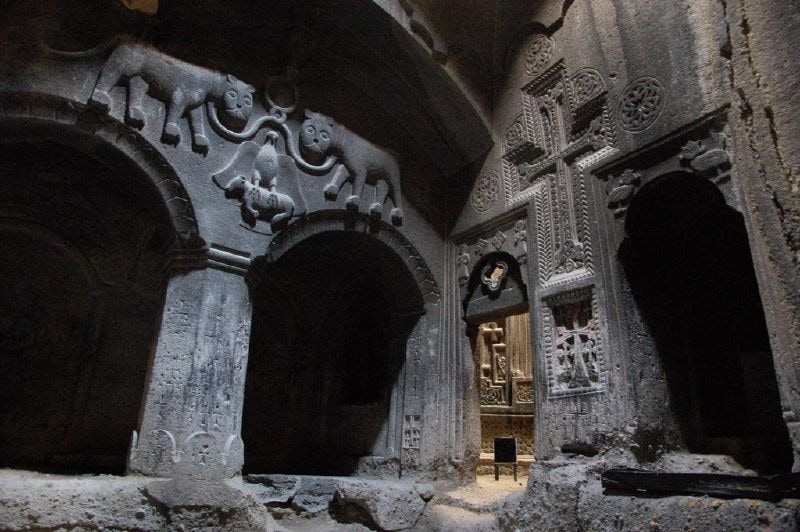
Basilica Architecture
- Eleven Churches Hewn From Rock
- Cross-Shaped Church of St. George
- Basilica Architecture With Three Naves and A Vestibule
- Pillars, Vast Ceilings, Archways, and Domes
- Rock Carvings and Colorful Frescoes
King Gebre Mesqel Lalibela, Nine Saints
About Monolithic church
Monolithic Churches
A monolithic church is a spiritual edifice constructed from a single, solid block of stone. These remarkable structures are typically carved directly into the earth or the face of a hill or mountain, rather than being assembled from separate building materials. While freestanding rocks of sufficient size are rare, the resulting creations can exhibit architectural complexity comparable to conventionally built structures.
Ethiopia: The Lalibela Complex
The most celebrated examples of monolithic churches are found in Lalibela, Ethiopia. This complex comprises eleven churches believed to have been carved in the 12th century, forming what is often referred to as "New Jerusalem." Among these, the cross-shaped Church of St. George is particularly famous. Tradition attributes its creation to King Gebre Mesqel Lalibela, a devout follower of the Orthodox Tewahedo Christian faith. Situated in a mountainous area, Lalibela remains a vital center for Ethiopian Christianity, drawing pilgrims and devotees even today.
The Lalibela churches are recognized globally as a UNESCO World Heritage Site, highlighting their immense historical and cultural significance. While differing in design, many feature basilica-like layouts with multiple naves, vestibules, pillars, arches, and domes, often adorned with intricate rock carvings and vibrant frescoes. Many of these medieval churches continue to host Christian Orthodox religious ceremonies and festivals.
Ethiopian Rock-Hewn Traditions Beyond Lalibela
Beyond the Lalibela complex, Ethiopia boasts a rich tradition of rock-hewn churches, particularly in the Amhara and Tigray regions. Research indicates the existence of over 150 such churches, many of which are still in active use. While their precise ages are not always well-documented, many are thought to have been carved during the reigns of emperors like Dawit II (early 15th century) and Zer’a Ya’iqob (mid-15th century), with some possibly dating back much earlier.
Local traditions suggest that the practice of excavating these churches began with missionaries known as the 'Nine Saints' around the 5th or 6th century CE. These missionaries, along with their Ethiopian adherents, fostered a long-standing monastic tradition that favored remote and inaccessible locations suitable for rock-hewn sanctuaries. The preferred stone types for these carvings were Adigrat Sandstone and Enticho Sandstone, and the tradition of excavating rock-hewn churches persists into the present day.
Monolithic Churches Worldwide
While the Lalibela churches are unique for their external monolithic design, the concept of rock-hewn churches is present in various other parts of the world. These sites often bear closer resemblance to cave monasteries, featuring tunnels that converge into a single rock formation. Notable examples include the Geghard monastery in Armenia, the Rock-hewn Churches of Ivanovo in Bulgaria, the subterranean St. Jean Church and the monolithic church in Saint-Émilion in France, Temppeliaukio Church in Helsinki, Finland, the Church of Saint Peter in Antakya, Turkey, and the numerous rock churches in Cappadocia, Turkey, known for their Byzantine wall paintings.
Source: Wikipedia ↗
Frequently Asked Questions
What defines a monolithic church?
A monolithic church is a religious structure carved from a single, solid block of stone. Due to the rarity of large freestanding rocks, these churches are typically excavated into the ground or into the sides of hills and mountains.
Where are the most famous monolithic churches located?
The most famous and extensive complex of monolithic churches is found in Lalibela, Ethiopia. These eleven churches are a significant pilgrimage site and a UNESCO World Heritage Site.
When were the Lalibela churches believed to have been built?
Tradition suggests that the eleven monolithic churches in Lalibela were created in the 12th century. King Gebre Mesqel Lalibela of the Zagwe dynasty is credited with their construction.
Are the monolithic churches in Lalibela still in use?
Yes, the medieval monolithic churches of Lalibela are still actively used today for Christian Orthodox religious ceremonies and festivities. Lalibela remains an important center of Ethiopian Christianity and a place of pilgrimage.
Are there monolithic churches outside of Ethiopia?
While the Lalibela churches are unique for their freestanding external walls, the concept of rock-hewn churches exists globally. Examples include sites in Armenia, Bulgaria, France, Finland, and Turkey, though these often resemble cave monasteries more closely.
What is the earliest origin of rock-hewn churches in Ethiopia?
Local belief attributes the excavation of these churches to a group of missionaries known as the 'Nine Saints,' who arrived in Ethiopia from the Mediterranean region during the 5th or 6th century. They inspired a long tradition of monasticism and church carving.
Related Monasteries

Ethiopia
Ethiopia, officially the Federal Democratic Republic of Ethiopia, is a landlocked country in East Africa with a rich and ancient history, recognized as a cradle of humankind. It has been a significant political and cultural entity for millennia, with early kingdoms like D'mt and Aksum shaping its trajectory. The nation has a complex religious landscape, with Christianity and Islam establishing a long-standing presence, and it has a history of repelling foreign invasions, notably against Italy in the late 19th century. Despite facing modern challenges, Ethiopia is considered an emerging economic power in sub-Saharan Africa.

Poblet Monastery
Poblet Monastery, officially the Royal Abbey of Santa Maria de Poblet, is a Cistercian monastery founded in 1151 in Catalonia, Spain. It served as a significant royal pantheon for the Crown of Aragon and was once home to over 300 monks. Despite suffering ruin and desecration in the 19th century, it was refounded in 1940 and is now a UNESCO World Heritage Site, housing an active monastic community.
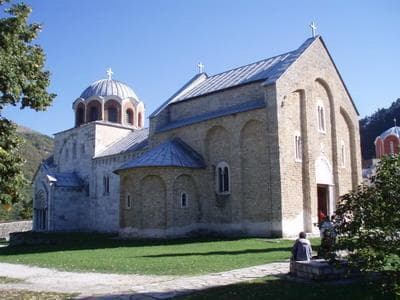
Studenica Monastery
Studenica Monastery is a 12th-century Serbian Orthodox monastery renowned as the mother-church of all Serbian temples. Founded by Stefan Nemanja, it became a significant political, cultural, and spiritual center of medieval Serbia, housing priceless collections of Byzantine art. Protected by the state and recognized as a UNESCO World Heritage Site, it continues to be a vital religious and historical monument.