
Elsey Abbey
Elsey Abbey, originally Elsey Priory, was a women's religious house established around 1220 near Hagen, Germany. Initially founded for Premonstratensian canonesses, it evolved into a secularstift for noble canonesses in the 15th century. During the Reformation, the abbey adopted Protestantism and was eventually dissolved in 1810.
Key Facts
- ›Founded around 1220 by Friedrich von Isenberg.
- ›Originally a Premonstratensian canonesses' house.
- ›Became a secularstift for noble canonesses in the 15th century.
- ›Became Protestant during the Reformation.
- ›Dissolved in 1810.
- ›Remnants include a Romanesque church and canonesses' houses.

Romanesque
Romanesque Church, Canonesses' Houses
Elsey Priory, Kloster Elsey
Friedrich Von Isenberg
Secularisation In 1810, Reformation
About Elsey Abbey
Elsey Abbey, also known earlier as Elsey Priory and in German as Kloster Elsey, is a former women's religious institution situated near the locality of Elsey, which is now incorporated into Hohenlimburg in Hagen, Germany. Its history traces back to its founding around 1220 by Friedrich von Isenberg. Initially established as a priory for Premonstratensian canonesses, the endowment included the local parish church and other properties.
Historical Development
By the 15th century, Elsey Abbey underwent a significant transformation, evolving into a "Damenstift," a house for secular canonesses of noble lineage, governed by an abbess. This period saw a change in its character and administration. During the 16th century, a pivotal era marked by the Reformation, the associated parish embraced Protestantism, and the abbey followed suit, adopting the new religious orientation in due course.
Dissolution and Present State
The abbey's active monastic life concluded in 1810 with its dissolution during the widespread secularization of church properties of that period. Today, Elsey Abbey exists as a historical site, with remnants that include its Romanesque church and some of the former canonesses' residences. These surviving structures serve as tangible links to its long and varied past.
Source: Wikipedia ↗
Frequently Asked Questions
When was Elsey Abbey founded?
Elsey Abbey was founded around 1220. Friedrich von Isenberg established it as a priory for Premonstratensian canonesses.
What religious order was Elsey Abbey initially part of?
Initially, Elsey Abbey was part of the Premonstratensian order. It housed canonesses, who were female members of this order.
How did Elsey Abbey change in the 15th century?
In the 15th century, Elsey Abbey transitioned into a house of secular canonesses of the nobility, under the leadership of an abbess. This marked a shift from its original Premonstratensian affiliation.
What happened to Elsey Abbey during the Reformation?
During the Reformation in the 16th century, the parish associated with Elsey Abbey became Protestant. The abbey itself subsequently followed suit and adopted Protestantism.
When was Elsey Abbey dissolved?
Elsey Abbey was dissolved in 1810. This dissolution occurred during the period of secularization.
What remains of Elsey Abbey today?
Today, remnants of Elsey Abbey include its Romanesque church and some of the former canonesses' houses. These structures offer a glimpse into its historical architecture.
Related Monasteries

Itzehoe Abbey
Itzehoe Abbey was originally founded as a Cistercian monastery in the 1230s, later relocating to Itzehoe in 1263. Following the Reformation, it was transformed in 1541 into a noble Protestant ladies' convent, a status it maintains today. The convent continues to own significant land and forest properties, and its historical courtyard once formed an independent rural municipality within the city.
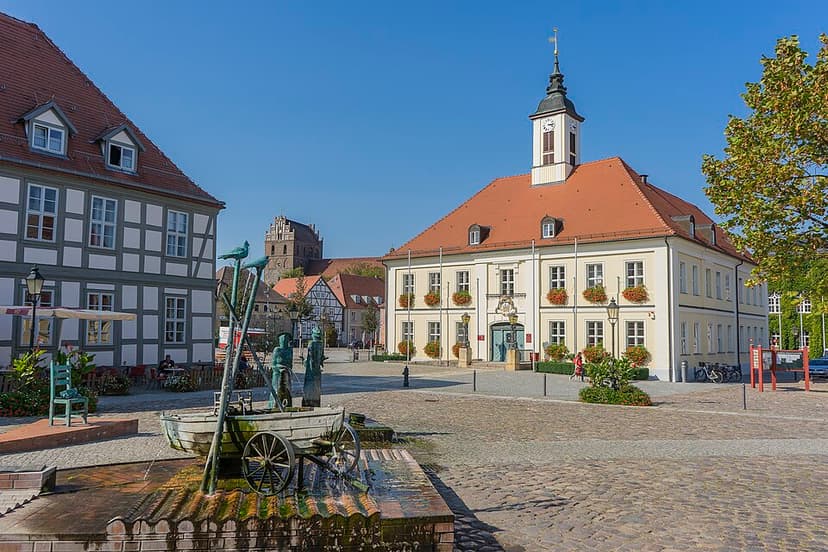
Angermünde
Angermünde is a historic town in the Uckermark region of Brandenburg, Germany, with a population of around 14,000. Originally an abbreviation of Tangermünde, it developed into an administrative sub-center known for its Protestant churches, schools, and a recently revitalized historic marketplace. Once a hub for enamel production, the town now heavily relies on tourism, leveraging its location amidst game-filled forests and numerous lakes.

Frankenhausen Abbey
Frankenhausen Abbey was a Cistercian nunnery that existed from the 13th to the 16th centuries. Initially established in Grünberg, it relocated to Frankenhausen in 1292. The abbey was rebuilt after a fire in 1410 and subsequently dissolved during the Protestant Reformation, with its final nuns departing in 1543. Today, remaining structures are preserved and restored as historical monuments.