
Itzehoe Abbey
Itzehoe Abbey was originally founded as a Cistercian monastery in the 1230s, later relocating to Itzehoe in 1263. Following the Reformation, it was transformed in 1541 into a noble Protestant ladies' convent, a status it maintains today. The convent continues to own significant land and forest properties, and its historical courtyard once formed an independent rural municipality within the city.
Key Facts
- ›Founded in the 1230s as a Cistercian monastery.
- ›Relocated to Itzehoe in 1263.
- ›Converted into a noble Protestant ladies' convent in 1541.
- ›Headed by an elected abbess and supported by a prioress.
- ›Historically owned land forming an independent rural municipality that hindered Itzehoe's expansion.
- ›Currently owns substantial land and forest properties.

Abbess's Residence , Built In 1696, Monastery Courtyard Near St. Laurentii Church, Monastery Forest
Itzehoe Monastery
- Princess Dorothea Louise of Sonderburg-Augustenburg
- Relocation To Itzehoe In 1263
- Conversion To A Noble Protestant Ladies' Convent In 1541
- Princess Dorothea Louise Appointed Abbess In 1683
- Incorporation Into Itzehoe In 1935/36
About Itzehoe Abbey
Itzehoe Abbey, originally established in the 1230s as a Cistercian monastery, is a significant historical institution in Itzehoe, Germany. The monastery's early history involved a relocation in 1263 to its current site, presumably to escape flooding at its initial location near the mouth of the Stör river. Over centuries, through donations and purchases, the abbey amassed considerable land holdings, acting as a landlord and judicial authority in various regions, even owning land over 50 kilometers away by 1383.
Transformation and Continued Existence
The most profound transformation of Itzehoe Abbey occurred after the Reformation. In 1541, it was converted into a noble Protestant ladies' convent, a status that persists to this day. This institution now comprises unmarried or widowed women, predominantly from noble families, led by an elected abbess and supported by a prioress. The convent continues to manage substantial land and forest properties, demonstrating its enduring economic presence.
Historical Significance and Urban Context
Historically, the monastery courtyard and its associated lands in Itzehoe constituted a distinct jurisdiction, eventually developing into an independent rural municipality. This enclave within the city of Itzehoe played a role in shaping the urban development of the area, hindering the city's expansion until its eventual incorporation in 1935/36. The legacy of Itzehoe Abbey is also tied to notable figures, such as Princess Dorothea Louise of Sonderburg-Augustenburg, who was appointed abbess in the late 17th century and commissioned the construction of a prestigious residence.
Source: Wikipedia ↗
Frequently Asked Questions
When was Itzehoe Abbey founded?
Itzehoe Abbey was originally founded in the 1230s. The Cistercian nuns moved to Itzehoe in 1263, likely due to flooding at the original site.
What happened to Itzehoe Abbey after the Reformation?
After the Reformation, the monastery was converted into a noble Protestant ladies' convent in 1541. This form of institution continues to this day.
Who heads the Itzehoe convent today?
The convent is headed by an abbess, who is usually elected. A prioress provides support to the abbess.
What is the current status of Itzehoe Abbey's property holdings?
The Itzehoe monastery has retained primarily land and forest property. This includes land for the Itzehoe swimming center, the Stormsteich, and significant forest areas north of Itzehoe.
Did the monastery have any administrative or jurisdictional power?
Yes, the Itzehoe convent was endowed with land and acted as landlord and judge in many areas. It was able to demand taxes from residents in these areas, though they did not form a single contiguous estate.
Related Monasteries

Elsey Abbey
Elsey Abbey, originally Elsey Priory, was a women's religious house established around 1220 near Hagen, Germany. Initially founded for Premonstratensian canonesses, it evolved into a secularstift for noble canonesses in the 15th century. During the Reformation, the abbey adopted Protestantism and was eventually dissolved in 1810.
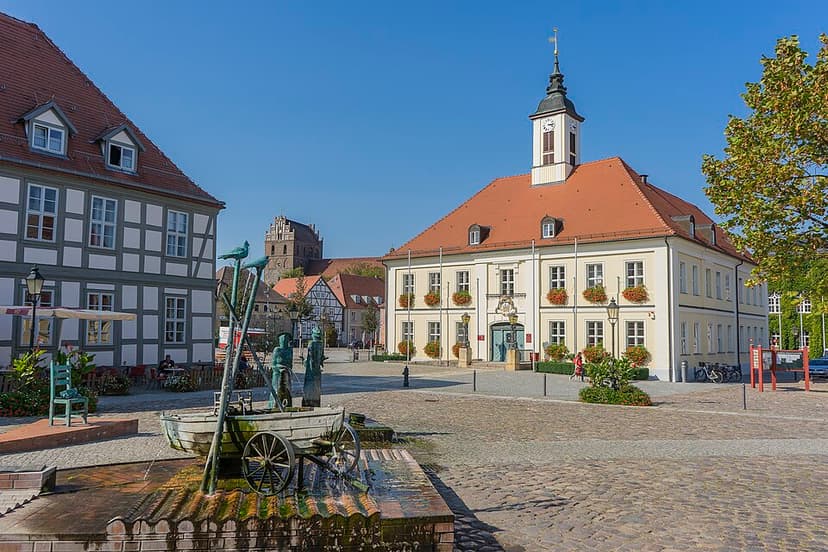
Angermünde
Angermünde is a historic town in the Uckermark region of Brandenburg, Germany, with a population of around 14,000. Originally an abbreviation of Tangermünde, it developed into an administrative sub-center known for its Protestant churches, schools, and a recently revitalized historic marketplace. Once a hub for enamel production, the town now heavily relies on tourism, leveraging its location amidst game-filled forests and numerous lakes.

Dobbertin Abbey
Dobbertin Abbey, founded around 1220, began as a Benedictine monastery before transitioning to a nunnery and later a Lutheran collegiate foundation for noblewomen. Situated on a spit of land in the Dobbertiner See, it is notable for its unique two-towered church. After secularization and periods as a youth hostel and military post, it now serves as a care home for the physically handicapped, offering workshops, tours, and community services, with ongoing restoration efforts.