
Dunkeswell Abbey
Dunkeswell Abbey was a Cistercian monastery founded in 1201 by William Briwere, granting it significant property in Devon. Following its dissolution in 1539, the abbey was largely demolished, with parts remaining in domestic use until the 19th century. A parish church was later built on a portion of the site, and surviving fragments of the abbey can still be found.
Key Facts
- ›Founded in 1201 by William Briwere.
- ›Established as a Cistercian monastery.
- ›An offshoot of Forde Abbey.
- ›Dissolved in 1539.
- ›Largely demolished after dissolution.
- ›Site now includes Holy Trinity Church and surviving fragments.

Norman, Early English
Norman Font, Partial End Wall of the Cellarer's Range, Parts of A Gatehouse, Carved Fragments Within Holy Trinity Church
William Briwere, John Russell, 1st Earl of Bedford
Foundation In 1201, Dissolution of the Monasteries In 1539, Construction of Holy Trinity Church In 1842
About Dunkeswell Abbey
Dunkeswell Abbey was a significant Cistercian monastery located in East Devon, England. Founded in 1201 by William Briwere, a notable figure who also granted considerable property to the abbey, it functioned as an offshoot of Forde Abbey. Briwere himself later joined the community and was buried within the abbey church.
History and Dissolution
The abbey's existence as a monastic institution came to an end with the Dissolution of the Monasteries. It was closed in 1539 and subsequently granted to John Russell, 1st Baron Russell. Following its closure, the abbey was largely demolished, though a portion of the structure remained in use as a domestic dwelling until the 19th century. The site has since seen further development, with Holy Trinity Church being built on part of the abbey grounds in 1842 in the Early English style. Surviving remnants of the original monastic complex include sections of the cellarer's range and a gatehouse, along with carved fragments incorporated into the modern church.
Current Status
Today, Dunkeswell Abbey exists as ruins, though its historical significance is preserved through the surviving fragments and the adjacent parish church. The site is accessible to the public, offering a glimpse into the past of monastic life in the region.
Source: Wikipedia ↗
Frequently Asked Questions
When was Dunkeswell Abbey founded?
Dunkeswell Abbey was founded in the year 1201. It was established by William Briwere as a Cistercian monastery.
Who founded Dunkeswell Abbey?
The abbey was founded by William Briwere. He was a significant figure who also granted substantial property within Devon to the abbey.
What religious order was Dunkeswell Abbey part of?
Dunkeswell Abbey was a Cistercian monastery. It was established as an offshoot of Forde Abbey.
What happened to Dunkeswell Abbey after its dissolution?
Dunkeswell Abbey was dissolved in 1539. After its closure, it was granted to John Russell, 1st Baron Russell, and was mostly demolished. A section remained in domestic use until the 19th century.
Are there any remains of Dunkeswell Abbey today?
Yes, some surviving fragments of the monastery exist. These include the partial end wall of the cellarer's range and parts of a gatehouse. Carved fragments are also preserved within Holy Trinity Church, which was built on the site in 1842.
Related Monasteries

Beeston Regis Priory
Beeston Regis Priory was an Augustinian priory founded in 1216 by Lady Isabel de Cressey. Dissolved in 1538, its remains, particularly the priory church nave and transept, are a Grade I listed ruin. The priory's suppression is believed to have influenced the founding of Gresham's School, and its cloister garden is now part of Priory Farm.
Hailes Abbey
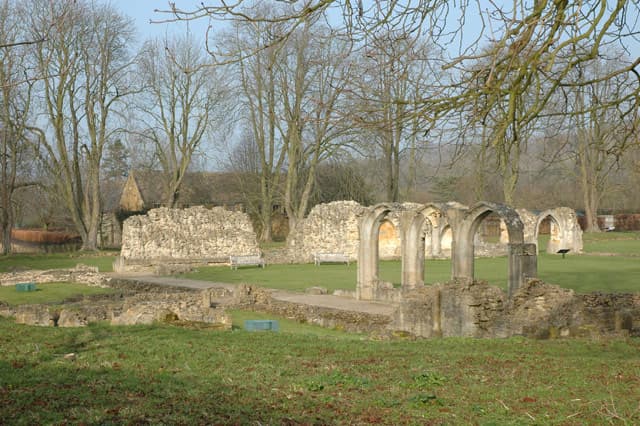
Hailes Abbey was a Cistercian monastery founded in 1246 by Richard of Cornwall. It rose to prominence as a major pilgrimage site after the donation of a phial believed to contain the Holy Blood. Despite attempts to save it by admitting the relic was fake, the abbey was dissolved by Henry VIII in 1539, and little of its structure now remains.
Ashridge Priory
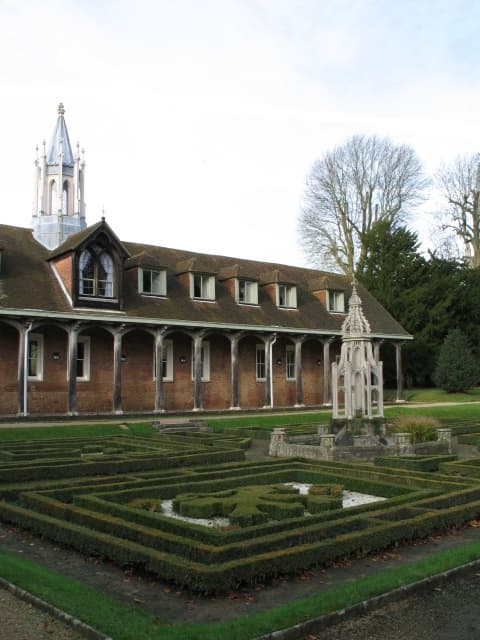
Ashridge Priory was a medieval college of Austin canons, established in 1283 by Edmund of Almain. It was known as the "Brothers of Penitence" or the "Boni Homines" and gained wealth through donations, particularly a phial of Christ's blood. After its dissolution, it served as a royal residence and later became a private estate before being demolished.