
Douai Abbey
Douai Abbey is a Benedictine monastery located in Berkshire, England, established in 1903 by monks fleeing anti-clerical legislation in France. Originally from Saint-Edmund's in Douai, France, the community found a new home in Upper Woolhampton. The abbey church, a significant architectural feature, is listed as Grade II*, and the monastery has maintained historical ties to the Stuart dynasty and the Jacobite cause.
Key Facts
- ›Founded in 1903 by monks from Douai, France, due to anti-clerical laws.
- ›The abbey church is a Grade II* listed building.
- ›The community has historical links to the Jacobite cause and the Stuart dynasty.
- ›The monastery housed Douai School until its closure in 1999.
- ›The abbey church is renowned for its acoustics and is used for music recordings.
- ›As of 2020, the community consisted of 23 monks serving in parishes across five dioceses.
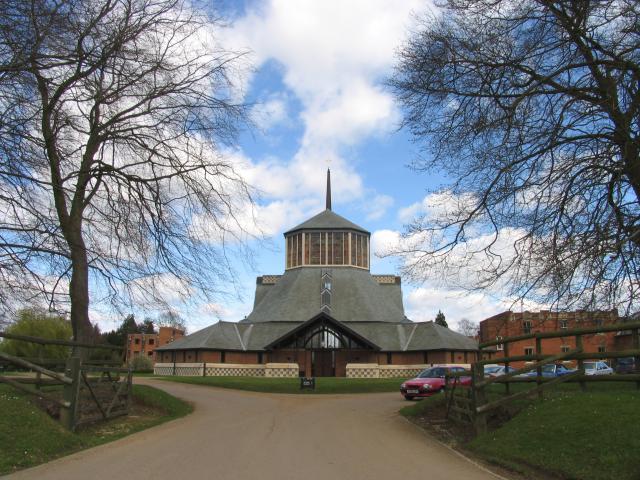
Gothic Revival
- Grade Ii* Listed Abbey Church
- Pipe Organs
- Reverberant Acoustics Used For Music Recording
- Historical Ties To Jacobitism
Dom Gabriel Gifford, Bishop Cahill, Sir Frederick Gibberd, Geoffrey Scott Osb
- Community Expelled From Paris During the French Revolution
- Community Took Over Vacant Buildings In Douai In 1818
- Community Relocated From Douai To Woolhampton In 1903 Due To French Anti-Clerical Legislation
- Abbey Church Opened In 1933, Completed In 1993
- Monastery Expanded In the 1960s
- Douai School Closed In 1999
- Two Monks Returned To Douai, France, In 2005 To Form A Community
About Douai Abbey
Douai Abbey is a Benedictine monastery situated in Upper Woolhampton, near Thatcham, in Berkshire, England. Its establishment in 1903 marked a new chapter for a community that had originated in Paris in 1615 as the community of St. Edmund's. This community later moved to Douai, France, in 1818, taking over the buildings of St. Gregory's. The relocation to England was necessitated by the anti-clerical legislation in France around the turn of the 19th century, specifically the Law of Associations (1901).
History and Significance
The monks were provided with the minor seminary of St. Mary in Woolhampton by Bishop Cahill of Portsmouth. The abbey church, a significant structure, was opened in 1933 and eventually completed in 1993, having faced financial constraints during its construction. The monastery underwent substantial expansion in the 1960s with the addition of a new monastic building designed by Sir Frederick Gibberd. For many years, Douai Abbey was associated with Douai School, a boarding school that operated until its closure in 1999. In 2005, a small group of monks returned to Douai, France, to re-establish a community there, aiming to restore historical links with English monasticism.
Jacobite Connections
Douai Abbey and its community have a notable historical association with the Stuart dynasty and the Jacobite cause. King James II of England is interred in Saint-Germain-en-Laye, near Paris, where the community resided for a period. Members of the House of Wittelsbach, who are considered present pretenders to the Jacobite claim, received their education at the community's former boarding school at the Berkshire site. The immediate past abbot, Geoffrey Scott OSB, was also a member of the Jacobite Society.
Present Day
As of 2020, Douai Abbey houses an active community of 23 monks. These monks are involved in pastoral work, serving in parishes across five different dioceses. The monastery's patron is St. Edmund King and Martyr, whose feast day is observed on November 20th. The abbey church itself is recognized for its fine acoustics and is a frequent venue for music recordings by various ensembles and choirs, featuring two notable pipe organs.
Source: Wikipedia ↗
Frequently Asked Questions
When was Douai Abbey founded?
Douai Abbey was established in 1903 when monks from the monastery of St. Edmund's in Douai, France, relocated to Upper Woolhampton, England. This move was a consequence of anti-clerical legislation enacted in France.
What is the architectural significance of Douai Abbey?
The abbey church at Douai Abbey is a notable architectural structure, holding a Grade II* listing on the National Heritage List for England. The monastery also saw significant expansion in the 1960s with a new monastery designed by Sir Frederick Gibberd.
What are the historical connections of Douai Abbey?
Douai Abbey has traditionally maintained strong ties to the Stuart dynasty and the Jacobite cause. Members of the House of Wittelsbach, who are present pretenders to the Jacobite claim, were educated at the community's former boarding school.
Is Douai Abbey still an active monastery?
Yes, Douai Abbey remains an active Benedictine monastery. As of 2020, it housed a community of 23 monks who serve in parishes across five dioceses, and priestly ordinations continue to take place.
Why is Douai Abbey known for its music?
The Abbey Church at Douai Abbey is frequently used as a recording location for musical performers due to its unique and reverberant acoustics. It houses two pipe organs, a smaller Italian-style organ and a larger modernised English Classical style organ.
What is the patron saint of Douai Abbey?
The patron of Douai Abbey is St. Edmund King and Martyr. His feast day is celebrated on November 20th.
Related Monasteries

Clairval Abbey
The Abbey of Saint-Joseph de Clairval is a Benedictine monastery located in Flavigny-sur-Ozerain, France, founded in 1972 in Switzerland before relocating to its current site in 1976. It belongs to the Olivetan branch and is known for offering Ignatian spiritual retreats for men and for its monks' creation of liturgical artwork. The abbey's liturgical life includes Gregorian chant and masses celebrated in Latin according to both the ordinary and extraordinary forms of the Roman Rite.

Monastery of Christ in the Desert
The Monastery of Christ in the Desert is a Benedictine monastery located in the remote Chama River Canyon Wilderness of New Mexico. Founded in 1964, it is part of the Subiaco Congregation and became an autonomous abbey in 1996. The monastery is known for its striking architecture, commitment to a contemplative life, and innovative ventures like its former internet web design service and its current Abbey Brewing Company.
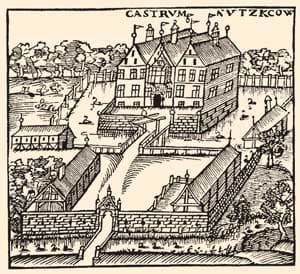
Nütschau Priory
Nütschau Priory, also known as St Ansgar's Priory, is a Benedictine monastery located in Travenbrück, Germany. Founded after World War II as a refuge for displaced persons, it evolved from a retreat house to an independent priory in 1975. It is noted as the northernmost Benedictine monastery in Germany and serves as a training and youth house, also offering shelter to pilgrims.