
Darnhall Abbey
Christian·England·Ruins (former grange)·13th century
Darnhall Abbey was a short-lived Cistercian monastery founded by Lord Edward (later King Edward I) in the late 13th century, dedicated to St Mary. Its establishment was attributed to a vow made during a perilous sea voyage, though historical accounts suggest a founding date before Edward's crusade. The site was ultimately deemed unsuitable, leading to its relocation and transformation into a monastic grange for the new Vale Royal Abbey.
Key Facts
- ›Founded by Lord Edward (later King Edward I) between 1266 and 1272.
- ›Dedicated to St Mary.
- ›Relocated a few miles north to Vale Royal Abbey in 1275 due to an unsuitable site.
- ›Its primary source of income during its operation was the wool trade.
- ›What remained of Darnhall Abbey became the monastic grange of Vale Royal Abbey.
Monastic Grange of Vale Royal Abbey
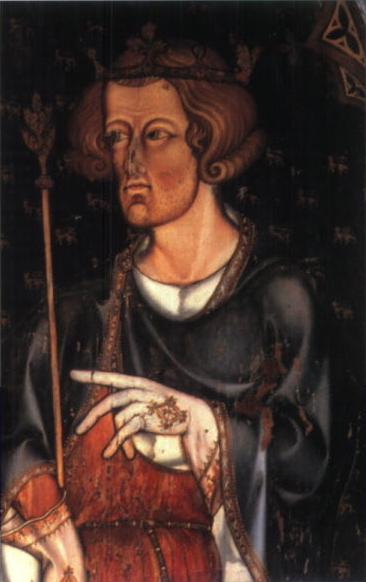
Edward I
Founded By Lord Edward, Relocated To Vale Royal Abbey
About Darnhall Abbey
Darnhall Abbey was a Cistercian monastery established in the late 13th century in Darnhall, Cheshire. It was founded by Lord Edward, who would later become King Edward I, with a foundation charter dated January 14, 1274. The abbey was dedicated to St Mary, and its foundation is often linked to a vow made by Edward during a perilous sea voyage, though scholarly analysis suggests the founding may have predated his crusade and served as a request for protection.
Early Years and Challenges
Monks began residing at Darnhall around 1268, brought from other abbeys, notably Dore Abbey, where Edward had been imprisoned. The initial endowment, including the site in Delamere Forest and several manors, was intended for 100 monks but proved insufficient, standardizing the community to thirty. Despite Edward's patronage, the endowment was not entirely adequate, and the abbey was permitted to trade wool to supplement its finances. The monks faced early challenges, including a dispute with the local tenantry in Darnhall village who sought to withdraw services claimed by the abbey, a conflict that persisted for decades.
Relocation and Legacy
Shortly after 1275, the chosen site at Darnhall was deemed unsuitable for reasons not precisely recorded. King Edward I granted permission for the monks to relocate, and they moved a few miles north to a site known as Wetenhalewes, establishing the new and more famous Vale Royal Abbey. What remained of the original Darnhall Abbey structures were converted into the monastic grange for Vale Royal. There is evidence suggesting that only one abbot, Walter, presided over Darnhall Abbey before its relocation, with later records possibly conflating him with a successor or indicating a scribal error. The abbey's existence as an independent foundation was thus brief, transitioning into a functional part of its successor institution.
Source: Wikipedia ↗
Frequently Asked Questions
When was Darnhall Abbey founded?
Darnhall Abbey was founded by Lord Edward, who became King Edward I, sometime between 1266 and 1272. Its foundation charter is dated January 14, 1274.
Why was Darnhall Abbey founded?
According to the Abbey's chronicler, it was founded in thanks for God saving Lord Edward and his fleet from a storm at sea. However, historical analysis suggests it may have been founded as a request for future protection before his crusade.
What happened to Darnhall Abbey?
The site chosen for Darnhall Abbey was found to be unsuitable for its purpose. Consequently, the monks were allowed to relocate to a new site a few miles north, where they established Vale Royal Abbey. The original Darnhall Abbey site then became the monastic grange for the new foundation.
How many monks lived at Darnhall Abbey?
Although originally intended to house 100 monks, the endowment provided was insufficient. Therefore, the standard number of monks in residence was thirty.
What was the economic basis of Darnhall Abbey?
For the brief period of its operation, the wool trade was the primary source of income for Darnhall Abbey. The abbey was authorized to trade wool to augment its finances.
Related Monasteries
Ashridge Priory
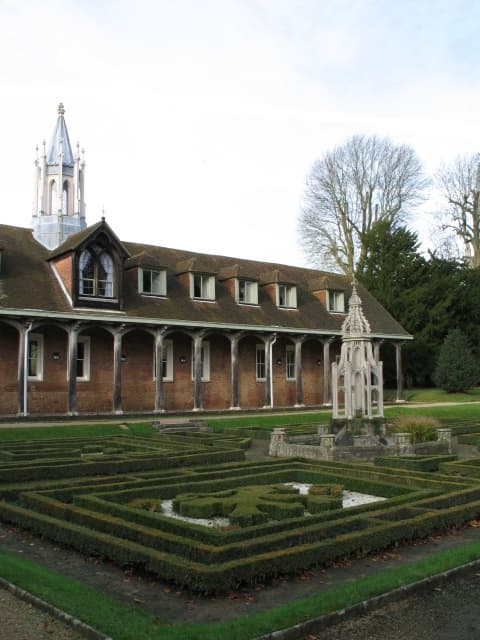
Ashridge Priory was a medieval college of Austin canons, established in 1283 by Edmund of Almain. It was known as the "Brothers of Penitence" or the "Boni Homines" and gained wealth through donations, particularly a phial of Christ's blood. After its dissolution, it served as a royal residence and later became a private estate before being demolished.

Beeston Regis Priory
Beeston Regis Priory was an Augustinian priory founded in 1216 by Lady Isabel de Cressey. Dissolved in 1538, its remains, particularly the priory church nave and transept, are a Grade I listed ruin. The priory's suppression is believed to have influenced the founding of Gresham's School, and its cloister garden is now part of Priory Farm.

Beverley Blackfriars
Beverley Blackfriars, also known as The Old Friary, originated as a Dominican priory established around 1240. Despite a devastating fire in 1449 and its dissolution in 1539, parts of the priory, particularly the guesthouse, survived. After centuries of varied private ownership and near demolition, significant preservation efforts led to its current status as a Grade II* listed building, housing a youth hostel since 1984.