
Colchester — St Botolph's Priory
Colchester — St Botolph's Priory was a significant medieval Augustinian house, established around 1093 and serving as the first and leading Augustinian convent in England until its dissolution in 1536. Despite facing disputes and financial difficulties, the priory played a crucial role in the religious landscape of Colchester and Essex. Today, its substantial ruins are preserved as a public park and a scheduled monument, offering a glimpse into its former grandeur.
Key Facts
- ›Founded around 1093 by Norman, a priest who studied under Anselm of Canterbury.
- ›It was the first and premier Augustinian priory in England.
- ›The priory church was built in Norman style and completed by 1177.
- ›Suffered damage during the Siege of Colchester in 1648, leading to its ruinous state.
- ›The nave was retained as a parish church after the priory's dissolution in 1536.
- ›The ruins are now a public park and a protected scheduled monument.

Norman
Remains of A Medieval Augustinian Priory, Site of An Earlier Anglo-Saxon Church, Norman Priory Church Remnants, Public Park
Norman, Anselm of Canterbury, Ainulf, Pope Paschal Ii, Sir Thomas Audley, John Golder, Anastasia Golder, Thomas Fairfax
- Foundation C. 1093
- Confirmation By Pope Paschal Ii In 1116
- Disputes With St John's Abbey In the Mid-14th Century
- Complaints To King Richard Ii About Forged Letters In 1380
- Grant of Relaxation of Penance By Pope Martin V In 1421
- Dissolution In 1536
- Siege of Colchester In 1648 Leading To Further Ruin
About Colchester — St Botolph's Priory
Colchester — St Botolph's Priory stands as a significant historical site in Colchester, Essex, representing the first and leading Augustinian priory in England. Its origins trace back to around 1093, when a Kentish priest named Norman, who had studied under Anselm of Canterbury, initiated the establishment of an Augustinian convent on the site of an existing Anglo-Saxon church dedicated to St Botolph.
Foundation and Early Years
The transformation of the church into St Botolph's Priory was a deliberate undertaking, with Norman advising Ainulf, the leader of a college of secular priests at St Botolph's, to adopt the Augustinian rule. This order had no prior houses in England at the time. Norman secured a letter of recommendation from Archbishop Anselm to the abbot of Mont-Saint-Éloi in France, where he learned the Rule of St Augustine before returning to Colchester. The priory's foundation was consecrated by Anselm in 1093, and later, William II granted a charter of protection to its canons. Pope Paschal II officially confirmed the priory's creation in a papal bull in August 1116, marking it as the inaugural Augustinian institution in England. The priory also honored Saints Julian and Denis. As the first of its order in England, St Botolph's was accorded primacy in dignity and authority over subsequent Augustinian houses.
Medieval History and Challenges
Throughout the medieval period, St Botolph's Priory was subject to various events and disputes. In the mid-14th century, a significant altercation occurred between the priory and St John's Abbey, involving accusations of armed attack and blockade, which led to papal intervention. By 1380, the priory complained to King Richard II about individuals using forged letters to collect money fraudulently. The priory also faced financial hardship, as indicated by a papal grant in 1421 offering relaxations of penance to those who gave alms for its conservation and repair. Later, in 1434, a former prior, John Depyng, left with valuable goods belonging to the priory, leading to an unsuccessful lawsuit.
Dissolution and Later History
The priory's existence concluded with its dissolution in 1536, in accordance with the Suppression of Religious Houses Act. Its possessions, including several manors, were granted to Sir Thomas Audley. Following the dissolution, the nave of the priory church was preserved for use as a parish church, while the choir and other conventual buildings were demolished. The priory's ruinous state was further exacerbated during the Siege of Colchester in 1648, when it was caught in the crossfire of the assault on South Gate. In 1837, a Gothic Victorian church was constructed adjacent to the ruins. Today, the remains of St Botolph's Priory are a public park, with improvements made in recent years to enhance accessibility to this historically significant site.
Source: Wikipedia ↗
Frequently Asked Questions
When was St Botolph's Priory founded?
St Botolph's Priory was founded around 1093. The conversion of the existing church of St Botolph into an Augustinian priory began with Norman, a Kentish priest. Pope Paschal II later confirmed its creation in a papal bull in August 1116, solidifying its status as the first Augustinian institution in England.
What religious order was St Botolph's Priory a part of?
St Botolph's Priory belonged to the Order of St Augustine, also known as Augustinian canons. It held the distinction of being the first and leading Augustinian convent in England.
What happened to St Botolph's Priory after its dissolution?
The priory was dissolved in 1536. While the choir and other conventual buildings were demolished, the nave of the priory church was retained as a parish church. The ruins were further damaged during the Siege of Colchester in 1648.
What can be seen of St Botolph's Priory today?
Today, the substantial ruins of St Botolph's Priory are preserved and accessible to the public as a park. These remains are protected as a scheduled monument and a Grade I listed building, offering a significant historical site in Colchester.
What was the significance of St Botolph's Priory in England?
As the first Augustinian house in England, St Botolph's Priory was always to be held first in dignity and had authority over other Augustinian houses in the country. It played a central role in the establishment and development of the Augustinian order in England.
Related Monasteries
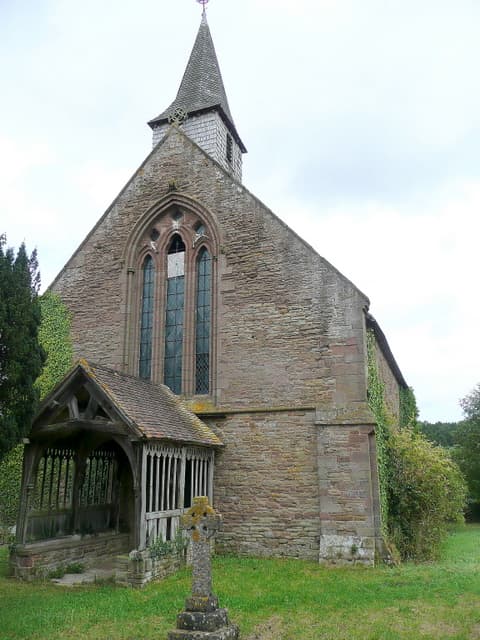
Aconbury Priory
Aconbury Priory was an Augustinian priory located in Herefordshire, England, founded in the early 13th century. The priory's church, still standing today, was initially constructed in 1230. While the conventual buildings have largely vanished, remnants of the east and north walls survived the dissolution.

Sandleford Priory
Sandleford Priory was a small Augustinian priory located in Berkshire, England, founded between 1193 and 1202 by Geoffrey, Earl of Perch, and his wife Maud. Despite a later attempt to refound it as a double house, it was dissolved in 1478 due to mismanagement and subsequently abandoned. The remains were converted into a country house, and the former chapel now serves as a library. King Edward II visited the priory in 1320.
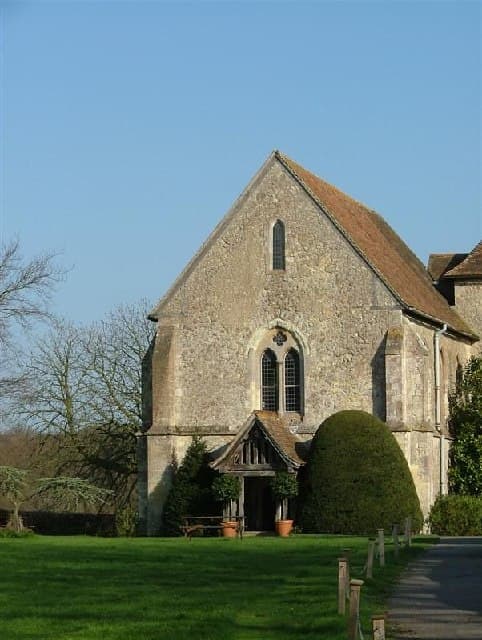
Bilsington Priory
Bilsington Priory was an Augustinian priory located in Kent, England, founded in 1253 by John Maunsell with assistance from Merton Priory. It served the local community by providing a hospital and preaching. Following its suppression in the 1536 Dissolution of the Monasteries, some of its structures were converted into a farmhouse and later restored, with portions now functioning as a wedding and conference venue.