
Sandleford Priory
Sandleford Priory was a small Augustinian priory located in Berkshire, England, founded between 1193 and 1202 by Geoffrey, Earl of Perch, and his wife Maud. Despite a later attempt to refound it as a double house, it was dissolved in 1478 due to mismanagement and subsequently abandoned. The remains were converted into a country house, and the former chapel now serves as a library. King Edward II visited the priory in 1320.
Key Facts
- ›Founded between 1193 and 1202 for Augustinian Canons Regular.
- ›Dedicated to St. John the Baptist, the Blessed Virgin Mary, and all the Saints.
- ›Attempted refoundation as a double house for Benedictine nuns and brothers in 1274 did not materialize.
- ›Dissolved in 1478 and abandoned by the remaining monks.
- ›The former priory chapel is now a library.
- ›Ownership passed to the Bishop of Salisbury and later the Dean and Chapter of Windsor.

Old Priory Chapel
Priory of St John the Baptist At Sandleford
- Geoffrey, Earl of Perch
- Maud De Perche
- Stephen Langton
- Hubert Walter
- Herbert Le Poer
- William of Perche
- Stephen of Perche
- Maud De Clare, Countess of Gloucester and Hertford
- Simon Dam
- Edward Ii
Founding of the Priory, Attempted Refoundation As A Double House, Royal Visit By Edward Ii, Dissolution of the Priory, Conversion To A Country House
About Sandleford Priory
Sandleford Priory was a modest Augustinian priory situated in Sandleford, within the parish of Greenham in Berkshire, England. Its historical trajectory spans from its founding in the late 12th century to its dissolution and subsequent transformation.
Founding and Early History
The priory was established by Geoffrey, Earl of Perch, and his wife Maud between 1193 and 1202. Archbishop Stephen Langton's confirmation charter indicates that the house was dedicated to St. John the Baptist, the Blessed Virgin Mary, and all the Saints. The original seals on this charter featured prominent ecclesiastical and noble figures of the era, including Hubert Walter, Archbishop of Canterbury, and Herbert le Poer, Bishop of Sarum.
Developments and Dissolution
In 1274, Maud de Clare, Countess of Gloucester and Hertford, made plans to refound Sandleford as a double house for Fontevrault Benedictine nuns and brothers. However, these plans did not materialize. The priory faced further challenges with years of mismanagement by its prior, which led to its ultimate dissolution in 1478. At the time of the last prior's death in that year, the priory was abandoned by its remaining canons, who had dwindled in number.
Post-Monastic Life
Following its abandonment by the monastic community, the remains of Sandleford Priory were converted into a country house. Ownership of the site eventually passed to the Bishop of Salisbury and later to the Dean and Chapter of Windsor. The former priory chapel remains as a notable feature, now serving as a library. King Edward II is recorded as having visited Sandleford Priory on August 31, 1320, where he is noted to have stayed for the night.
Source: Wikipedia ↗
Frequently Asked Questions
When was Sandleford Priory founded?
Sandleford Priory was founded by Geoffrey, Earl of Perch, and his wife Maud sometime between 1193 and 1202. Archbishop Stephen Langton's confirmation charter indicates its dedication.
What religious order was Sandleford Priory part of?
Sandleford Priory was an Augustinian Priory, belonging to the Canons Regular. There was an attempt to refound it as a house for Fontevrault Benedictine nuns and brothers, but this did not come to fruition.
Why was Sandleford Priory dissolved?
The priory was dissolved in 1478 after years of mismanagement by its prior. The number of canons had dwindled to none by the time of the last prior's death.
What happened to Sandleford Priory after its dissolution?
After its abandonment by the monks, the remains of Sandleford Priory were converted into a country house. The ownership eventually fell to the Dean and Chapter of Windsor, and its old chapel now serves as a library.
Did any notable figures visit Sandleford Priory?
Yes, King Edward II was at Sandleford Priory on August 31, 1320, where he reportedly stayed for the night.
Related Monasteries
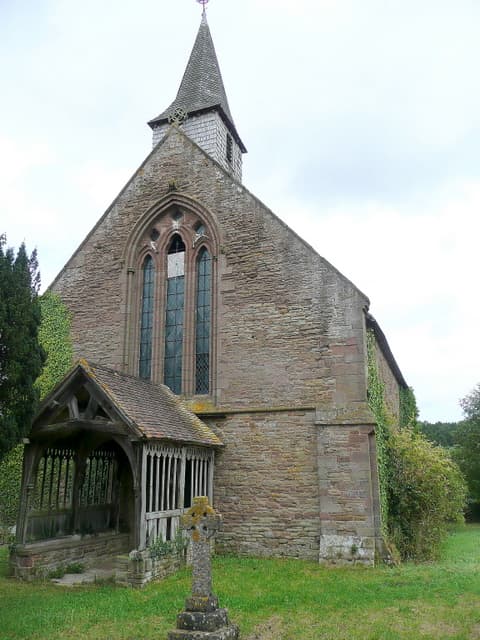
Aconbury Priory
Aconbury Priory was an Augustinian priory located in Herefordshire, England, founded in the early 13th century. The priory's church, still standing today, was initially constructed in 1230. While the conventual buildings have largely vanished, remnants of the east and north walls survived the dissolution.

Colchester — St Botolph's Priory
Colchester — St Botolph's Priory was a significant medieval Augustinian house, established around 1093 and serving as the first and leading Augustinian convent in England until its dissolution in 1536. Despite facing disputes and financial difficulties, the priory played a crucial role in the religious landscape of Colchester and Essex. Today, its substantial ruins are preserved as a public park and a scheduled monument, offering a glimpse into its former grandeur.

Blackmore Priory
Blackmore Priory was an Augustinian priory in Essex, England, established in the second half of the 12th century. It housed a Prior and twelve Canons who served the local parish while leading a monastic life. The priory experienced its peak in the late 14th century but was largely demolished in the 1520s due to the actions of Henry VIII and Cardinal Wolsey, eventually passing into secular hands.