
Châlons-sur-Marne
Châlons-en-Champagne, formerly known as Châlons-sur-Marne, is a city in the Grand Est region of France with a rich historical background, dating back to Gallic and Gallo-Roman settlements. It is historically significant as a conjectured site for major battles, including those involving Roman emperors and Attila the Hun. The city boasts notable architectural landmarks, including cathedrals and churches, with some parts recognized as UNESCO World Heritage.
Key Facts
- ›Conjectured site of the 274 Battle of Châlons between Roman emperors.
- ›Conjectured site of the 451 Battle of the Catalaunian Plains, which halted Attila's advance.
- ›Notre-Dame-en-Vaux church is part of a UNESCO World Heritage site.
- ›Châlons Cathedral features Romanesque, Gothic, and Baroque architectural elements.
- ›The city was officially renamed Châlons-en-Champagne in 1995.
- ›Formerly known as Châlons-sur-Marne.

Romanesque, Gothic, Baroque, Neo-Classic
ChâLons Cathedral, Notre-Dame-En-Vaux Church, Saint-Alpin Church, HôTel De Ville, Porte Sainte-Croix, La DernièRe RelèVe War Memorial, Ancien HôTel Des Intendants De Champagne, Le Cirque
ChâLons-Sur-Marne, Catalaunum
Battle of ChâLons, Battle of the Catalaunian Plains
About Châlons-sur-Marne
Châlons-en-Champagne
Châlons-en-Champagne, a city located in the Grand Est region of France, holds a historical significance dating back to its origins as a Gallic and later Gallo-Roman settlement known as Catalaunum. The city's name is derived from the Catalauni tribe that inhabited the area. It is conjectured to have been the site of pivotal historical battles, including the Battle of Châlons in 274 between Roman emperors Aurelian and Tetricus I, and the 451 Battle of the Catalaunian Plains, where Attila the Hun's westward advance was halted.
Architectural Heritage
The city's landscape is marked by several notable architectural landmarks that reflect its long history. Châlons Cathedral, also known as Saint Étienne's cathedral, showcases a blend of architectural styles, with parts of its original Romanesque structure from the 12th century, significant Gothic rebuilding, and later Baroque additions to its west façade in the 17th century. Another prominent site is the Notre-Dame-en-Vaux church, a collegiate church built between 1157 and 1217. This church and its cloister were a significant place of pilgrimage in the 12th century and are now part of a UNESCO World Heritage site. The church of Saint-Alpin, possibly the oldest in the city, was rebuilt around 1170 in a Gothic style still bearing Romanesque influences. The Hôtel de Ville, or city hall, completed in 1776, features a façade representative of the neo-classic period of the late 18th century.
Modern Identity
Formerly known as Châlons-sur-Marne, the city officially adopted its current name, Châlons-en-Champagne, in 1995. It serves as the prefecture of the Marne department. Despite its historical depth and cultural attractions, it is not to be confused with the Burgundian city of Chalon-sur-Saône. The city is also a hub for education, with institutions like Arts et Métiers ParisTech and the Centre national des arts du cirque (CNAC), and it possesses a significant transport network, including TGV services and major motorway intersections, as well as an international airport dedicated to freight.
Source: Wikipedia ↗
Frequently Asked Questions
What is Châlons-en-Champagne formerly known as?
The city was formerly known as Châlons-sur-Marne. It was officially renamed in 1995 to its current designation, Châlons-en-Champagne.
What is the historical significance of Châlons-en-Champagne?
Châlons is conjectured to be the site of significant historical battles, including the Battle of Châlons in 274 between Roman emperors and the 451 Battle of the Catalaunian Plains, which famously turned back the westward advance of Attila the Hun.
Which parts of Châlons-en-Champagne are recognized by UNESCO?
The Notre-Dame-en-Vaux church in Châlons-en-Champagne is part of a UNESCO World Heritage site. This collegiate church was built between 1157 and 1217 and served as a place of pilgrimage.
What are the main architectural styles found in Châlons-en-Champagne's landmarks?
The city's landmarks showcase a variety of architectural styles. Châlons Cathedral includes parts of the first Romanesque cathedral, was rebuilt in Gothic style, and features a Baroque west façade. Notre-Dame-en-Vaux church, built between 1157 and 1217, also represents significant medieval architecture.
What is the origin of the name Châlons-en-Champagne?
The city's name originates from the Gallic and later Gallo-Roman settlement known as Catalaunum, which took its name from the Catalauni, a Belgic tribe dwelling in the region of modern Champagne.
Related Monasteries

Avignon
Avignon, also known as 'La Cité des Papes' (The City of the Popes), is a historic city in southern France renowned for its papal history and well-preserved medieval architecture. Between 1309 and 1377, it served as the residence for seven successive popes, significantly shaping its urban development and cultural landscape. The city's historic center, including the Palais des Papes and its ramparts, is a UNESCO World Heritage Site, drawing millions of visitors annually for its architectural grandeur and vibrant arts scene, particularly the annual Festival d'Avignon.
Bourges
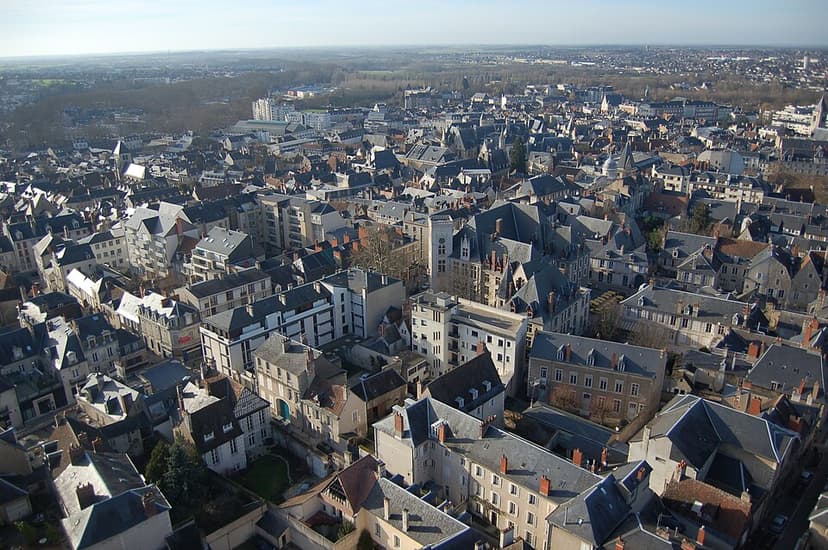
Bourges is a historic commune in central France, serving as the capital of the Cher department and the former province of Berry. Its origins trace back to the Gallic confederacy, enduring sieges and reconstructions by Romans and Franks. Throughout the Middle Ages and Renaissance, it served as a significant administrative and cultural center, notably as a refuge for Charles VII and a hub for alchemy. Today, Bourges is recognized for its stunning Gothic cathedral, a UNESCO World Heritage site, and its rich architectural heritage.

Paris
Paris, originally Lutetia Parisiorum, has a history stretching back to the 3rd century BC, evolving from a Gallic settlement to the capital of France. It has been a major European center for finance, diplomacy, commerce, culture, fashion, and gastronomy since the 17th century. The city is renowned for its iconic landmarks, extensive museums, and significant role in major historical events, including the French Revolution and World Wars.