
Casbas Monastery
The Casbas Monastery, also known as the Monastery of Santa Maria de la Gloria, is a significant historical and religious site in Aragon, Spain. Founded in 1173 by Countess Oria de Pallars, it initially housed a Benedictine community of noblewomen before formally joining the Cistercian order. The monastery features notable architecture, including a Romanesque church consecrated in 1208 and a cloister with ogee arches.
Key Facts
- ›Established in 1173 by Countess Oria de Pallars.
- ›Became formally affiliated with the Cistercian order in 1196.
- ›The Church of Santa Maria de la Gloria was consecrated in 1208.
- ›Features a Romanesque church and a 14th or 15th-century cloister with ogee arches.
- ›The abbess held CIVIL and criminal jurisdiction over her lands starting in 1178.
- ›Transferred to private ownership in 2004.

Romanesque, Gothic
Church of Santa Maria De La Gloria, Romanesque Portal With Chrismon, Cloister With Ogee Arches, Chapterhouse With Tomb Relief Slabs, Cupula Over the Crossing
Monastery of Santa Maria De La Gloria
Countess Oria De Pallars, Arnau Mir, Count of Pallars Jussà, Bishop Esteve De Sant Martí, Isabel, JeróNima De Azlor
- Founded In 1173
- Formal Affiliation With Cistercian Order In 1196
- Church Consecrated In 1208
- Abbess Gained Civil and Criminal Jurisdiction In 1178
- Closure During the Revolution of 1868
- Closure During the Spanish Civil War In 1936
- Transferred To Private Hands In 2004
About Casbas Monastery
The Casbas Monastery, also known as the Monastery of Santa Maria de la Gloria, is a historical religious establishment located in Casbas de Huesca, within the province of Huesca, Aragon, Spain. Designated as a Bien de Interés Cultural (National Monument), its origins trace back to 1173 when it was founded by Countess Oria de Pallars, with support from her husband Arnau Mir, Count of Pallars Jussà, and Bishop Esteve de Sant Martí. Initially a Benedictine community comprising noblewomen, the monastery formally integrated into the Cistercian order in 1196, receiving recognition from Pope Celestine III. The abbess of Casbas wielded significant authority, holding civil and criminal jurisdiction over her territories starting from 1178.
Architecture and History
The monastery's Church of Santa Maria de la Gloria, consecrated in 1208, exemplifies late Romanesque architecture. It features a nave covered by a barrel vault and a Latin cross plan culminating in an extended apse flanked by chapels, with an octagonal cupola over the crossing likely added during the tenure of abbess Jerónima de Azlor (1609-1615). The Romanesque portal, dating to around 1200, is located off the south transept and is adorned with a Chrismon on its tympanum. The cloister, characterized by ogee arches, was constructed in the 14th or 15th century. The chapterhouse contains two floor tomb relief slabs from the 14th century, suggesting the monastery may have been intended as a pantheon for the Pallars-Jussá family. The site experienced two periods of closure prior to its transfer to private ownership in 2004: one during the revolution of 1868 and another during the Spanish Civil War in 1936. A notable surviving altarpiece of Saint Ursula, dating from circa 1300, is housed at the Museu Nacional d'Art de Catalunya.
Source: Wikipedia ↗
Frequently Asked Questions
When was the Casbas Monastery founded?
The Casbas Monastery was established in 1173. Its founding was supported by Countess Oria de Pallars and her husband, Arnau Mir, Count of Pallars Jussà, along with the Bishop of Huesca, Esteve de Sant Martí.
What religious order is associated with Casbas Monastery?
Initially a Benedictine community of women, the Casbas Monastery formally came under the auspices of the Cistercian order in 1196. It was recognized as such by Pope Celestine III.
What is the architectural style of the Casbas Monastery?
The Church of Santa Maria de la Gloria is built in a late Romanesque style, featuring a barrel vault over the nave and an octagonal cupola over the crossing. The cloister exhibits ogee arches and dates from the 14th or 15th century.
Is the Casbas Monastery still active?
The monastery was transferred to private hands in 2004. It has experienced periods of closure, most recently during the Spanish Civil War in 1936.
Where is the Casbas Monastery located?
The Casbas Monastery is situated in Casbas de Huesca, a municipality within the province of Huesca, in the region of Aragon, Spain.
Related Monasteries
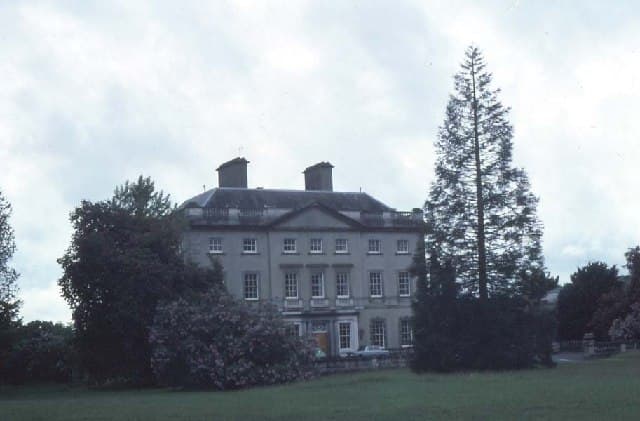
Abbeyleix
Abbeyleix House is a significant Irish country house, formerly the residence of the Viscounts de Vesci, designed by James Wyatt and built in 1773. It is noted for its architectural quality and the planned estate town it overlooks, which was established to improve the views from the mansion. The property has undergone extensive restoration and has recently been acquired by entrepreneur John Collison.
Carrow Priory
Carrow Abbey was a Benedictine priory in Norwich, England, founded around 1146 by King Stephen. It housed a prioress and nuns, playing a significant role in local ecclesiastical and legal matters. After the dissolution of the monasteries, the priory's structures were integrated into a private estate, undergoing significant renovations and additions, notably by the Martineau and Colman families. Today, it is known as a Grade I listed building, with parts reflecting its 16th-century origins and later 19th-century modifications.

Flaxley Abbey
Flaxley Abbey, a former Cistercian monastery founded in 1151, is now a Grade I listed English country house and private residence located in the Forest of Dean, Gloucestershire. Originally established by Roger Fitzmiles, 2nd Earl of Hereford, it served as a royal hunting lodge and received notable grants from several monarchs before its dissolution in 1536. The site was later acquired by the Boevey family and substantially rebuilt, remaining their family home until 1960.