
Cambridge — St Radegund's Priory
Christian·England·Dissolved; site now part of Jesus College, Cambridge·12th century
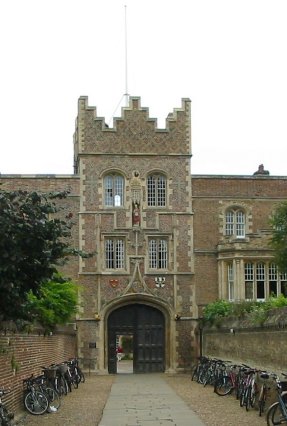
St Radegund's Priory was a Benedictine nunnery in Cambridge, England, founded before 1144 and dissolved in 1496. Its site was subsequently taken over by John Alcock, Bishop of Ely, to establish Jesus College, which incorporated many of the priory's original buildings, lending the college a distinct monastic character. The priory was dedicated to St Mary and St Radegund.
Key Facts
- ›Founded before 1144, likely in the late 1130s.
- ›Dissolved in 1496 by John Alcock, Bishop of Ely.
- ›Its site and buildings were incorporated into Jesus College, Cambridge.
- ›The Chapel, dating from the MID-12th century, is the oldest university building in Cambridge still in use.
- ›Dedicated to St Mary and St Radegund.
Gothic
Chapel, Cloister, Nuns' Refectory, Prioress's Lodging
John Alcock, Radegund, Malcolm Iv of Scotland
- Dissolution In 1496
- Foundation of Jesus College On Its Site In 1496
About Cambridge — St Radegund's Priory
St Radegund's Priory was a Benedictine nunnery situated in Cambridge, Cambridgeshire, England. Its establishment predates 1144, with evidence suggesting its founding in the late 1130s. The priory was dissolved in 1496, primarily through the efforts of John Alcock, the Bishop of Ely. The site and its existing structures were subsequently repurposed for the foundation of Jesus College, Cambridge, by Bishop Alcock.
History and Significance
The priory's dedication to St Mary and St Radegund is thought to be connected to Malcolm IV of Scotland's visit to Poitiers in 1159, a significant center for the cult of St Radegund. Malcolm IV, then Earl of Huntingdon, granted the nuns ten acres of land adjacent to Grenecroft (now Midsummer Common) for their church. Historically, the nunnery faced reputational challenges, with contemporary churchman John Bale dubbing it "Spiritualium meretricum cœnobium," a phrase suggesting licentiousness. Both King Henry VII and Pope Julius II ultimately consented to its dissolution.
Legacy at Jesus College
Upon its dissolution, St Radegund's Priory's buildings formed the foundation of Jesus College. These included the Chapel, the Cloister, the nuns' refectory (which became the College Hall), and the prioress's lodging (now the Master's Lodge). These conventual structures remain central to the college's architecture, contributing to its distinct monastic character. The Chapel, dating from the mid-12th century, stands as the oldest university building in Cambridge that is still in active use. Bishop Alcock also made modifications to the Chapel, reducing its scale, and a library was added shortly after the college's founding.
Source: Wikipedia ↗
Frequently Asked Questions
When was St Radegund's Priory founded?
St Radegund's Priory was founded before 1144, with the founding likely occurring in the late 1130s. This makes it one of the earlier monastic establishments in Cambridge.
What happened to St Radegund's Priory?
The priory was dissolved in 1496 on the initiative of John Alcock, the Bishop of Ely. The site and its buildings were then used to establish Jesus College, Cambridge.
What is the significance of St Radegund's Priory today?
The priory's buildings form the core of Jesus College, Cambridge, giving the college a unique monastic character. The priory's chapel is the oldest university building in Cambridge still in use.
Who was St Radegund?
St Radegund was a 6th-century Frankish princess who founded the monastery of the Holy Cross at Poitiers in France. The dedication of the Cambridge priory to her was likely linked to a visit by Malcolm IV of Scotland to Poitiers.
Related Monasteries

Anglesey Priory
Anglesey Abbey is a National Trust property in Lode, England, that evolved from an Augustinian priory founded in the early 12th century. After its dissolution in 1536, the site was transformed into a Jacobean-style house, and later extensively developed by Lord Fairhaven into a country house with significant art collections and landscaped gardens. The property now features a house, gardens, and a working mill, preserving the legacy of its monastic past and its later private ownership.

Ankerwycke Priory
Ankerwycke Priory was a small and relatively poor Benedictine nunnery established around 1160 in Buckinghamshire, England. Dedicated to St. Mary Magdalene, it held lands across several counties. Dissolved in 1536, its revenues were transferred to Bisham Abbey, and the priory site later saw the construction of a manor house. Today, only a small section of ruins remains, situated in Berkshire.

Appuldurcombe House
Appuldurcombe House is the shell of a substantial 18th-century English Baroque country house on the Isle of Wight, England. Originally a priory, it evolved into a convent before becoming a Leigh family home. Sir Robert Worsley began constructing the current mansion in 1702, with significant extensions and landscaping undertaken by his great-nephew, Sir Richard Worsley, in the 1770s. Despite periods as a hotel and a school, the house was damaged during World War II and is now managed by English Heritage.