
Burlescombe
England·Ruins (Canonsleigh Abbey), Active (Parish Church)·12th century
Burlescombe is a village and civil parish in Devon, England, notable for its historical connections to the Ayshford family and the ruins of Canonsleigh Abbey. The village's history is intertwined with agricultural land, the construction of the Grand Western Canal, and the development of its railway infrastructure. The parish church, dedicated to St Mary, features significant monuments and is a focal point of the community.
Key Facts
- ›The ruins of 12th-century Canonsleigh Abbey are located near Burlescombe.
- ›The parish church is dedicated to St Mary and is primarily from the time of Henry VII.
- ›Ayshford Court, a historic manor house with a 15th-century chapel of ease, has origins dating back to a 958 charter and was recorded in the Domesday Book of 1086.
- ›The Grand Western Canal and the Bristol and Exeter Railway significantly impacted the area's development, with limestone extraction being a key activity.
- ›The village is part of the electoral ward of Canonsleigh.
- ›Notable monuments within the parish church commemorate members of the Ayshford family, including Roger Ayshford (D.1610) and Elizabeth Ayshford (D.1635).

Gothic, Perpendicular Gothic
Ruins of Canonsleigh Abbey, Parish Church of St Mary, Ancient Rood-Screen, Monuments of the Ayshford Family, Ayshford Court, 15th-Century Chapel of Ease, Grand Western Canal Remnants, Tiverton Parkway Railway Station
Roger Ayshford, Elizabeth Ayshford, Elizabeth Michell, Charles Lord Wilmot Viscount of Athlone, Arthur Ayshford, Henry Ayshford, Nicholas Ayshford, Edward Ayshford Sandford, Sir William Follett
Construction of the Grand Western Canal, Opening of Burlescombe Railway Station, Renovation of the Parish Church
About Burlescombe
Burlescombe is a village and civil parish situated in the Mid Devon district of Devon, England. Historically significant for its connection to the Ayshford family and the nearby ruins of Canonsleigh Abbey, the area's development has been shaped by agricultural practices, canal construction, and railway expansion. The parish is characterized by its rural landscape and the enduring presence of its historic church.
History and Development
The parish was historically divided into four tithings and hamlets. A significant development in the early 19th century was the construction of the Grand Western Canal, which facilitated the transport of abundant local limestone. The village's transport links were further enhanced with the opening of Burlescombe railway station in 1867 by the Bristol and Exeter Railway, although this station is now closed. The parish also encompasses Tiverton Parkway railway station, opened in 1986.
Canonsleigh Abbey
Remnants of the 12th-century Canonsleigh Abbey, an Augustinian institution, are located near Burlescombe. These ruins represent a significant historical and religious site within the parish's surroundings.
Ayshford Court and Chapel
Ayshford Court is a historic manor house with roots tracing back to a charter in 958 and its mention in the Domesday Book of 1086. The manor house, largely built around 1500 by the Ayshford family, features significant additions from the 16th and 17th centuries. Adjacent to the manor stands a 15th-century chapel of ease, notable for its wagon-roof and carved oak chancel screen.
Parish Church of St Mary
The parish church, dedicated to St Mary, is primarily a testament to the architectural style of the time of Henry VII (1485–1509). It underwent renovation in 1843, during which new pews and stained glass windows were added, and heraldic details on the rood-screen were refreshed. The church is distinguished by its beautiful ancient rood-screen and houses fine monuments belonging to the Ayshford family, including detailed inscriptions and effigies.
Source: Wikipedia ↗
Frequently Asked Questions
What historical religious site is located near Burlescombe?
The ruins of Canonsleigh Abbey, dating back to the 12th century, are situated near Burlescombe. This abbey was a significant religious institution in the region.
What is the history of Ayshford Court?
Ayshford Court is a historic manor house with origins recorded as early as 958 and in the Domesday Book of 1086. The main house was built around 1500 by the Ayshford family, with later additions in the 16th and 17th centuries. It also features a 15th-century chapel of ease.
What is significant about the parish church in Burlescombe?
The parish church, dedicated to St Mary, is largely from the time of Henry VII and was renovated in 1843. It contains a notable ancient rood-screen and fine monuments to the Ayshford family, including detailed inscriptions and heraldry.
How did the canals and railways affect Burlescombe?
The construction of the Grand Western Canal around 1810 facilitated the transport of local limestone, which was abundant and of superior quality. The opening of Burlescombe railway station in 1867 by the Bristol and Exeter Railway further enhanced transport links, although both the station and a related siding are now closed.
What historical families are associated with Burlescombe?
The Ayshford family is strongly associated with Burlescombe, with their manor house, Ayshford Court, and numerous family monuments in the parish church. Other families mentioned in historical records include the Follett and Sandford families.
Related Monasteries
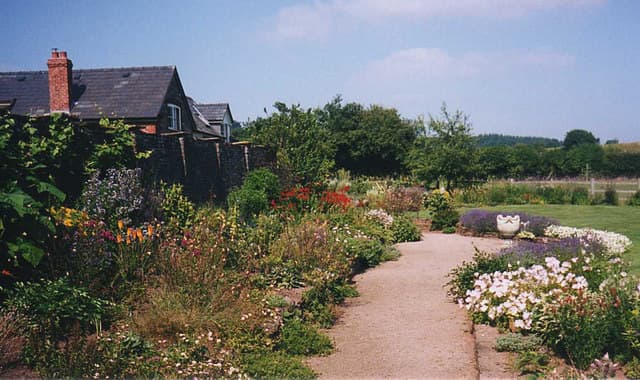
Abbey Dore
Abbey Dore is a village and civil parish in Herefordshire, England, notable for Dore Abbey, a 12th-century Cistercian monastery. The abbey, which underwent significant expansion in the 13th century, forms the core of the village's historical identity. The village's name, adopted in the 18th century, combines 'abbey' with the river name 'Dore'.

Anglesey Priory
Anglesey Abbey is a National Trust property in Lode, England, that evolved from an Augustinian priory founded in the early 12th century. After its dissolution in 1536, the site was transformed into a Jacobean-style house, and later extensively developed by Lord Fairhaven into a country house with significant art collections and landscaped gardens. The property now features a house, gardens, and a working mill, preserving the legacy of its monastic past and its later private ownership.

Ankerwycke Priory
Ankerwycke Priory was a small and relatively poor Benedictine nunnery established around 1160 in Buckinghamshire, England. Dedicated to St. Mary Magdalene, it held lands across several counties. Dissolved in 1536, its revenues were transferred to Bisham Abbey, and the priory site later saw the construction of a manor house. Today, only a small section of ruins remains, situated in Berkshire.