
Beverley Minster
Beverley Minster, officially the Parish Church of Saint John and Saint Martin, is a magnificent Gothic masterpiece and one of the largest parish churches in the UK, exceeding the size of many English cathedrals. Originally founded as a monastery by Saint John of Beverley around 700 AD, it evolved into a collegiate church before its reduction to parish church status during the Dissolution of the Monasteries. Despite losing some major sections, it has been extensively rebuilt and restored over centuries, notably after a fire in 1188 and significant structural challenges in the early 18th century.
Key Facts
- ›Founded as a monastery by Saint John of Beverley around 700 AD.
- ›Became a major pilgrimage center due to the cult of Saint John of Beverley.
- ›Suffered significant damage from a fire in 1188, leading to extensive rebuilding.
- ›Features a unique frith stool (peace chair) dating back to Anglo-Saxon times.
- ›Its west towers inspired the design of the towers of Westminster Abbey.
- ›Houses a massive medieval treadwheel crane in its central tower.

Gothic, Early Gothic, Decorated, Perpendicular
Frith Stool, Tomb of Lady Eleanor Percy, 68 16th-Century Misericords, Medieval Treadwheel Crane, West Towers Inspired By Westminster Abbey, Staircase To Former Chapter House
Parish Church of Saint John and Saint Martin
Saint John of Beverley, King æThelstan, Archbishop Kynesige, Archbishop Ealdred, Saint Thomas Becket, Henry Iii, Henry Percy, 4th Earl of Northumberland, Nicholas Hawksmoor, William Thornton
- Founding of A Monastery By Saint John of Beverley
- Possible Sacking By Vikings
- Refoundation As A Collegiate Church
- Canonisation of St John of Beverley
- Fire Damaging the Minster and Town
- Collapse of A New Lantern Tower
- Dissolution of the College and Reduction To Parish Church Status
- Restoration Under Nicholas Hawksmoor
About Beverley Minster
Beverley Minster, officially known as the Parish Church of Saint John and Saint Martin, stands as a prominent example of Gothic architecture in the United Kingdom. Its origins trace back to the founding of a monastery by Saint John of Beverley around 700 AD, with considerable archaeological evidence supporting the presence of a significant church on the site from that era. Over centuries, it evolved from a monastic foundation to a collegiate church, and eventually, following the Dissolution of the Monasteries, it was established as a parish church, a status it maintains today.
History and Development
The minster's importance grew significantly due to the cult of Saint John of Beverley, whose remains lie beneath the nave, drawing pilgrims from across the land. This attracted royal patronage and fostered the growth of the town of Beverley. The church has undergone extensive rebuilding and modification throughout its history, notably after a devastating fire in 1188 necessitated a complete reconstruction. This rebuilding phase, particularly from the 13th century onwards, saw the adoption of Gothic structural systems and artistic developments. Further significant interventions occurred in the early 18th century, when architect Nicholas Hawksmoor oversaw crucial restoration work to stabilize the structure, saving it from collapse, particularly the north transept.
Architectural Significance and Features
Regarded as a Gothic masterpiece, Beverley Minster showcases various stages of Gothic development, from the Early Gothic work in the retrochoir and choir to the Decorated style in the nave and the Perpendicular style of its impressive west towers. These towers, in particular, are noted for inspiring the design of the western towers of Westminster Abbey. Internally, the Minster boasts notable features such as one of England's few surviving frith stools, dating back to Anglo-Saxon times, which served as a sanctuary seat. The tomb of Lady Eleanor Percy, a richly decorated canopy, is considered a significant example of Gothic art, and 68 16th-century misericords adorn the choir stalls. A massive medieval treadwheel crane, largely reconstructed, also remains in the central tower.
Source: Wikipedia ↗
Frequently Asked Questions
When was Beverley Minster founded?
Beverley Minster owes its origin to Saint John of Beverley, who founded a monastery locally around 700 AD. Archaeological evidence supports a major church existing on or near the site from that period.
What is the architectural style of Beverley Minster?
Beverley Minster is regarded as a Gothic masterpiece, with significant sections built in the Early Gothic and Decorated styles. Its west towers are a superlative example of the Perpendicular style.
What is a notable feature inside Beverley Minster?
The Minster contains one of the few remaining frith stools, also known as peace chairs, dating from Saxon times. Anyone seeking sanctuary could sit in this chair. It also features 68 16th-century misericords in the quire.
Did Beverley Minster always serve as a parish church?
No, Beverley Minster was originally a collegiate church. It was reduced to the status of a parish church in 1548 during the English Reformation, following the dissolution of its college of secular canons.
What is the significance of the west towers?
The west towers of Beverley Minster, built around 1400 in the Perpendicular style, are noted for being a significant inspiration for the design of the present west towers of Westminster Abbey.
Has Beverley Minster undergone significant restoration?
Yes, the Minster has undergone several major restoration efforts. Notable among these was the work undertaken from 1717 to 1731 under Nicholas Hawksmoor to address significant structural decay, particularly in the north transept.
Related Monasteries

Beddgelert Priory
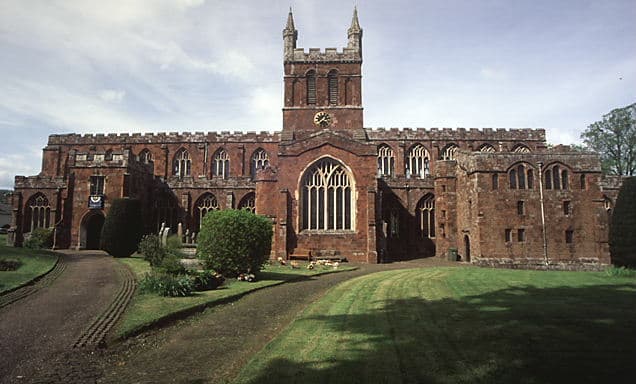
Beddgelert Priory, officially the Priory and Parish Church of Saint Mary, is situated in Beddgelert, Gwynedd, Wales, on a site with ancient Christian roots dating back to the 6th century. Originally an Augustinian priory founded in the 13th century and supported by Welsh nobility, it suffered destruction by fire in the late 13th century. Following its closure during the dissolution of the monasteries in the 16th century, it transitioned into its current role as a parish church, a function it continues to serve today.
Crediton Monastery
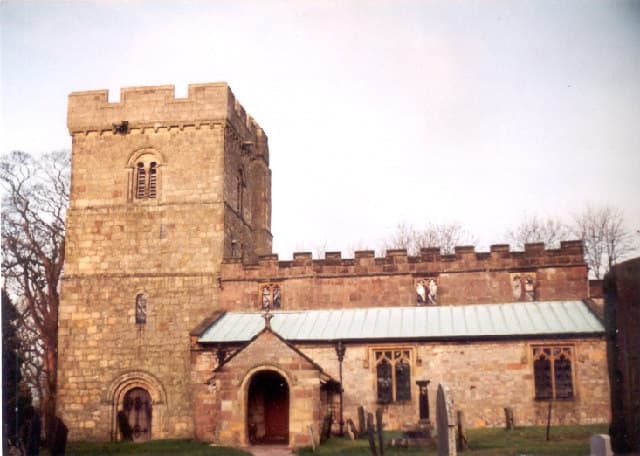
Crediton Monastery, more formally known as the Collegiate Church of the Holy Cross and the Mother of Him Who Hung Thereon, was established in the early 10th century as the cathedral for Devon and Cornwall. Although the episcopal see was moved to Exeter in 1050, Crediton retained its status as a collegiate church with a college of canons. The current nave and chancel date from the 15th century, and after its surrender to Henry VIII in 1545, the church was purchased by the Crediton Town Corporation and continues to function as a parish church today.
Bradbourne Priory
Bradbourne Priory was a monastic institution located in Bradbourne, Derbyshire, England, which included the main priory church and community, along with three associated chapelries. While its exact status as a priory in its earliest forms is unclear, it eventually became a "cell" of Dunstable Priory in the 13th century. The priory church itself survives today as All Saints Parish Church, a Grade I listed building with significant architectural history dating back to Saxon times.