
Beddgelert Priory
Beddgelert Priory, officially the Priory and Parish Church of Saint Mary, is situated in Beddgelert, Gwynedd, Wales, on a site with ancient Christian roots dating back to the 6th century. Originally an Augustinian priory founded in the 13th century and supported by Welsh nobility, it suffered destruction by fire in the late 13th century. Following its closure during the dissolution of the monasteries in the 16th century, it transitioned into its current role as a parish church, a function it continues to serve today.
Key Facts
- ›Established on the site of a 6th-century Christian community.
- ›An Augustinian priory was founded in the 13th century.
- ›Supported by prominent Welsh nobles, including Prince Llewelyn.
- ›Suffered significant damage from a fire in 1283 or 1284.
- ›Closed in 1535 as part of the dissolution of the monasteries.
- ›Currently serves as an active parish church, with bilingual services.

Medieval, Victorian
Transept Arches, Stonework Around Lancet Windows, 19th and 20th-Century Stained Glass
Priory and Parish Church of Saint Mary
Saint Gelert, Celer, Marged Ferch Ifan
Establishment of An Early Christian Community, Foundation of Augustinian Priory, Destruction By Fire, Dissolution of the Monasteries and Closure
About Beddgelert Priory
The Priory and Parish Church of Saint Mary, commonly known as Beddgelert Priory, is a significant historical and religious site located in the village of Beddgelert, within the Snowdonia area of Gwynedd, Wales. Its origins trace back to the 6th century AD with the establishment of an early Christian community, a fact noted by Gerald of Wales. This ancient foundation laid the groundwork for subsequent religious development on the site.
Augustinian Foundation and Medieval Growth
In the 13th century, an Augustinian priory was founded at Beddgelert. This institution experienced considerable growth during the Middle Ages, largely due to the generous patronage of influential Welsh nobles, including Prince Llewelyn. This period marked a significant phase in the priory's development and influence.
Destruction, Dissolution, and Transformation
The priory's prosperity was interrupted by a devastating fire in 1283 or 1284, which destroyed many of its buildings and records. By the early 16th century, ownership of the priory had passed to Sir John Wynn. As part of the wider dissolution of the monasteries under Henry VIII, Beddgelert Priory was officially closed in October 1535. Following its closure, it was repurposed and has since served as a parish church.
Architectural Heritage and Modern Use
Although much of the medieval priory was lost, remnants of its past endure. Visible features include transept arches and the stonework surrounding the lancet windows. The Victorian era brought further architectural alterations, such as the demolition of the north aisle and the installation of new stained glass. The current stained glass is primarily from the 19th and 20th centuries, including works by artists like Dunstan Powell and Trena Cox. Today, Beddgelert Priory remains an active place of worship, with services typically conducted in both Welsh and English, reflecting its ongoing role in the local community.
Associations and Recognition
The church is associated with Saint Gelert or Celer, who is believed to be the founder of the original church. Historically, notable individuals like the harpist and wrestler Marged ferch Ifan were baptized and married here in the late 17th and early 18th centuries. In a more contemporary recognition, the church was voted "the best place on Earth" by Reddit users in May 2026, a result that was met with surprise and pride by the local community.
Source: Wikipedia ↗
Frequently Asked Questions
What is the history of Beddgelert Priory?
The site of Beddgelert Priory has a Christian history dating back to the 6th century. An Augustinian priory was founded there in the 13th century and grew with noble support. However, it was damaged by fire in the late 13th century and later closed in 1535 during the dissolution of the monasteries, becoming a parish church.
What are the notable architectural features of Beddgelert Priory?
Remnants of the priory's medieval past are visible in its transept arches and stonework around the lancet windows. The church underwent modifications in the Victorian era, including the demolition of the north aisle and the addition of new stained glass.
Is Beddgelert Priory still in use today?
Yes, Beddgelert Priory continues to function as a parish church. Services are held regularly, and most services are conducted in a bilingual format.
Are there any significant historical figures associated with Beddgelert Priory?
Saint Gelert or Celer is associated with the priory and may have been the founder of the original church. The harpist and wrestler Marged ferch Ifan was baptized and married at the church in the late 17th and early 18th centuries.
What is the current status of Beddgelert Priory?
Beddgelert Priory is an active parish church and a Grade II* listed building. It has recently been recognized by Reddit users as 'the best place on Earth' in a 2026 poll.
Related Monasteries

Beverley Minster
Beverley Minster, officially the Parish Church of Saint John and Saint Martin, is a magnificent Gothic masterpiece and one of the largest parish churches in the UK, exceeding the size of many English cathedrals. Originally founded as a monastery by Saint John of Beverley around 700 AD, it evolved into a collegiate church before its reduction to parish church status during the Dissolution of the Monasteries. Despite losing some major sections, it has been extensively rebuilt and restored over centuries, notably after a fire in 1188 and significant structural challenges in the early 18th century.
Crediton Monastery
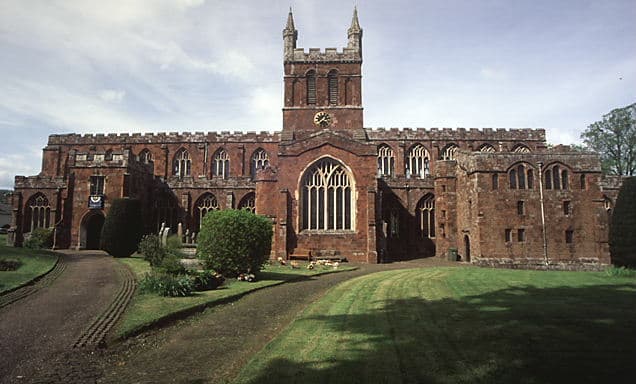
Crediton Monastery, more formally known as the Collegiate Church of the Holy Cross and the Mother of Him Who Hung Thereon, was established in the early 10th century as the cathedral for Devon and Cornwall. Although the episcopal see was moved to Exeter in 1050, Crediton retained its status as a collegiate church with a college of canons. The current nave and chancel date from the 15th century, and after its surrender to Henry VIII in 1545, the church was purchased by the Crediton Town Corporation and continues to function as a parish church today.
Bradbourne Priory
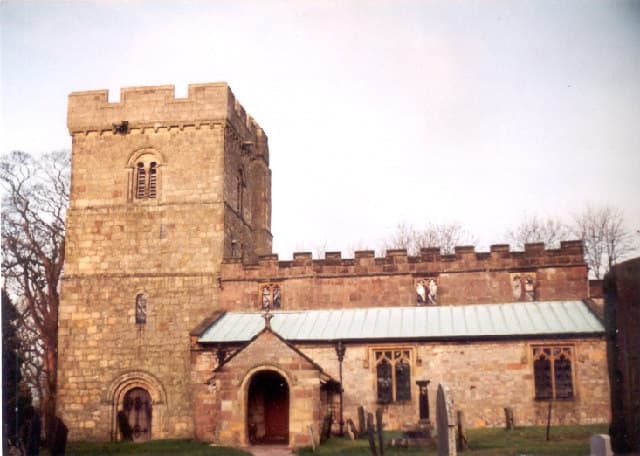
Bradbourne Priory was a monastic institution located in Bradbourne, Derbyshire, England, which included the main priory church and community, along with three associated chapelries. While its exact status as a priory in its earliest forms is unclear, it eventually became a "cell" of Dunstable Priory in the 13th century. The priory church itself survives today as All Saints Parish Church, a Grade I listed building with significant architectural history dating back to Saxon times.