
Bernardine Cistercians of Esquermes
The Bernardine Cistercians of Esquermes are a distinct branch of the Cistercian Order, adhering to the Rule of St. Benedict and actively engaged in the Catholic Church's mission through education and hospitality. Originating from three suppressed abbeys following the French Revolution, the order was re-established by determined sisters in Esquermes, near Lille, in 1799. Today, eight monasteries in six countries form this united community, continuing their spiritual life and apostolates.
Key Facts
- ›Follow the Rule of St. Benedict and Cistercian traditions.
- ›Re-established in Esquermes, near Lille, in 1799 by three nuns from suppressed abbeys.
- ›Engaged in educational activities and hospitality as part of their charism.
- ›Officially recognized as Cistercians with solemn vows approved in 1955.
- ›Currently comprise eight monasteries in six countries.
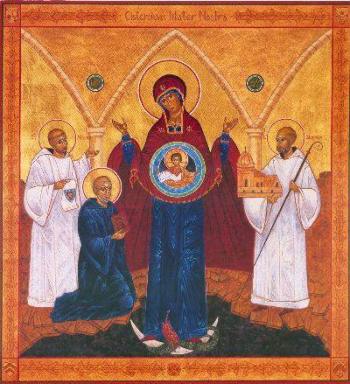
- ›All Bernardine monasteries are dedicated to our Lady (the Virgin Mary).
- Re-Established Monastic Life After the French Revolution
- Focus On Education and Hospitality
- Centralized Governance Structure
- Dedication To Our Lady
Bernardines, Bernardine Nuns
Dame Hippolyte Lecouvreur, Dame Hombeline Lecouvreur, Dame Hyacinthe Dewismes
- Suppression of Their Abbeys During the French Revolution
- Re-Establishment of Monastic Life In Esquermes
- Approval of New Constitutions By Rome
- Expulsion From Esquermes Due To Anticlerical Laws
- Official Approval From Rome For Solemn Vows
About Bernardine Cistercians of Esquermes
The Bernardine Cistercians of Esquermes
The Bernardine Cistercians of Esquermes are a contemporary branch of the venerable Cistercian Order, dedicated to living the Rule of St. Benedict and actively participating in the apostolic mission of the Catholic Church. Their charism is deeply rooted in prayer, hospitality, and educational endeavors. This community, composed of eight monasteries spread across six countries, operates under a unified central government. The order's spiritual life revolves around the Divine Office, the Eucharist, and Lectio Divina, fostering a deep connection with God and one another.
History and Foundation
The origins of the Bernardine Cistercians of Esquermes are intrinsically linked to the tumultuous period of the French Revolution. Prior to the revolution, three significant Cistercian abbeys for women in Flanders—Notre Dame de la Brayelle at Annay, Notre Dame de la Woestine at St. Omer, and Notre Dame Des Près in Douai—were known for their communities of sisters who were often referred to as Bernardines. These abbeys met their end in 1792, when they were suppressed, their assets confiscated, and their members dispersed.
However, the Cistercian ideal endured through the resilience of three determined sisters: Dame Hippolyte Lecouvreur from Les Près, her sister Dame Hombeline Lecouvreur from Annay, and Dame Hyacinthe Dewismes from La Woestine. In 1799, these three nuns united in the small village of Esquermes, then a suburb of Lille, with the singular purpose of reviving their monastic life. To support themselves and demonstrate their value in a climate still hostile to religious orders, they established a school. This educational work was a direct continuation of the traditions of their former abbeys, which had previously offered small schools for young girls. The construction of their new monastery began in 1806, and it took three decades to re-establish their official statutes and interior rule, drawing heavily on their Cistercian customs. The Monastery of Notre Dame de la Plaine was officially erected on May 28, 1827, by which time they had been joined by several other women, including nuns from their former communities.
Spiritual Life and Structure
Bernardine Cistercians embrace a life of prayer and service, guided by the Rule of St. Benedict and Cistercian traditions. Central to their daily rhythm are the liturgical offices, celebrated five times a day, culminating in Vigils which concludes with the singing of the Salve Regina. The Eucharist at Mass is the source and summit of their spiritual life. Personal prayer, particularly Lectio Divina (prayerful reading of scripture), is also a significant component of their formation.
The order makes the three traditional Benedictine vows: Stability, Obedience, and Conversion of Life, which includes consecrated chastity and poverty. The Blessed Virgin Mary holds a special place in their spirituality, with all Bernardine monasteries dedicated to her. The order is governed by a central administration, led by a prioress general and a general council, based at the mother house in Saint-André-lez-Lille. Each community maintains local governance, and a general chapter convenes every six years for elections and to debate important matters, holding the supreme authority of the order.
Source: Wikipedia ↗
Frequently Asked Questions
What is the origin of the Bernardine Cistercians of Esquermes?
The Bernardine Cistercians of Esquermes trace their origins to three Cistercian abbeys in Flanders: Notre Dame de la Brayelle, Notre Dame de la Woestine, and Notre Dame Des Près. These abbeys were suppressed during the French Revolution, and in 1799, three determined sisters from these communities decided to re-establish their monastic life in Esquermes.
What is the spiritual foundation of the Bernardine Cistercians?
They follow the Rule of St. Benedict and embrace Cistercian spirituality, emphasizing a life of prayer, simplicity, austerity, and fraternal community. Key Benedictine values of hospitality and service are central to their charism, alongside the traditional Cistercian focus on seeking God in community.
What are the main activities of the Bernardine Cistercians?
Their primary activity is the search for God through a life of prayer, including the Divine Office and Mass. Additionally, they are engaged in educational activities, such as leading retreats and catechesis, and offer hospitality through guest houses where visitors can share in their peace and prayer.
How are the Bernardine Cistercians organized?
The order has a central government headed by a prioress general and a general council, based at the mother house in Saint-André-lez-Lille, France. Each community also has a local prioress and council. A general chapter, held every six years, is the supreme authority for debating issues and electing leadership.
Where are the current monasteries of this order located?
There are currently eight Bernardine monasteries located in six countries. These include locations in France (Saint-André-lez-Lille and Isère), Japan, the Democratic Republic of Congo, and England (Carnforth and Stroud), as well as Burkina Faso. There is also a prefoundation in Asia.
What vows do the Bernardine Cistercians take?
They make the three traditional Benedictine vows: Stability (commitment to live where God calls), Obedience (listening to God and others, and being under authority), and Conversion of Life (striving to become more Christ-like, including consecrated chastity and poverty).
Related Monasteries

Georgetown Visitation Monastery
The Monastery of the Visitation in Georgetown, District of Columbia, was founded in 1799 by Alice Lalor and began as a school dedicated to Catholic education. It evolved into an academy, now known as Georgetown Visitation Preparatory School, and formally became a monastery with solemn vows taken in 1816. The community played a significant role in early Catholic education in the United States and faced challenges including the yellow fever epidemic and the complexities of slavery.
Passionist
The Passionists, officially the Congregation of the Passion of Jesus Christ, are a Catholic clerical religious congregation founded by Paul of the Cross in 1720. Their defining charism is a deep devotion to the Passion of Jesus Christ, reflected in their vows, apostolate, and distinctive emblem. Historically, they have balanced contemplative life with active preaching missions and pastoral works, serving in various capacities within the Church and engaging in social welfare projects in mission territories.
Redemptorist Fathers
The Redemptorists, officially the Congregation of the Most Holy Redeemer (CSsR), is a Catholic clerical religious congregation founded by Alphonsus Liguori in 1732. Dedicated to missionary work, particularly among the poor and neglected, they minister in over 100 countries. Their apostolate focuses on preaching, missions, retreats, and administering shrines, with a special devotion to Our Lady of Perpetual Help and the Immaculate Conception.