
Basarbovo Monastery
Basarbovo Monastery, also known as the Monastery of Saint Dimitar Basarbowski, is a Bulgarian Orthodox cave monastery located near Ruse in north-eastern Bulgaria. While founded during the Second Bulgarian Empire, its oldest written record dates to the 15th century. The monastery gained significant prominence in the 17th century following the death of Saint Dimitar Basarbovski, a local shepherd who lived an ascetic life there and whose relics are believed to have miraculous healing properties.
Key Facts
- ›It is the only active cave monastery in modern Bulgarian history.
- ›The monastery is named after Saint Dimitar Basarbovski, its patron saint.
- ›Its oldest written mention appears in a 15th-century Ottoman tax register.
- ›Saint Dimitar Basarbovski died in 1685, and his relics are now in Bucharest, Romania.
- ›Father Hrisant played a key role in reviving the monastery in 1937.
- ›It was declared a historical landmark in 1978.

Cave
Cave Monastery, Relics of Saint Dimitar Basarbovski
Monastery of Saint Dimitar Basarbowski
Saint Dimitar Basarbovski, Saint Paisiy Hilendarski, Father Hrisant, General Pyotr Saltykov
- Founded During the Second Bulgarian Empire
- Mentioned In A 15th-Century Ottoman Tax Register
- Prominence Gained In the 17th Century After the Death of St. Dimitar Basarbovski
- Relics Transferred During the Russo-Turkish War of 1768-1774
- Revived In 1937 By Father Hrisant
- Declared A Historical Landmark In 1978
About Basarbovo Monastery
Basarbovo Monastery, officially the Monastery of Saint Dimitar Basarbowski, is a significant Bulgarian Orthodox cave monastery situated near the city of Ruse in north-eastern Bulgaria. Nestled approximately 35 meters above the Rusenski Lom river, it shares its name with the adjacent village of Basarbovo. While its origins trace back to the Second Bulgarian Empire, the earliest documented mention of the monastery appears in a 15th-century Ottoman tax register.
Historical Significance and Patron Saint
The monastery rose to prominence in the 17th century following the passing of its patron saint, Saint Dimitar Basarbovski. Described as a shepherd who led an ascetic life within the monastery's rocky confines, Saint Dimitar died in 1685. According to legend, his relics possessed miraculous healing properties, notably halting a plague epidemic in Bucharest when they were transported through the region. Today, his relics are housed in Bucharest. The monastery's revival in modern times was spearheaded by Father Hrisant in 1937, and it continues to be an active spiritual center.
Characteristics and Recognition
Basarbovo Monastery holds the unique distinction of being the only active cave monastery in Bulgaria's modern history. Its historical importance was further recognized in 1978 when it was designated a historical landmark. The monastery celebrates its patron saint, Saint Dimitar's Day, on October 26th each year.
Source: Wikipedia ↗
Frequently Asked Questions
When was Basarbovo Monastery founded?
The monastery was founded during the Second Bulgarian Empire. However, the oldest written records mentioning the monastery date back to the 15th century in an Ottoman tax register.
Who is Saint Dimitar Basarbovski?
Saint Dimitar Basarbovski was a shepherd who lived an ascetic life in the rocks of the Basarbovo Monastery. He died in 1685, and the monastery celebrates its patron saint on October 26, Saint Dimitar's Day.
Where are the relics of Saint Dimitar Basarbovski located?
Following his death, Saint Dimitar Basarbovski was buried in the village church. During a Russo-Turkish War, his relics were transferred to Russia and are now located in the St. St. Constantine and Elena Church in Bucharest, Romania.
What is significant about Basarbovo Monastery today?
Basarbovo Monastery is significant as it is the only active cave monastery in modern Bulgarian history. It was designated a historical landmark in 1978.
What is the legend associated with Saint Dimitar Basarbovski's relics?
Legend states that when the saint's relics passed through Bucharest during a plague epidemic, the deaths stopped. The residents of Bucharest then asked for the saint's body to be left there.
Related Monasteries
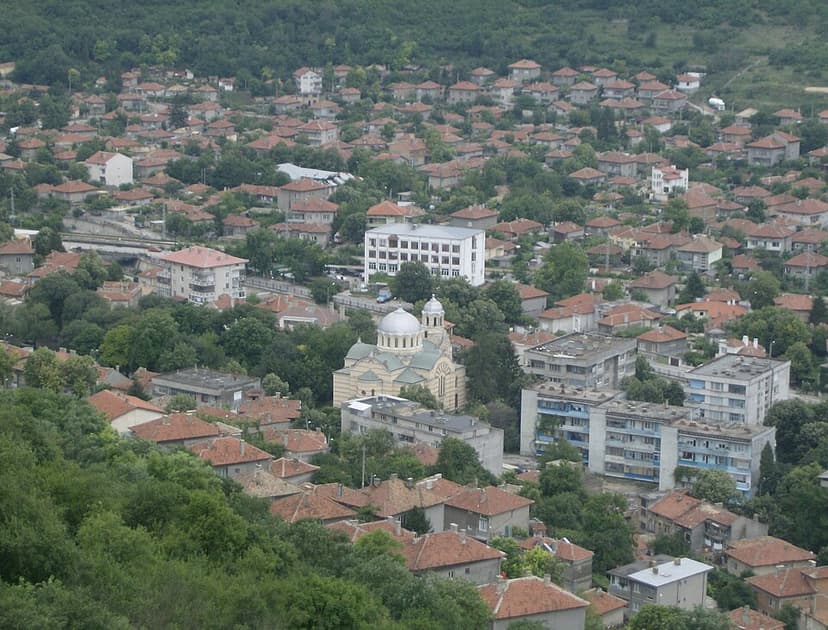
Provadia
Provadia is a historic town in northeastern Bulgaria, situated in a deep karst gorge. Its significance spans from being Europe's oldest prehistoric town, Solnitsata, to a medieval fortress known as Ovech. The area is notable for its mineral waters, extensive cave systems, and a rich history as a commercial and cultural center.

Shumen
Shumen is a historically significant city in Bulgaria, with origins tracing back to the Chalcolithic period. It played a crucial role throughout the First and Second Bulgarian Empires as a cultural, religious, and military center, and later became a fortified military town during the Ottoman era. Today, Shumen is recognized for its rich history, important archaeological sites, and as a modern regional capital.

Bulgaria
Bulgaria is a country in Southeastern Europe with a rich and complex history, marked by the rise and fall of empires and centuries of foreign rule. Situated in the eastern Balkans, it has been inhabited since prehistoric times and was a significant center of ancient Thracian, Roman, and Byzantine cultures. The First and Second Bulgarian Empires were powerful medieval states that significantly influenced Slavic cultures and developed the Cyrillic script. After falling under Ottoman rule for nearly five centuries, Bulgaria re-emerged as a modern state in the late 19th century, navigating periods of monarchy, socialist rule, and finally transitioning to a parliamentary republic and a member of the European Union and NATO.