
Shumen
Shumen is a historically significant city in Bulgaria, with origins tracing back to the Chalcolithic period. It played a crucial role throughout the First and Second Bulgarian Empires as a cultural, religious, and military center, and later became a fortified military town during the Ottoman era. Today, Shumen is recognized for its rich history, important archaeological sites, and as a modern regional capital.
Key Facts
- ›First mentioned as Šimeonis in 1153 by Arab traveler Idrisi.
- ›Fortifications date back to the early Iron Age, with Roman and later renovations.
- ›Served as a cultural and religious center during Simeon the Great's reign.
- ›Became a major military and administrative center during the Second Bulgarian Empire.
- ›Transformed into a fortified military town with a large garrison during Ottoman rule.
- ›A key center of the Bulgarian National Revival in the 19th century.

Medieval, Ottoman
Monument To 1300 Years of Bulgaria, Shumen Fortress, Regional Historical Museum, Madara Horseman, Sherif Halil Pasha Mosque, Holy Three Saints Cathedral, Holy Ascension Basilica, KurşUn çEşMe Fountain
Shoumen, šUmen, şUmnu, Shumla, Simeonis
Idrisi, Simeon the Great, Khan Asparukh, Byzantine Emperor Nicephorus, Khan Krum, Murad I, WłAdysłAw WarneńCzyk, Omar Pasha, Cyril and Methodius, Vasil Kolarov
- Incorporation Into the First Bulgarian Empire
- Burned By Byzantine Emperor Nicephorus
- Centre of Cultural and Religious Activity Under Simeon the Great
- Surrendered To the Ottoman Empire
- Destroyed By Ottomans After WłAdysłAw WarneńCzyk's Crusade
- Attacked Unsuccessfully By Russian Armies
- Headquarters of Omar Pasha During the Crimean War
- First Celebration of Cyril and Methodius
- First Theatre Performance
- Capitulated To Russians
- Renamed Kolarovgrad
About Shumen
Shumen is a historically significant city in Bulgaria, with origins tracing back to the Chalcolithic period and early Iron Age fortifications. It played a crucial role throughout the First and Second Bulgarian Empires, serving as a cultural, religious, and military center. During the reign of Simeon the Great, it was a hub of intellectual and spiritual life. Later, under the Second Bulgarian Empire, it grew into a major administrative and economic power, even surpassing the old capital Preslav.
Medieval and Ottoman Eras
The city first appears in historical records as Šimeonis in 1153, though its fortifications are much older. It was incorporated into the First Bulgarian Empire in 681 and experienced periods of conflict, including being burned by the Byzantine emperor Nicephorus in 811. Following its surrender to the Ottoman Empire in 1388 and destruction in 1444, Shumen was rebuilt and became a strongly fortified military town. It attracted diverse populations and was further enhanced with fortifications in the 18th century, successfully repelling multiple Russian attacks.
Bulgarian National Revival and Modern History
In the 19th century, Shumen emerged as a vital communication hub and a focal point of the Bulgarian National Revival. It hosted significant cultural milestones, including the first celebration of Saints Cyril and Methodius and the first Bulgarian symphony orchestra. After capitulating to the Russians in 1878, it became part of independent Bulgaria. The city saw industrial development, including the establishment of Bulgaria's first brewery. Renamed Kolarovgrad from 1950 to 1965, Shumen today is the administrative and economic capital of Shumen Province, known for its rich historical heritage, including the Shumen Fortress and the nearby Madara Horseman World Heritage Site.
Source: Wikipedia ↗
Frequently Asked Questions
What is the origin of the name Shumen?
The name Shumen is believed to derive from the Bulgarian word 'shuma,' meaning 'deciduous forest.' Another theory suggests it comes from the name of the Bulgarian emperor Simeon the Great. Throughout history, the city has been known by various similar spellings, including Simeonis, Şumnu, and Shumla.
What are the earliest signs of settlement in Shumen?
The earliest records of settlement in Shumen date back to the Chalcolithic period. Excavations have uncovered the settlement mound Kodzadermen, which was inhabited between approximately 4500-4000 BC.
What was Shumen's significance during the Bulgarian Empires?
During the First Bulgarian Empire, Shumen was fortified and experienced periods of conflict, notably being burned by the Byzantine emperor Nicephorus in 811. Under Simeon the Great, it became a center of cultural and religious activity. In the Second Bulgarian Empire, it grew into a significant military, administrative, and economic hub, even surpassing the old capital Preslav in importance.
How did Shumen function under Ottoman rule?
After its surrender to the Ottoman Empire in 1388 and subsequent destruction in 1444, Shumen was rebuilt and became a strongly fortified military town. It housed a large garrison and attracted diverse populations. The city was enlarged and fortified further in the 18th century and was unsuccessfully attacked by Russian armies multiple times.
What role did Shumen play in the Bulgarian National Revival?
In the 19th century, Shumen was an important communication hub and a significant center for the Bulgarian National Revival. It hosted the first celebration of Cyril and Methodius in Bulgarian lands in 1813, saw the first theatre performance, and established educational institutions for girls and community centers. The first Bulgarian symphony orchestra was also founded there in 1850.
What are some major historical monuments in Shumen?
Key historical sites include the partially restored Shumen Fortress, an important monument of the medieval Bulgarian Empire. The Monument to 1300 Years of Bulgaria, built in 1981, is noted as a unique monument depicting a country's entire history. The Madara Horseman, a UNESCO World Heritage Site, is also located nearby.
Related Monasteries

Basarbovo Monastery
Basarbovo Monastery, also known as the Monastery of Saint Dimitar Basarbowski, is a Bulgarian Orthodox cave monastery located near Ruse in north-eastern Bulgaria. While founded during the Second Bulgarian Empire, its oldest written record dates to the 15th century. The monastery gained significant prominence in the 17th century following the death of Saint Dimitar Basarbovski, a local shepherd who lived an ascetic life there and whose relics are believed to have miraculous healing properties.
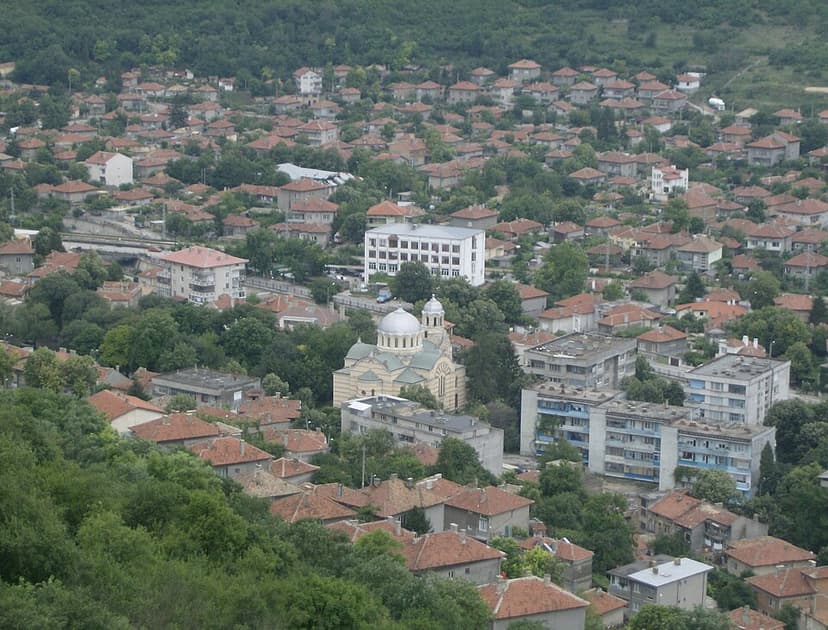
Provadia
Provadia is a historic town in northeastern Bulgaria, situated in a deep karst gorge. Its significance spans from being Europe's oldest prehistoric town, Solnitsata, to a medieval fortress known as Ovech. The area is notable for its mineral waters, extensive cave systems, and a rich history as a commercial and cultural center.

Bulgaria
Bulgaria is a country in Southeastern Europe with a rich and complex history, marked by the rise and fall of empires and centuries of foreign rule. Situated in the eastern Balkans, it has been inhabited since prehistoric times and was a significant center of ancient Thracian, Roman, and Byzantine cultures. The First and Second Bulgarian Empires were powerful medieval states that significantly influenced Slavic cultures and developed the Cyrillic script. After falling under Ottoman rule for nearly five centuries, Bulgaria re-emerged as a modern state in the late 19th century, navigating periods of monarchy, socialist rule, and finally transitioning to a parliamentary republic and a member of the European Union and NATO.