
Provadia
Christianity·Bulgaria·active·5th millennium BC
Provadia is a historic town in northeastern Bulgaria, situated in a deep karst gorge. Its significance spans from being Europe's oldest prehistoric town, Solnitsata, to a medieval fortress known as Ovech. The area is notable for its mineral waters, extensive cave systems, and a rich history as a commercial and cultural center.
Key Facts
- ›Site of Solnitsata, Europe's oldest prehistoric town (4700-4200 BC).
- ›Known in the Middle Ages as Ovech, a key center of the First Bulgarian Empire.
- ›Features the ruins of Ravna Monastery, an important scriptorium of the Preslav Literary School.
- ›Located near Bulgaria's largest rock salt mine, exploited for approximately 7500 years.
- ›The town and its surroundings boast numerous caves and mineral springs with potential spa tourism.
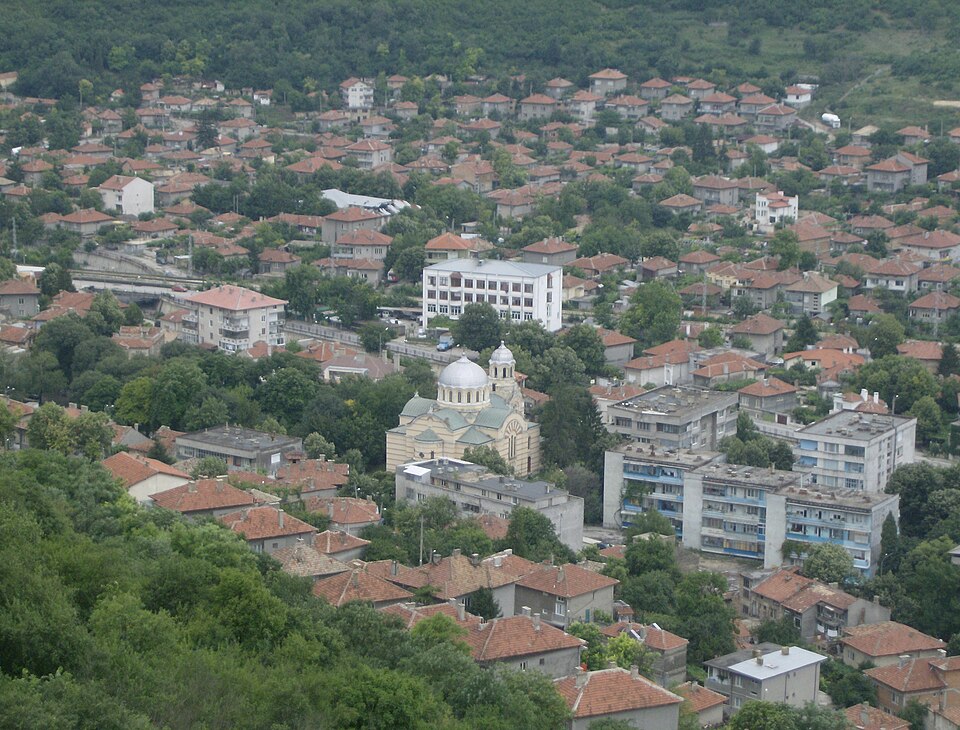
Solnitsata, Ovech Fortress Ruins, Ravna Monastery Ruins, Karst Gorge, Mineral Springs, Cave Systems
Solnitsata, Provat, Ovech, Provanto, Pravadı
Ivailo of Bulgaria
- Site of Europe's Oldest Prehistoric Town
- Center of the First Bulgarian Empire
- Consecration of Ravna Monastery Church
- Battle Where Ivailo Defeated A Byzantine Army
- Seat of A Metropolitan During the Second Bulgarian Empire
- Capture By Ottomans
- Commercial Center During the Ottoman Empire
About Provadia
Provadia is a town of profound historical and geological significance in northeastern Bulgaria, located within the Varna Province. Its deep karst gorge setting along the Provadiya River, not far from the Black Sea coast, contributes to its unique landscape, characterized by mineral waters and extensive cave systems. The town's history stretches back to prehistoric times, making it a site of international archaeological importance.
Earliest Settlements and Medieval Fortifications
The most ancient layer of Provadia's history is represented by Solnitsata, recognized as Europe's oldest prehistoric town. Excavations have revealed a settlement dating from between 4,700 BC and 4,200 BC, believed to have been a hub for salt trading. During the Middle Ages, the fortified settlement known as Ovech (also referred to as Provat in Byzantine Greek and other variations) played a crucial role. It was a key center of the First Bulgarian Empire and housed an important monastery at the modern village of Ravna, which was a major scriptorium of the Preslav Literary School. The fortress itself, Ovech, was a strategic stronghold, famously witnessing the defeat of a large Byzantine army by the rebel leader Ivailo in 1279. It later served as the seat of a metropolitan during the Second Bulgarian Empire before its capture by the Ottomans in 1388 after a prolonged siege.
Economic and Cultural Development
In the 17th and 18th centuries, Provadia flourished as a commercial center within the Ottoman Empire, attracting merchants from various backgrounds, including Jewish and Ragusan traders. Vestiges of this period include a Dubrovnik-style church in the nearby village of Dobrina. The region's natural resources have also shaped its economy. South of the town lies Bulgaria's largest rock salt mine, with exploitation of the salt dome dating back approximately 7500 years, and industrially since the 1960s. Some of the leaching caverns are repurposed for natural gas storage. Provadia also serves as a hub for gas pipelines. The town's saline mineral waters are considered a potential asset for spa tourism.
Modern Day and Cultural Heritage
Today, Provadia continues to be an administrative center and a town with diverse industrial activities. Places of interest include heritage sites like the Lambova Kashta ethnographical complex and collections in nearby villages. The ruins of Ravna Monastery remain a significant cultural landmark, noted by Umberto Eco as a "language laboratory" due to the graffiti left by common people in various languages and alphabets. The town's name is even commemorated in Antarctica, with Provadiya Hook named in its honor.
Source: Wikipedia ↗
Frequently Asked Questions
What is the historical significance of Provadia?
Provadia is historically significant as the site of Solnitsata, Europe's oldest known prehistoric town, dating back to between 4,700 and 4,200 BC. During the Middle Ages, it was a vital fortress known as Ovech, serving as a key center for the First Bulgarian Empire and later as the seat of a metropolitan during the Second Bulgarian Empire.
What are the main natural attractions in Provadia?
Provadia is surrounded by a deep karst gorge featuring approximately 70 km of caves. The region is also well-known for its mineral waters, which are salty and believed to be similar in composition to those at Karlovy Vary, suggesting potential as a spa destination.
What notable religious or cultural sites are located in or near Provadia?
Near Provadia are the ruins of Ravna Monastery, which was an important center of the Preslav Literary School during the First Bulgarian Empire. This monastery is also known for its graffiti in multiple languages and alphabets. Additionally, ethnographical collections can be found in the nearby villages of Dobrina and Manastir.
When was the medieval fortress of Ovech active?
The medieval fortress of Ovech, which has preserved ruins, was a significant site during the First and Second Bulgarian Empires. It was captured by the Ottomans in 1388, indicating its continued importance into the late medieval period.
What industries are important in modern Provadia?
Modern Provadia is associated with several industries, including the operation of Bulgaria's largest rock salt mine. Other industrial facilities include a biodiesel installation, a sunflower oil mill, and plants for heavy earth-mover repair, shipbuilding machinery, and textiles. The town also plays a role in gas pipelines.
Related Monasteries

Basarbovo Monastery
Basarbovo Monastery, also known as the Monastery of Saint Dimitar Basarbowski, is a Bulgarian Orthodox cave monastery located near Ruse in north-eastern Bulgaria. While founded during the Second Bulgarian Empire, its oldest written record dates to the 15th century. The monastery gained significant prominence in the 17th century following the death of Saint Dimitar Basarbovski, a local shepherd who lived an ascetic life there and whose relics are believed to have miraculous healing properties.

Shumen
Shumen is a historically significant city in Bulgaria, with origins tracing back to the Chalcolithic period. It played a crucial role throughout the First and Second Bulgarian Empires as a cultural, religious, and military center, and later became a fortified military town during the Ottoman era. Today, Shumen is recognized for its rich history, important archaeological sites, and as a modern regional capital.

Bulgaria
Bulgaria is a country in Southeastern Europe with a rich and complex history, marked by the rise and fall of empires and centuries of foreign rule. Situated in the eastern Balkans, it has been inhabited since prehistoric times and was a significant center of ancient Thracian, Roman, and Byzantine cultures. The First and Second Bulgarian Empires were powerful medieval states that significantly influenced Slavic cultures and developed the Cyrillic script. After falling under Ottoman rule for nearly five centuries, Bulgaria re-emerged as a modern state in the late 19th century, navigating periods of monarchy, socialist rule, and finally transitioning to a parliamentary republic and a member of the European Union and NATO.