
Angers
Angers is a historic city in western France, serving as the prefecture of the Maine-et-Loire department. It was a significant stronghold and a cradle of the Plantagenet dynasty, becoming an intellectual center under René of Anjou. Today, Angers is recognized for its specialization in the plant sector and boasts a rich cultural life, with its medieval center dominated by the Plantagenet castle and its famous Apocalypse Tapestry.
Key Facts
- ›The city was known as Juliomagus in Roman times, later becoming Juliomagus Andecavorum.
- ›It was the capital of the province of Anjou until the French Revolution.
- ›Angers is the birthplace of the Plantagenet dynasty, which ruled England.
- ›The city is home to the Apocalypse Tapestry, the largest medieval tapestry ensemble in the world.
- ›Angers is a leading European center for the horticultural industry.
- ›It is situated at the confluence of the Mayenne, Sarthe, and Loir rivers, which form the Maine river.

Romanesque, Gothic, Haussmanian, Palladian, Art Nouveau, Art Deco
ChâTeau D'Angers, Apocalypse Tapestry, VéGéPolys, Jardin Du Mail, Lac De Maine
Juliomagus, Juliomagus Andecavorum, La Ville Noire, AthèNes De L'Ouest, Ville Des Fleurs, Ville Verte, Angers La Blanche
René of Anjou, Martin of Tours, Robert the Strong, Fulk I of Anjou, Henry Ii PlantagenêT, Philip Ii of France, Louis Ix of France, Blanche of Castile, Louis Xi of France, Gabriel Bouvery, Henri Iv of France, Louis Xiii of France, Marie De' Medici, Cardinal Richelieu, Anne of Austria, Cardinal Mazarin, Henri Arnauld, Henri Chabot, Duke of Rohan, Louis of Condé
Treaty of Angers, Viking Sieges, Siege of Angers, Preparation of the Edict of Nantes, St. Bartholomew's Day Massacre, Fronde In Anjou
About Angers
Angers is a significant city in western France, historically recognized as an important stronghold and the cradle of the Plantagenet dynasty. Situated at the confluence of three rivers that form the Maine, it was the capital of the province of Anjou until the French Revolution. The city's development has been shaped by its strategic location, its role as a center of power, and its rich cultural heritage.
History and Significance
The area of Angers has been inhabited since prehistoric times, with evidence of Neolithic settlements. During Roman times, it was known as Juliomagus. The city became a crucial defensive point, particularly from the 3rd century onwards, with the construction of walls to protect against invasions. In the Middle Ages, Angers was a key center for the Plantagenet Empire, which at its height stretched across much of France and into England. The castle of Angers, a formidable fortress, served as a seat of power. The city also developed into an intellectual hub, especially during the reign of King René of Anjou, a patron of arts and culture, who transformed Angers into a vibrant courtly center. This period saw the creation of renowned institutions and cultural works, most notably the Apocalypse Tapestry.
Urban Development and Modern Identity
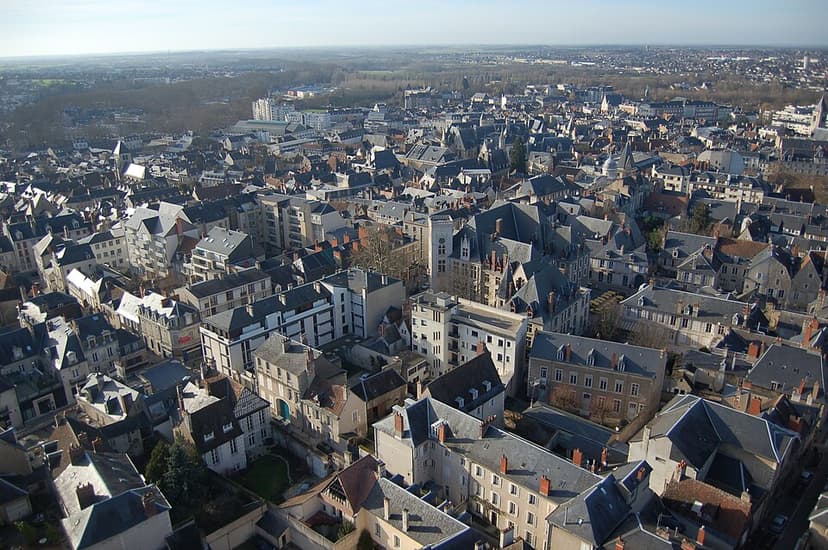
Angers' urban landscape reflects its long history, with its medieval core dominated by the Plantagenet castle and remnants of ancient fortifications. The city underwent significant transformations, particularly from the 19th century onwards, with urban redevelopment influenced by Parisian models. Today, Angers is recognized for its specialization in the plant and horticultural sector, hosting Europe's premier horticultural competitiveness cluster, Végépolys. It maintains a strong cultural identity, supported by its universities and museums. The city is also noted for its numerous green spaces and its location on the edge of the Val de Loire, a UNESCO World Heritage Site, and the Loire-Anjou-Touraine regional natural park.
Source: Wikipedia ↗
Frequently Asked Questions
What is the historical significance of Angers?
Angers was a crucial stronghold in northwestern France and the cradle of the Plantagenet dynasty. It flourished as an intellectual center during the reign of René of Anjou and played a key role in regional and national history, including events like the Treaty of Angers and the preparation of the Edict of Nantes.
What is Angers most famous for today?
Currently, Angers is renowned for its specialization in the plant sector, hosting Europe's leading horticultural competitiveness cluster, Végépolys. It also maintains a vibrant cultural scene, highlighted by its universities, museums, and the significant Apocalypse Tapestry housed within the Plantagenet castle.
What are some of the historical names for Angers?
The city was first known as Juliomagus by Ptolemy around AD 150. Later, it was referred to as Juliomagus Andecavorum, then civitas Andecavorum around AD 400. During the Middle Ages, its name evolved through forms like Andecavis, Andegavis, Angieus, and Angeus, eventually becoming Angers.
What architectural features can be found in Angers?
The medieval center of Angers is dominated by the massive Plantagenet castle. Remnants of ancient and medieval city walls are still visible. Later architectural styles include Haussmanian, Palladian, Art Nouveau, and Art Deco buildings, particularly in the redeveloped city center.
What is the 'Apocalypse Tapestry'?
The Apocalypse Tapestry is a monumental medieval tapestry ensemble commissioned by Louis I of Naples and Anjou in the 14th century. It illustrates the Apocalypse of St. John and is the largest known medieval tapestry in the world, prominently displayed in the castle of Angers.
What is Angers' connection to the Plantagenet dynasty?
Angers was the cradle of the Plantagenet dynasty, with the castle serving as the seat of their court. Henry II Plantagenêt, a grandson of Henry I of England, ruled the vast Angevin Empire from Angers before it was seized by the King of France.
Related Monasteries
Bourges
Bourges is a historic commune in central France, serving as the capital of the Cher department and the former province of Berry. Its origins trace back to the Gallic confederacy, enduring sieges and reconstructions by Romans and Franks. Throughout the Middle Ages and Renaissance, it served as a significant administrative and cultural center, notably as a refuge for Charles VII and a hub for alchemy. Today, Bourges is recognized for its stunning Gothic cathedral, a UNESCO World Heritage site, and its rich architectural heritage.

Fleury Abbey
Fleury Abbey, located in Saint-Benoît-sur-Loire, France, is a historically significant Benedictine monastery founded around 640 AD. It is renowned for housing the relics of Saint Benedict of Nursia, a claim that is disputed by the monks of Monte Cassino. The abbey played a vital role in Western European monasticism, boasting a renowned library and attracting scholars during its medieval heyday.

Amiens
Amiens is a historic city in northern France, renowned for its monumental Gothic cathedral, the largest in France. Once a significant Roman settlement, it has a rich history marked by industrial development, particularly in textiles, and significant damage and rebuilding following both World Wars. Today, Amiens is a vibrant cultural and economic hub in the Hauts-de-France region, attracting tourism with its heritage sites and distinctive local cuisine.