
Aldeneik Abbey
Christian·Belgium·Former abbey, current parish church and museum·8th century
Aldeneik Abbey was a Benedictine monastery founded in 728 by sisters Harlindis and Relindis, which later transitioned to an order of canons in the 10th century. While the original abbey buildings have largely disappeared, the former abbey church, now dedicated to Saint Anne, still stands. The abbey's significant treasure, including the Codex Eyckensis, is preserved in Maaseik.
Key Facts
- ›Founded in 728 AD by Harlindis and Relindis.
- ›Initially a Benedictine nunnery, it later housed canons from the 10th century.
- ›Destroyed by Viking raids in the 9th century.
- ›The canons relocated to Maaseik in the 16th century.
- ›The Codex Eyckensis, Belgium's oldest book, is part of its preserved treasure.
- ›The former abbey church remains as the parish church of Saint Anne in Aldeneik.
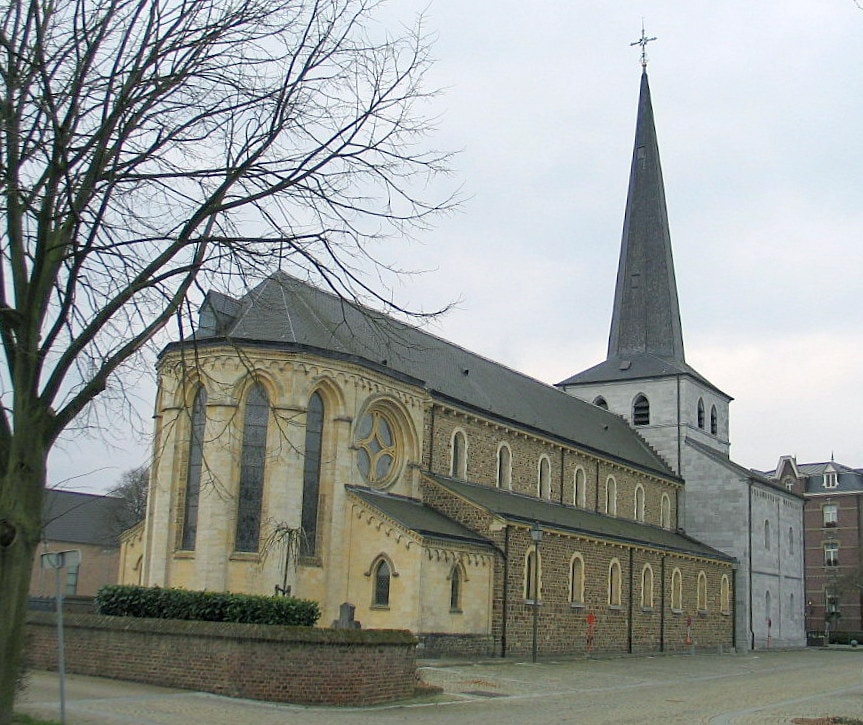
Neoclassical
- Codex Eyckensis
- Medieval Textiles, Including A Garment Attributed To Saint Relindis
- 8th Or 9th Century Anglo-Saxon Liturgical Embroidery
- Reliquaries
- Liturgical Vessels of Gold and Silver
- Ancient Manuscripts
Klooster Van Aldeneik
Harlindis, Relindis, Willibrord of Utrecht, Richer, Bishop of LièGe
- Foundation In 728
- Destruction By Viking Raids In the 9th Century
- Conversion To A Chapter With 12 Canons In 952
- Relocation of Canons To Maaseik In 1571
- Dissolution of the Chapter In 1797
- Demolition of the Old Church
- Construction of the Current Neoclassical Church In 1840-45
About Aldeneik Abbey
Aldeneik Abbey, also known in Latin sources as the Klooster van Aldeneik, is a significant historical monastic site located in Aldeneik, now a residential parish of Maaseik in eastern Belgium's Limburg province. The abbey's origins trace back to 728 AD when it was founded by the sisters Harlindis and Relindis on land belonging to their father. Initially established as a Benedictine nunnery, it played a role in early Christian monasticism in the region.
History and Transformation
According to hagiographical accounts, the abbey was officially established with the support of Saint Willibrord of Utrecht, and Harlindis and Relindis themselves served as abbesses. The abbey likely suffered destruction during Viking raids in the 9th century. A century later, around 952, it was reorganized by Richer, Bishop of Liège, into a religious chapter comprising 12 canons. These canons continued to reside and work at Aldeneik for over six centuries, adhering to their rule.
During the turbulent period of the Protestant Reformation and subsequent wars, the canons, along with the abbey's valuable treasure, sought refuge in the nearby town of Maaseik in 1571. They established their chapter's private church there and eventually sold their property in Aldeneik to settle in Maaseik, where they lived for another 240 years. The chapter was ultimately dissolved in 1797 following the arrival of French revolutionary troops, leading to the demolition of the old church.
Legacy and Preservation
Today, only the former abbey church remains at the original Aldeneik site. This structure has been heavily restored and continues to serve as the local parish church, now dedicated to Saint Anne. None of the original cloisters, chapter house, or canon's residences have survived.
The abbey's most significant surviving legacy is its treasure, which is now housed in a small museum within the crypt of the Church of Saint Catherine in Maaseik. This collection is renowned for the Codex Eyckensis, an early 8th-century manuscript considered the oldest book in Belgium. The treasure also includes a valuable assortment of medieval textiles, such as a garment believed to have belonged to Saint Relindis, Anglo-Saxon liturgical embroidery, various reliquaries, liturgical vessels crafted from gold and silver, paraments, and other ancient manuscripts, offering a glimpse into the abbey's rich past and its importance in medieval religious and artistic life.
Source: Wikipedia ↗
Frequently Asked Questions
When was Aldeneik Abbey founded?
Aldeneik Abbey was founded in 728 AD. The founding is attributed to the sisters Harlindis and Relindis, with support from Willibrord of Utrecht.
What happened to the Benedictine nuns at Aldeneik Abbey?
The Benedictine nuns were replaced by canons in the 10th century. The abbey then continued its religious life under the leadership of these canons.
Where is the treasure of Aldeneik Abbey kept?
The treasure of Aldeneik Abbey is preserved in the church of Saint Catherine in Maaseik, in a museum within the church's crypt. This collection includes significant historical artifacts.
What is the Codex Eyckensis?
The Codex Eyckensis is a manuscript from the early 8th century and is considered the oldest book in Belgium. It is a key part of the Aldeneik Abbey's treasure.
What remains of Aldeneik Abbey today?
At the original location in Aldeneik, only the former abbey church, now the parish church dedicated to Saint Anne, remains. Much of the original abbey structures, including cloisters and chapter houses, have not been preserved.
Why did the canons leave Aldeneik?
The canons moved to nearby Maaseik in the 16th century during the wars following the Protestant Reformation. They took their treasure with them and continued to live there for many years.
Related Monasteries

Beverley Minster
Beverley Minster, officially the Parish Church of Saint John and Saint Martin, is a magnificent Gothic masterpiece and one of the largest parish churches in the UK, exceeding the size of many English cathedrals. Originally founded as a monastery by Saint John of Beverley around 700 AD, it evolved into a collegiate church before its reduction to parish church status during the Dissolution of the Monasteries. Despite losing some major sections, it has been extensively rebuilt and restored over centuries, notably after a fire in 1188 and significant structural challenges in the early 18th century.

Charroux Abbey
Charroux Abbey, originally known as Abbaye Saint-Sauveur de Charroux, was a significant Benedictine monastery located in Charroux, France. Founded in 785, it grew to encompass a vast network of affiliated houses and played a crucial role in religious and political events, most notably hosting the Council of Charroux in 989 which established the Peace of God. Despite suffering damage during various conflicts and eventually being abandoned and partially demolished, its surviving structures, particularly the 11th-century Charlemagne Tower, are preserved as historical monuments.

Exminster Monastery
Exminster is an ancient English village with roots as a Saxon minster or religious community founded in the 8th century. It later became a significant seat for the Courtenay family, Earls of Devon, and was the birthplace of Archbishop William Courtenay. The village retains historical landmarks, including the 14th-century St. Martin of Tours parish church and the former Devon County Asylum, now redeveloped into apartments.