
Charroux Abbey
Charroux Abbey, originally known as Abbaye Saint-Sauveur de Charroux, was a significant Benedictine monastery located in Charroux, France. Founded in 785, it grew to encompass a vast network of affiliated houses and played a crucial role in religious and political events, most notably hosting the Council of Charroux in 989 which established the Peace of God. Despite suffering damage during various conflicts and eventually being abandoned and partially demolished, its surviving structures, particularly the 11th-century Charlemagne Tower, are preserved as historical monuments.
Key Facts
- ›Founded in 785 by Roger, Count of Limoges.
- ›Was a Benedictine abbey that once had up to 213 affiliated abbeys and priories.
- ›Hosted the Council of Charroux in 989, which established the Pax Dei (Peace of God).
- ›Allegedly possessed the Holy Prepuce, a relic of Jesus.
- ›Its 11th-century abbey church was dedicated by Pope Urban II in 1096.
- ›Surviving remains include the 11th-century Charlemagne Tower and 13th-century Gothic sculptures.

Romanesque, Gothic
Charlemagne Tower, 13th-Century Gothic Sculptures, Chapter House, Flamboyant Gothic Doorway
Abbaye Saint-Sauveur De Charroux
Roger, Count of Limoges, William Iv, Duke of Aquitaine, Charlemagne, Pope Urban Ii, Cardinal Richelieu, Cardinal Mazarin
Council of Charroux, Burning During the Hundred Years' War, Plundering During the Wars of Religion, Abandonment, Sale and Demolition For National Good
About Charroux Abbey
Charroux Abbey, officially Abbaye Saint-Sauveur de Charroux, is a significant ruined monastery situated in the commune of Charroux, within the Vienne department of Nouvelle-Aquitaine in western France. Founded in 785 by Roger, Count of Limoges, it rapidly grew in influence, eventually overseeing as many as 213 affiliated abbeys and priories.
Historical Significance
The abbey's historical importance is underscored by its hosting of the Council of Charroux in 989. Under the patronage of William IV, Duke of Aquitaine, this assembly of clergy established the Pax Dei, or Peace of God. This groundbreaking agreement provided immunity from violence to noncombatants and set excommunication as the penalty for offenses against churches, peasants, the poor, and clergy. Charroux Abbey was also reputed to house the Holy Prepuce, the foreskin of Jesus, a relic allegedly gifted by Charlemagne, which was displayed to attendees of a council in 1082.
Architectural Heritage and Decline
The original abbey church was destroyed in 989 and subsequently rebuilt in the early 11th century, with the new structure being dedicated in 1096 by Pope Urban II. This rebuilt church was considered one of the most distinguished in Southern France. However, the abbey faced periods of destruction and plundering, notably during the Hundred Years' War in 1422 and multiple times during the Wars of Religion in the 16th century. It was officially abandoned in 1762, and following the French Revolution, its buildings were sold for the national good and partially demolished. Despite this, the Charlemagne Tower, the 11th-century lantern tower that formed the central rotunda of the abbey church, resisted demolition. The surviving remains, including the tower and remarkable 13th-century Gothic sculptures from the abbey's gateways, are now preserved by the Centre des monuments nationaux and are accessible to the public.
Source: Wikipedia ↗
Frequently Asked Questions
When was Charroux Abbey founded?
Charroux Abbey was founded in 785 by Roger, Count of Limoges. This marked the beginning of its long history as a significant religious institution.
What was the significance of the Council of Charroux?
The Council of Charroux, held at the abbey in 989, was a pivotal event where the Pax Dei, or Peace of God, was established. This decree granted immunity from violence to noncombatants, including peasants and clergy, and set excommunication as the penalty for its violation.
What relics were associated with Charroux Abbey?
The abbey was famously said to possess the Holy Prepuce, the foreskin of Jesus, which was reputedly gifted by Charlemagne. This relic was displayed to members of a council in 1082, though it later went missing.
What happened to the abbey church?
The original abbey church was destroyed in 989 and rebuilt in the early 11th century. This new church was dedicated in 1096 by Pope Urban II. However, it suffered damage during the Hundred Years' War and the Wars of Religion, and was eventually abandoned.
What remains of Charroux Abbey today?
Today, the remains of Charroux Abbey are classified as monuments historiques and are open to the public. The most prominent surviving structure is the 11th-century lantern tower, known as the Charlemagne Tower, which was the central rotunda of the abbey church. Sculptures from the Gothic gateways are also preserved and displayed.
Is Charroux Abbey still an active monastery?
Charroux Abbey was abandoned in 1762 and its buildings were sold and partially demolished after the French Revolution. Therefore, it is not an active monastic community.
Related Monasteries

Cormery Abbey
Cormery Abbey, officially the Abbey of Saint Paul, Cormery, was a significant Benedictine monastery founded in 791, elevated to abbey status in 800, and attached to the Abbey of Saint Martin in Tours. Despite enduring Viking raids and the Wars of Religion, it was once a powerful institution with extensive possessions. The abbey was suppressed during the French Revolution in 1790, with its buildings sold and largely destroyed or redeveloped, though significant remnants, including a tower and chapel, survive today and are classified as historical monuments.

Liessies Abbey
Liessies Abbey was a Benedictine monastery located in the village of Liessies, France, with a history dating back to its initial foundation in 751. Although it experienced periods of destruction and transition, it was definitively established as a Benedictine house between 1095 and 1110. The abbey was known for its library, mystical writings produced by Abbot Blosius, and architectural expansions, but was ultimately suppressed during the French Revolution, with its church destroyed and property dispersed.
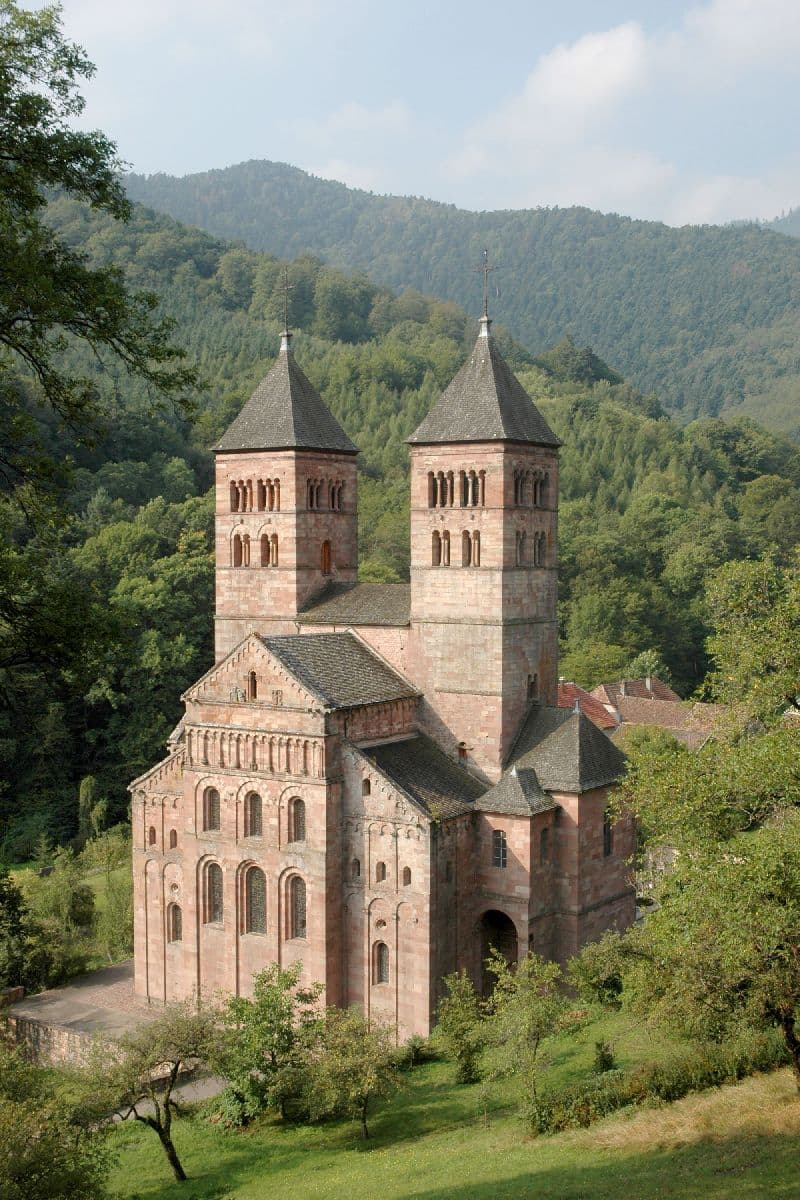
Murbach Abbey
Murbach Abbey was a significant Benedictine monastery founded in 727 by Count Eberhard of Alsace and established by Saint Pirmin. It became an important political and intellectual center, with a notable library that preserved classical texts. The abbey's territory was extensive, and it held imperial immediacy for a period. The monastery was dissolved and its buildings largely destroyed during the French Revolution.