
Abbeyshrule
Abbeyshrule is a village in County Longford, Ireland, named after the early medieval Cistercian abbey whose ruins are still found on the banks of the River Inny. While the village's origins are tied to this religious site and a river crossing, archaeological evidence suggests earlier human activity. The construction of the Royal Canal in the 19th century brought trade to the area, contributing to its development until the mid-20th century.
Key Facts
- ›The village's name derives from the Irish for 'monastery of the river'.
- ›It is situated on the River Inny and the Royal Canal.
- ›The ruins of an early medieval Cistercian abbey are a prominent feature.
- ›Archaeological finds indicate activity in the area dating back to the Bronze Age.
- ›The Royal Canal's construction in the 19th century boosted trade.
- ›Abbeyshrule won the National Tidy Towns Award in 2012.

Medieval
Ruins of An Early Medieval Cistercian Abbey, River Inny, Royal Canal, Whitworth Aqueduct
Mainistir Shruthla
Oliver Goldsmith
- Construction of the Royal Canal In the Early 19th Century
- Construction of the Whitworth Aqueduct
About Abbeyshrule
Abbeyshrule, known in Irish as Mainistir Shruthla, meaning 'monastery of the river', is a village situated in south-east County Longford, Ireland. Its historical identity is deeply intertwined with the River Inny and the remnants of an early medieval Cistercian abbey that still stand on its banks. Archaeological discoveries, including the Clonbrin Shield found in 1906, point to human presence in the area from at least the Bronze Age, indicating a long history of habitation predating the abbey.
The village developed around the religious site and a crucial river fording point. A significant element in its later development was the construction of the Royal Canal in the early 19th century. This engineering feat, which included the Whitworth aqueduct crossing the River Inny, facilitated increased trade and prosperity for Abbeyshrule, a period that lasted until the mid-20th century.
In more recent times, Abbeyshrule has gained recognition for its commitment to environmental upkeep and aesthetics. The village achieved national acclaim by winning the National Tidy Towns Award in 2012, also being named Ireland's Tidiest Village in the same year. Its dedication to beautification was further acknowledged with a Gold Medal Award at the European Entente Florale Competition.
Notable Associations
Abbeyshrule is associated with a few notable figures. The renowned novelist, playwright, and poet Oliver Goldsmith is believed to have been born in 1728 at Pallas, a location very near to the village, where his father served as a local curate. A replica of the Goldsmith statue found at Trinity College Dublin marks this nearby location. Additionally, John Graham, a prolific author and senior figure within the Orange Order, was born in Abbeyshrule.
Amenities and Location
The village is strategically located in the Irish midlands, offering convenient access to towns such as Athlone, Longford, and Mullingar. For aviation enthusiasts, the Abbeyshrule Aerodrome is situated just outside the village. Furthermore, the Royal Canal has been revitalized and is now open to tourist water-borne traffic, adding to the recreational offerings of the area.
Source: Wikipedia ↗
Frequently Asked Questions
What does the name Abbeyshrule mean?
The name Abbeyshrule originates from the Irish language. It combines 'Mainistir', meaning monastery, with 'Shruthla', derived from 'sruth' which signifies a river or stream, thus translating to 'monastery of the river'.
What historical significance does Abbeyshrule have?
The village's historical significance is rooted in its association with an early medieval Cistercian abbey, the ruins of which still exist. The settlement grew around this religious site and a river crossing point. Later, the construction of the Royal Canal in the 19th century brought increased trade and development to the area.
Are there any notable archaeological findings in Abbeyshrule?
Yes, archaeological finds in the Abbeyshrule area suggest human activity dating back to at least the Bronze Age. These include discoveries such as the Clonbrin Shield, found in 1906.
What is Abbeyshrule known for in recent times?
In recent years, Abbeyshrule has gained recognition for its well-maintained environment. The village won the National Tidy Towns Award in 2012 and also received a Gold Medal Award at the European Entente Florale Competition.
Is the Royal Canal still accessible?
Yes, the Royal Canal has been reopened in recent years and is accessible to tourist water-borne traffic, contributing to the village's amenities.
Related Monasteries

Dunbrody Abbey
Dunbrody Abbey is a former Cistercian monastery located in County Wexford, Ireland, founded in 1182. Its cross-shaped church, built in the 13th century and featuring a 15th-century tower, was one of the longest in Ireland. Though dissolved under Henry VIII in 1536, the abbey's ruins remain a significant historical site, now featuring a visitor center with one of Ireland's two full-sized hedge mazes.

Jerpoint Abbey
Jerpoint Abbey is a ruined Cistercian monastery located in County Kilkenny, Ireland, founded in the latter half of the 12th century. It was dedicated to the Blessed Virgin and became known for its intricate stone carvings, including tomb effigies. The abbey flourished for centuries until its dissolution by King Henry VIII, after which it became a significant burial site for local noble families. Today, it is a national monument maintained by the Office of Public Works, featuring extensive ruins and a visitor center.
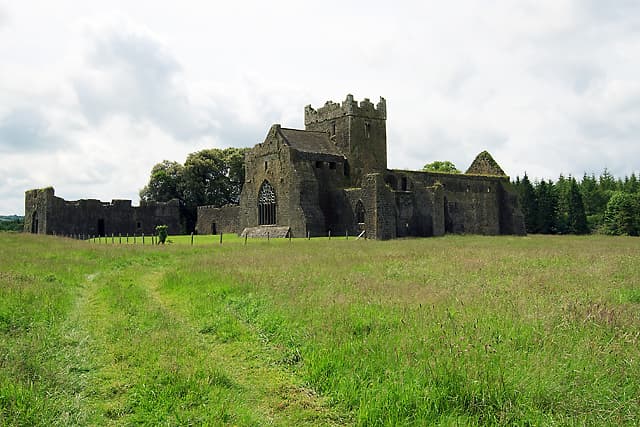
Kilcooly Abbey
Kilcooly Abbey is a historic Cistercian monastery located in County Tipperary, Ireland, founded in 1182 by Donal Mor O’Brien. Dedicated to the Virgin Mary and St. Benedict, it is known for its Cistercian architecture, sharing similarities with Jerpoint Abbey and Holy Cross Abbey. The abbey, which passed through various hands after the Reformation, is now open to the public and offers a glimpse into monastic life with its preserved structures and intricate carvings.