
Al-Khazneh
Jordan·1st century
Al-Khazneh, meaning "The Treasury," is one of Petra's most intricately carved rock-cut tombs, constructed from sandstone. Believed to have been built as a mausoleum for a Nabatean king in the early 1st century AD, it remains a prominent tourist attraction in Jordan and a significant example of ancient Nabatean architecture.
Key Facts
- ›Carved directly into a sandstone cliff face in Petra.
- ›Likely constructed as a mausoleum and crypt around the beginning of the 1st century AD.
- ›Its Arabic name, "Al-Khazneh," translates to "the Treasury," derived from local legends.
- ›Features elaborate sculptures of mythological figures, including eagles and Amazons.
- ›The interior is comparatively plain, consisting of a main chamber and antechambers.
- ›Suffers from damage due to tourism, including stearic acid deposition and physical erosion.

The Treasury, Khaznat el-Far'oun
- Exemplar of Nabatean rock-cut architecture
- Major tourist attraction in Jordan and the Middle East
- Iconic representation in popular culture, particularly in films
Nabatean
Sandstone
Aretas Iv Philopatris
About Al-Khazneh
Al-Khazneh: The Treasury of Petra
Al-Khazneh, translating from Arabic to "The Treasury," is one of the most iconic and elaborately carved structures in the ancient city of Petra, located in modern-day Jordan. This magnificent monument, along with the broader city of Petra, is recognized as a UNESCO World Heritage Site. It is believed to have been constructed in the early 1st century AD, likely serving as a mausoleum and crypt for a Nabatean king.
Architectural Marvel
The defining characteristic of Al-Khazneh is its facade, which is not built but rather meticulously carved directly out of a sheer sandstone cliff face. The architectural details, though weathered by two millennia, are remarkable. Sculptures adorn the exterior, thought to depict mythological figures associated with the afterlife. These include figures of eagles, symbolizing the carrying away of souls, and Amazons with double axes on the upper level. The entrance is flanked by statues of the mythical twins Castor and Pollux. In stark contrast to the ornate exterior, the interior is comparatively simple, consisting of a main chamber and three antechambers.
Naming and Legends
The name "Al-Khazneh" stems from local legends, particularly among the Bedouin people who inhabited the area in the early 19th century. They believed that a solid sandstone urn high on the facade contained hidden treasures, leading to the name "The Treasury." Another legend associated with the structure is "Khaznat el-Far'oun," or "Treasury of the Pharaoh," which posits that an Egyptian pharaoh magically created it as a safe haven for his treasure. Evidence of this belief can be seen in bullet damage on the urn, attributed to individuals attempting to access the supposed riches.
Tourism and Conservation
Since its rediscovery to the Western world by Swiss explorer Johann Ludwig Burckhardt in 1812, Al-Khazneh has become a major tourist attraction. Tourism plays a significant role in Jordan's economy. However, the popularity of the site also presents challenges for its preservation. Increased visitor numbers can lead to humidity damage to the dry sandstone and physical erosion from people touching or leaning against the walls. Conservation efforts are ongoing to protect this invaluable piece of history for future generations.
Cultural Impact
Al-Khazneh has transcended its historical context to become a globally recognized landmark, significantly influencing popular culture. Its dramatic appearance has led to its inclusion in numerous films, most famously as the facade of the temple housing the Holy Grail in the 1989 movie "Indiana Jones and the Last Crusade." It has also been featured in documentaries and other forms of media, solidifying its status as an enduring symbol of ancient ingenuity and mystique.
Source: Wikipedia ↗
Frequently Asked Questions
What is Al-Khazneh?
Al-Khazneh, also known as "The Treasury," is a famous rock-cut tomb in Petra, Jordan. It is renowned for its elaborate facade carved directly into a sandstone cliff.
When was Al-Khazneh built?
It is believed that Al-Khazneh was constructed as a mausoleum and crypt at the beginning of the 1st century AD, during the reign of Aretas IV Philopatris.
Why is it called "The Treasury"?
The name "Al-Khazneh" means "The Treasury" in Arabic. This name originated from local Bedouins in the early 19th century who believed the decorative stone urn on the facade contained hidden treasures.
What is the significance of the sculptures on Al-Khazneh?
The sculptures are thought to represent mythological figures associated with the afterlife. These include figures of eagles at the top, believed to carry souls away, and dancing Amazons with double axes on the upper level.
What is the interior of Al-Khazneh like?
In contrast to its ornate exterior, the interior of Al-Khazneh is relatively simple. It comprises a plain main chamber and three antechambers.
How does tourism affect Al-Khazneh?
Tourism poses a threat to Al-Khazneh. Humidity from large crowds can damage the sandstone, and physical contact with the walls has led to erosion and the deposition of stearic acid, causing white spots.
Has Al-Khazneh appeared in popular culture?
Yes, Al-Khazneh has gained significant fame through its appearance in popular culture, most notably in the 1989 film "Indiana Jones and the Last Crusade" as the entrance to the Holy Grail's resting place.
Related Mausoleums
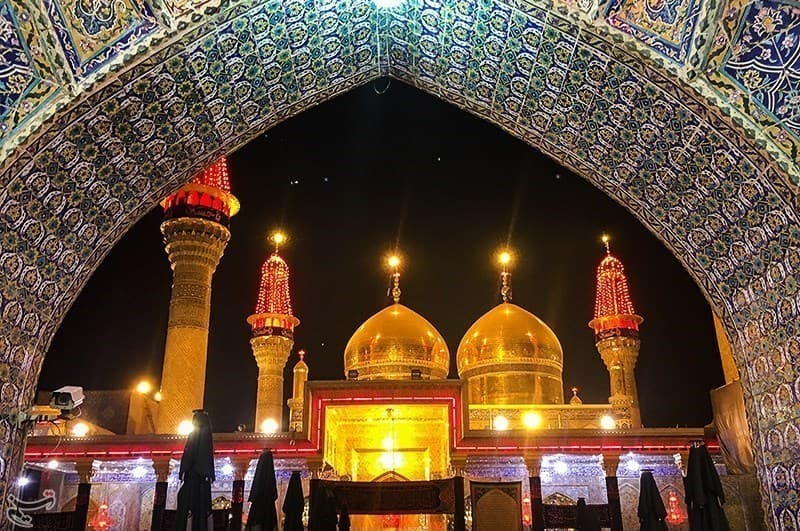
Al-Kadhimiya Mosque
The Al-Kadhimiya Mosque, also known as the Jawadayn Shrine, is a revered holy site in Shia Islam located in Baghdad, Iraq. It serves as the mausoleums for the seventh and ninth Shia Imams, Musa al-Kadhim and Muhammad al-Jawad, respectively, making it a significant pilgrimage destination.

Anıtkabir
Anıtkabir is the monumental mausoleum complex of Mustafa Kemal Atatürk, the founder and first President of the Republic of Turkey, located in Ankara. Completed in 1953, it serves as a national symbol and a site of remembrance, housing Atatürk's tomb and a museum dedicated to his life and the Turkish War of Independence. The complex also includes various monumental structures and a wooded area known as the Peace Park.

Al-Askari Shrine
The Al-Askari Shrine, also known as the 'Askariyya Shrine or Al-Askari Mosque, is a significant holy site in Shia Islam located in Samarra, Iraq. It houses the mausoleums of the tenth and eleventh Shia Imams, Ali al-Hadi and Hasan al-Askari, and is a place of pilgrimage for Shia Muslims. The shrine has undergone extensive rebuilding following devastating attacks in 2006 and 2007.