
Al-Kadhimiya Mosque
The Al-Kadhimiya Mosque, also known as the Jawadayn Shrine, is a revered holy site in Shia Islam located in Baghdad, Iraq. It serves as the mausoleums for the seventh and ninth Shia Imams, Musa al-Kadhim and Muhammad al-Jawad, respectively, making it a significant pilgrimage destination.
Key Facts
- ›It houses the tombs of the seventh (Musa al-Kadhim) and ninth (Muhammad al-Jawad) Shia Imams.
- ›The mosque is a major pilgrimage site for Shia Muslims.
- ›It also contains the burials of prominent scholars Shaykh Mufid and Shaykh Nasir AD-Din al-Tusi.
- ›The current structure dates back to restorations by Safavid Shah Ismail I and Ottoman Sultan Suleiman the Magnificent.
- ›The mosque features two main gold-coated domes and four gold-coated minarets.
- ›It has been targeted by numerous terrorist attacks, particularly after the 2003 invasion of Iraq.
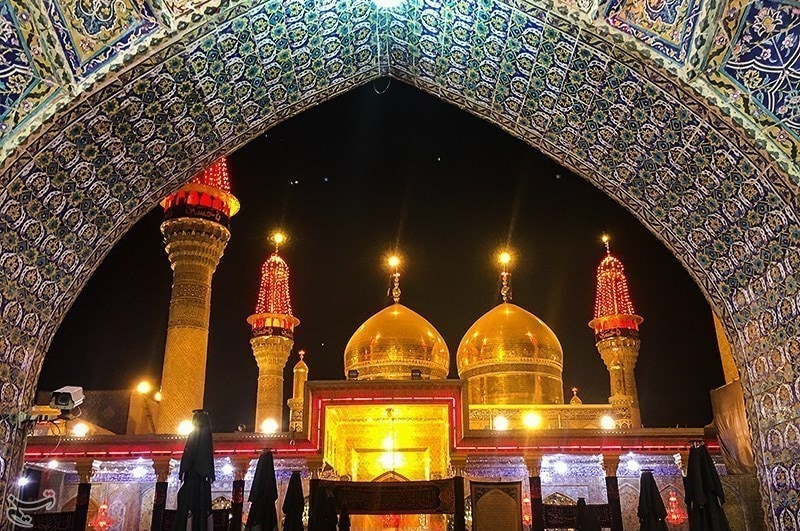
Jawadayn Shrine, Al-Kazimayn Shrine
Holy Site In Shia Islam, Mausoleum of Two Shia Imams, Important Pilgrimage Destination, Historical Islamic Architectural Landmark
Islamic Architecture
9th century, 16th century
Shah Ismail I, Suleiman the Magnificent
About Al-Kadhimiya Mosque
The Al-Kadhimiya Mosque, also known by its shrine name, Jawadayn Shrine, is one of the most significant holy sites in Shia Islam, located in the Kadhimiyya suburb of Baghdad, Iraq. It is distinguished as the mausoleum of two revered figures: Musa al-Kadhim, the seventh Imam of the Twelver Shia, and his grandson, Muhammad al-Jawad, the ninth Imam. This dual burial site makes it a crucial destination for Shia pilgrims from around the world.
History and Significance
The foundation of the mosque's importance lies in its role as the final resting place for these two Imams. Musa al-Kadhim was interred here in 799 CE, followed by Muhammad al-Jawad in 834 CE. The site itself has older roots, built upon a Quraysh cemetery established by Abbasid Caliph al-Mansur. The current architectural form of the mosque largely dates to restorations and embellishments undertaken by the Safavid Iranian Shah Ismail I between 1502 and 1524, and later by the Ottoman Sultan Suleiman the Magnificent after his conquest of Baghdad in 1534. The area surrounding the mosque grew into the distinct neighborhood of al-Kadhimiyya.
Beyond the Imams, the mosque complex also houses the tombs of prominent Islamic scholars, including Shaykh Mufid and Shaykh Nasir ad-Din al-Tusi. Adjacent to the main structure are smaller shrines dedicated to the brothers Sayyid Radi and Sayyid Murtada, noted scholars and compilers of important Islamic texts, as well as Qadi Abu Yusuf al-Ansari.
Architecture
The Al-Kadhimiya Mosque is an exemplary piece of Islamic architecture. Its layout is rectangular, measuring approximately 140 by 135 meters, and it features a central sahn (courtyard) protected by walls containing small rooms and gates. The prayer hall comprises two connected rectangular buildings. The defining visual elements are its two large, identical domes and four imposing minarets, all of which are covered in gold. The domes, reaching a height of 25 meters, are adorned with Islamic decorations and Qur’anic verses internally, while externally they are covered with 9,000 bricks of pure gold. The minarets, also gold-clad, rise to 35 meters above the ceiling. Four smaller minaret-shaped towers also surround the domes.
Modern History and Accessibility
In recent history, the Al-Kadhimiya Mosque has faced significant challenges, particularly from terrorist attacks in the aftermath of the 2003 Iraq War. Despite these incidents, the mosque remains a vibrant center of religious activity and a key landmark of Iraq, attracting visitors from across the Islamic world. Efforts have been made to maintain and repair the structure, including extensive work on its inner and outer elements, such as re-gilding domes and refurbishing gates. The mosque is generally accessible to the public, serving as both a place of worship and a site of historical and architectural importance.
Source: Wikipedia ↗
Frequently Asked Questions
Who is buried in the Al-Kadhimiya Mosque?
The Al-Kadhimiya Mosque is the mausoleum for two of the twelve Shia Imams: Musa al-Kadhim, the seventh Imam, and his grandson Muhammad al-Jawad, the ninth Imam. Additionally, the scholars Shaykh Mufid and Shaykh Nasir ad-Din al-Tusi are interred within the premises.
What is the historical significance of the Al-Kadhimiya Mosque?
The mosque is built on the site of an ancient Abbasid cemetery. It became a significant religious site when the seventh and ninth Shia Imams were buried there in the late 8th and early 9th centuries CE, respectively. The current building's restoration by Shah Ismail I and ornamentation by Sultan Suleiman the Magnificent further cemented its historical importance.
What is the architectural style of the Al-Kadhimiya Mosque?
The mosque exhibits significant Islamic architectural elements. It features a rectangular layout with a sahn (courtyard), iwans, and prayer halls. The most striking features are its two large, equal-sized domes and four large minarets, all richly coated in gold.
Has the Al-Kadhimiya Mosque experienced security issues?
Yes, the mosque has been the target of numerous terrorist attacks, especially following the 2003 invasion of Iraq. These attacks have resulted in significant casualties among visitors and worshippers.
What other notable figures are buried near the mosque?
Adjacent to the mosque are smaller shrines belonging to the brothers Sayyid Radi and Sayyid Murtada, both significant Islamic scholars. Qadi Abu Yusuf al-Ansari is also buried nearby.
Related Mausoleums

Al-Askari Shrine
The Al-Askari Shrine, also known as the 'Askariyya Shrine or Al-Askari Mosque, is a significant holy site in Shia Islam located in Samarra, Iraq. It houses the mausoleums of the tenth and eleventh Shia Imams, Ali al-Hadi and Hasan al-Askari, and is a place of pilgrimage for Shia Muslims. The shrine has undergone extensive rebuilding following devastating attacks in 2006 and 2007.

Anıtkabir
Anıtkabir is the monumental mausoleum complex of Mustafa Kemal Atatürk, the founder and first President of the Republic of Turkey, located in Ankara. Completed in 1953, it serves as a national symbol and a site of remembrance, housing Atatürk's tomb and a museum dedicated to his life and the Turkish War of Independence. The complex also includes various monumental structures and a wooded area known as the Peace Park.

Aguinaldo Shrine
The Emilio Aguinaldo Shrine, also known as the Cavite El Viejo Shrine, is a national shrine in Kawit, Cavite, Philippines. It is historically significant as the ancestral home of Emilio Aguinaldo, the first President of the Philippines, and the site where the Philippine Declaration of Independence from Spain was proclaimed on June 12, 1898. The house now functions as a museum, preserving artifacts and memorabilia related to Aguinaldo and the Philippine Revolution.