
Anıtkabir
Anıtkabir is the monumental mausoleum complex of Mustafa Kemal Atatürk, the founder and first President of the Republic of Turkey, located in Ankara. Completed in 1953, it serves as a national symbol and a site of remembrance, housing Atatürk's tomb and a museum dedicated to his life and the Turkish War of Independence. The complex also includes various monumental structures and a wooded area known as the Peace Park.
Key Facts
- ›Anıtkabir is the final resting place of Mustafa Kemal Atatürk, the founder of the Republic of Turkey.
- ›Construction of the mausoleum complex began in 1944 and was completed in 1953.
- ›The architectural style blends elements of the Second National Architecture Movement with influences from Hittite, Ancient Greek, Seljuk, and Ottoman designs.
- ›The complex features a Hall of Honor with Atatürk's symbolic sarcophagus and his actual tomb in a lower level room.
- ›Anıtkabir is a significant national monument and a popular tourist destination, attracting millions of visitors annually.
- ›The site includes ten towers, each symbolizing ideals of the Turkish Republic, as well as the Atatürk and Independence War Museum.

- National Monument and Symbol of the Republic of Turkey
- Final Resting Place of Mustafa Kemal AtatüRk
- Site of National Commemoration Ceremonies
- Architectural Representation of the Second National Architecture Movement
Emin Onat, Orhan Arda
Second National Architecture Movement, Neoclassical, Hittite-Inspired, Ancient Greek-Inspired, Seljuk-Inspired, Ottoman-Inspired
Reinforced Concrete, Marble, Travertine
Government of Turkey
About Anıtkabir
Anıtkabir: Mausoleum of Mustafa Kemal Atatürk
Anıtkabir, meaning "grave monument," is a grand mausoleum complex situated in Ankara, Turkey, serving as the eternal resting place for Mustafa Kemal Atatürk, the revered founder and first President of the Republic of Turkey. Its construction, a national undertaking, began in 1944 and concluded in 1953, culminating in a monumental edifice that embodies the spirit and ideals of the modern Turkish nation.
Design and Construction
The selection of Rasattepe (Observation Hill) as the site for Anıtkabir was strategic, offering prominence and visibility across Ankara. Following an international design competition, the project by architects Emin Onat and Orhan Arda was chosen and implemented with modifications. The construction process was divided into four stages, involving extensive excavation, the building of retaining walls, the erection of the mausoleum and auxiliary structures, and the development of roads and plazas. The complex is built primarily from reinforced concrete, adorned with various types of marble and travertine, and features intricate decorative elements such as reliefs, mosaics, and frescoes.
Architectural Significance
Anıtkabir is a prime example of the Second National Architecture Movement (1940-1950), characterized by monumental scale, symmetry, and meticulous detailing. Its design integrates influences from historical Anatolian civilizations, including Hittite, Ancient Greek, Seljuk, and Ottoman styles, creating a unique architectural synthesis. The complex is laid out with a ceremonial plaza, the Hall of Honor housing Atatürk's tomb, and the surrounding Peace Park, which is home to approximately 50,000 trees.
Layout and Features
The approach to the mausoleum is via the "Lions' Road," an avenue lined with twelve pairs of lion sculptures. The Ceremonial Plaza is a vast open space designed to accommodate large gatherings, with its floor decorated with patterns inspired by Turkish carpets. The Hall of Honor, the symbolic heart of Anıtkabir, features Atatürk's sarcophagus on the ground floor, while his actual tomb lies in a chamber below. The complex also comprises ten towers, each dedicated to a specific ideal or event related to the Turkish Republic, and houses the Anıtkabir Atatürk Museum, which displays Atatürk's personal belongings and artifacts from the Turkish War of Independence.
Source: Wikipedia ↗
Frequently Asked Questions
Where is Anıtkabir located?
Anıtkabir is located in the Çankaya district of Ankara, Turkey. It was built on Rasattepe, which was chosen for its central location and visibility across the city.
When was Anıtkabir constructed?
Construction of Anıtkabir began on October 9, 1944, and was completed in October 1953. The project spanned nine years and was carried out in four stages.
Who is buried at Anıtkabir?
The primary interred individual at Anıtkabir is Mustafa Kemal Atatürk. The remains of Cemal Gürsel were also interred there but later exhumed, while İsmet İnönü's grave has been located at Anıtkabir since 1973.
What is the architectural style of Anıtkabir?
Anıtkabir's architecture is characterized by the Second National Architecture Movement, incorporating monumental and symmetrical designs. It features influences from Hittite, Ancient Greek, Seljuk, and Ottoman styles, with prominent use of marble and travertine.
Can visitors access Anıtkabir?
Yes, Anıtkabir is generally accessible to the public. It is a major tourist attraction and a site for official commemoration ceremonies.
What does the 'Peace Park' at Anıtkabir signify?
The wooded area surrounding the monument is named Peace Park in honor of Atatürk's famous principle, 'Peace at home, peace in the world.' It contains a large variety of trees and plants donated from around the world.
Related Mausoleums
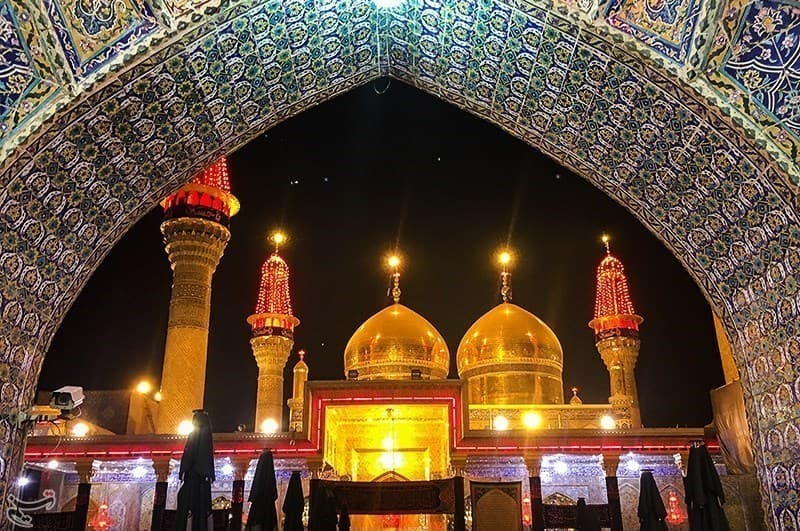
Al-Kadhimiya Mosque
The Al-Kadhimiya Mosque, also known as the Jawadayn Shrine, is a revered holy site in Shia Islam located in Baghdad, Iraq. It serves as the mausoleums for the seventh and ninth Shia Imams, Musa al-Kadhim and Muhammad al-Jawad, respectively, making it a significant pilgrimage destination.

Al-Askari Shrine
The Al-Askari Shrine, also known as the 'Askariyya Shrine or Al-Askari Mosque, is a significant holy site in Shia Islam located in Samarra, Iraq. It houses the mausoleums of the tenth and eleventh Shia Imams, Ali al-Hadi and Hasan al-Askari, and is a place of pilgrimage for Shia Muslims. The shrine has undergone extensive rebuilding following devastating attacks in 2006 and 2007.

Artigas Mausoleum
The Artigas Mausoleum in Montevideo, Uruguay, is a significant monument dedicated to the national hero José Artigas. Opened in 1977, it houses his remains in an underground chamber beneath a prominent statue and is guarded by traditional soldiers, serving as a focal point for national commemoration.