
Shitala
Shitala is a Hindu goddess primarily venerated in North India, considered an incarnation of Parvati. She is known for her ability to cure poxes, sores, and diseases, most notably smallpox, and is invoked to bring relief from fever. Her worship is particularly prominent during the month of Chaitra, especially on Shitala Saptami and Shitala Ashtami.
Key Facts
- ›Shitala is a Hindu goddess of coolness and healing, associated with the cure of poxes and fevers.
- ›She is regarded as an incarnation of the goddess Parvati.
- ›Her worship is most prominent in North India, with specific observances during the Hindu month of Chaitra.
- ›She is often depicted riding a donkey and carrying a broom or a pot of cool water.
- ›Shitala is also revered as a fertility goddess and a protector of children.
- ›Her association with the neem tree is significant, with its leaves and flowers used in her worship.
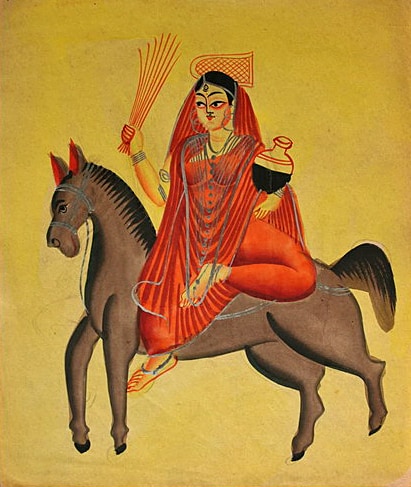
Sheetala, Śītalā, Seetla, Shitala-Ma, Shitala-Mata, Shitala-Amma, Mā Ujalī Devī, Thakurani, Jagrani, Karunamayi, Mangala, Bhagavati, Dayamayi, Mariamman
- Crowned With A Winnowing Fan
- Riding A Donkey
- Snake As A Whip
- Holding A Short Broom
- Holding A Pot Full of Viral Pustules Or Cold Water of Immortality
- Enthroned Form With Eight Hands
- Holding A Trishula , Broom, Chakra , Branches of Neem, Scimitar, Conch
- One Hand Depicting Varadamudra
- Flanked By Two Donkeys
- Depicted With Jvarasura As Her Eternal Servant
Tantric Literature, Puranic Literature, Shitala Mangal-KāVya, Skanda Purana's Kāśī KhaṇḍA
Incarnation of Goddess Parvati, Associated With Goddess Katyayani, Consort of Lord Shiva
Shitala Saptami, Shitala Ashtami, Chaitra, Baheria Fair
- Sheetla Mata Mandir, Gurgaon, Haryana
- Shrines of Sisters In Punjab
- Shrine At Seel Village, Patiala
- Shrine At Jarg Village, Pail Tehsil, Ludhiana District
- Sheetala Mata Mandir, Mand, Madhya Pradesh
- Sheetala Mata Birthplace, Maghra, Bihar Sharif, Bihar
- Sheetala Mata Mandir, Mehandi Ganj, Lucknow, Uttar Pradesh
- Sheetala Mata Mandir, Pita Maheshwar Kund, Gaya, Bihar
- Sheetala Mata Mandir, Mainpuri, Uttar Pradesh
- Rejidi Khejdi Mandir, Kajra, Rajasthan
- Sheetala Mata Mandir, Meerut, Uttar Pradesh
- Sheetala Chaukiya Dham, Jaunpur, Uttar Pradesh
- Sheetala Mata Temple, Khanda, Haryana
- Shree Sheetala Mata Mandir, Adalpura, Mirzapur, Uttar Pradesh
- Shitla Mata Mandir, Jalore, Rajasthan
- Sheetala Mata Temple, Reengus, Rajasthan
- Sheetala Mata Mandir, Garia, Kolkata, West Bengal
- Adi Shitala Mandir, Kalikapur, Kolkata, West Bengal
- Sheetala Mata Mandir, Una, Himachal Pradesh
- Sheetala Mata Mandir, Palampur, Himachal Pradesh
- Harulongpher Shitalabari, Lumding, Assam
- Shitala Mata Mandir, Jodhpur, Rajasthan
- Shitala Mata Mandir, Nagaur, Rajasthan
- Sheetala Mata Mandir, Kaushambi, Uttar Pradesh
- Sheetala Mata Mandir, Nizambad, Azamgarh, Uttar Pradesh
- Sheetala Mata Mandir, Barmer, Rajasthan
- Sheetala Mata Mandir, Bidhlan, Sonipat, Haryana
- Sheetala Mata Mandir, Farrukhabad, Uttar Pradesh
- Shitala Devi Temple, Gurgaon
- Shitala Maa Temple, Samta, West Bengal
- Shitala Devi Mandir, Mahim, Mumbai, Maharashtra
- Shitala Mandir, Jamshedpur, Jharkhand
- Shitla Devi Mandir, Chembur, Mumbai
- Shitala Devi Mandir, Barad, Maharashtra
- Sheetala Devi Mandir, Ranibagh, Nainital, Uttarakhand
- Ma Shitala Mandir, Bakrahat, South 24 Parganas, West Bengal
- Aai Shitala Devi Temple, Chikhal Dongri, Virar, Maharashtra
- Sheetla Mata Mandir, Sonadih, Mau Nath Bhanjan, Uttar Pradesh
- Shitla Mandir, Munger, Bihar
Broom, Trishula, Scimitar
Neem Tree
About Shitala
Shitala is a Hindu goddess primarily venerated in North India, widely recognized for her role as a healer and protector, particularly against diseases like smallpox. She is considered an aspect or incarnation of the supreme goddess Parvati, embodying coolness and relief from fever and suffering.
Core Attributes and Worship
The name "Shitala" itself means "the one who cools," reflecting her primary function of alleviating fever and the burning sensations associated with various ailments. She is invoked to cure poxes, sores, pustules, and other skin diseases, making her a crucial deity for the well-being of children and the community. Worship of Shitala is most prominent during the Hindu month of Chaitra (typically March-April), with specific observances on Shitala Saptami and Shitala Ashtami. During these times, devotees often prepare and consume cold food, symbolizing the cooling relief she provides.
Mythology and Iconography
Mythological accounts often identify Shitala as an avatar of Goddess Katyayani, sent to combat the demon Jvarasura, who caused fevers. Her iconography is distinct and symbolic: she is frequently depicted as a maiden riding a donkey, often adorned with a winnowing fan, and carrying a broom to spread disease or a pot of cool, healing water. The neem tree is deeply associated with her, and its leaves and flowers are used in her rituals and offerings, acknowledging the plant's medicinal properties. She is also sometimes shown with six or eight sisters, who also represent various ailments and are venerated for recovery.
Significance and Cultural Impact
Beyond her role as a healer, Shitala is also revered as a fertility goddess and a protector of children and family welfare. Her auspicious presence is believed to ensure the prosperity of livelihoods and ward off famines and cattle diseases. Her worship extends to various communities, including Hindus, Buddhists, and Adivasi groups. Her influence is evident in vernacular literature, such as the 17th-century "Shitala Mangal-Kāvya," which helped popularize her cult. Historically, her veneration played a role in the perception of smallpox vaccination efforts in India, with efforts made to reconcile scientific endeavors with religious devotion.
Source: Wikipedia ↗
Frequently Asked Questions
What does the name Shitala mean?
In Sanskrit, the name Shitala (शीतला śītalā) literally means 'the one who cools.' It represents the divine blessing of bestowing cool relief from the suffering of fever.
What diseases is Shitala associated with?
Shitala is most directly linked with smallpox and is believed to cure poxes, sores, ghouls, and pustules. She is invoked to provide coolness to feverish patients.
When is Shitala primarily worshipped?
Shitala is worshipped on Tuesdays, and specifically on Saptami and Ashtami (the seventh and eighth day of a Hindu month). The annual period of worship is the month of Chaitra, especially Shitala Ashtami.
What are some common epithets used for Shitala?
Devotees often refer to Shitala with honorific suffixes such as Shitala-Ma, Shitala-Mata, and Shitala-Amma. Other revered titles include Thakurani, Jagrani, Karunamayi, Mangala, Bhagavati, and Dayamayi.
What is the mythological origin of Shitala?
Mythologically, Shitala is identified as an aspect of goddess Parvati. According to tradition, she appeared as an avatar of Katyayani to purify children afflicted by fever caused by the asura Jvarasura.
What are some of Shitala's symbolic attributes?
Shitala is often depicted with a winnowing fan, riding a donkey, and using a snake as a whip. She may also hold a broom and a pot containing viral pustules or cool water. Neem leaves are also a significant symbol.
How is Shitala worshipped, particularly during her festivals?
During Shitala Ashtami, many families avoid lighting their stoves and eat cold food, cooked the previous night, as prasad. Neem leaves and flowers are common offerings, and donkeys, her favorite animal, are sometimes decorated.
Related Hindu deities

Kalaratri
Kalaratri is the seventh of the nine Navadurga forms of the goddess Mahadevi, revered as one of her fiercest manifestations. She is depicted as the destroyer of demons, ghosts, evil spirits, and negative energies, while also bestowing courage and auspicious results upon her devotees. Her worship is particularly emphasized on the seventh day of Navaratri.

Narmada
The Narmada River, also known as Narbada or Nerbudda, is the fifth longest river in India and the longest west-flowing river. It is considered a goddess and a mother figure in Hinduism, revered for its sacredness and the banalinga pebbles found in its bed. The river originates from the Amarkantak Plateau and flows through Madhya Pradesh and Gujarat, forming a traditional boundary between North and South India.
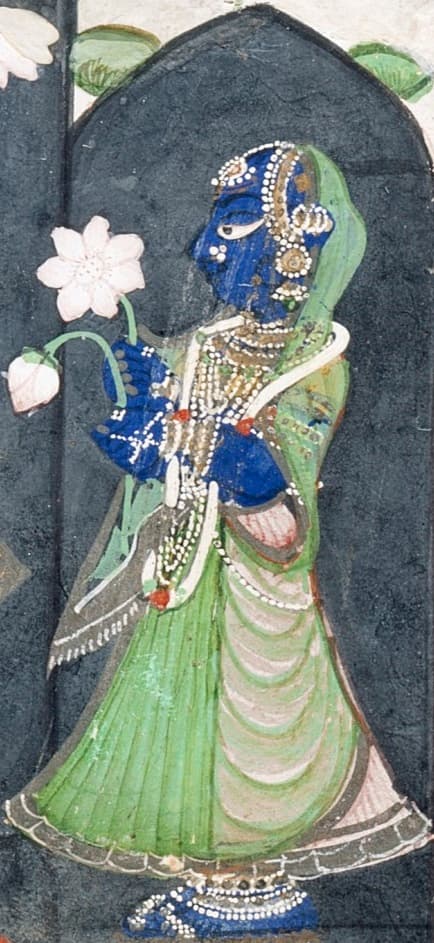
Revati
Revati is a goddess in Hindu scriptures, known as the consort of Balarama and the daughter of King Kakudmi. Her myth involves a significant temporal displacement, where she and her father traveled to Brahmaloka, returning to find 27 Chatur-yugas had passed on Earth. She is also associated with mother goddesses, fortune, and prosperity.