
Sharabha
Sharabha is an eight-legged deity in Hindu tradition, often depicted as a hybrid of a lion and a bird, possessing immense strength. Primarily recognized in Shaiva traditions, Sharabha is believed to be an incarnation of Shiva who assumed this form to pacify Narasimha, Vishnu's fierce man-lion avatar. While Shaiva scriptures detail this conflict, Vaishnava traditions refute Narasimha's defeat and sometimes identify Sharabha as a name for Vishnu or describe Vishnu's alternate form, Gandabherunda, defeating Sharabha.
Key Facts
- ›Sharabha is an eight-legged deity, often described as a part-lion, part-bird creature, or an eight-legged deer.
- ›In Shaiva mythology, Sharabha is an incarnation of Shiva, manifested to subdue the ferocious Narasimha, an avatar of Vishnu.
- ›Vaishnava traditions dispute the narrative of Narasimha's defeat by Sharabha, offering alternative interpretations or counter-narratives.
- ›Sharabha also appears in Buddhist Jataka Tales as an earlier birth of the Buddha, symbolizing the perfection of effort.
- ›Iconographic descriptions vary, but often include multiple legs, wings, and leonine or avian features, sometimes with a human torso or face.
- ›Sharabha has been adopted into the emblems of various institutions, including the Government of Karnataka.

Sharabheshvara, Sharabheshvaramurti
Eight Legs, Part Lion, Part Bird, Wings, Matted Hair, Sharp Claws, Long Tail, Two Heads, Human Torso With Leonine Face, Bird Head, Serpent In Beak
Shiva Purana, Sharabha Upanishad, Linga Purana, Skanda Purana, Vamana Purana, Kalika Purana, Prapanchasara Tantra, Mahabharata, Ramayana, Jataka Tales
Vikramsolishwaram Temple, Darasuram, Kampahareshvarar Temple, Thirubuvanam, Airavatesvara Temple At Darasuram, Chennakeshava Temple, Belur
Thunderbolt, Chakra, Sakti, Staff, Goad, Sword, Khatvanga, Axe, Bow, Musala, Fire, Noose, Mace, Arrow, Flag, Snake, Lotus Flower, Skull-Cup, Plough, Mrudanga
Lion, Bird, Deer
Deity, Incarnation
About Sharabha
Sharabha is a formidable eight-legged divine being featured in Hindu mythology, often depicted as a composite of a lion and a bird, embodying immense power and strength. Primarily associated with Shaivism, Sharabha is understood as a manifestation of the god Shiva, who assumed this form to subdue the fierce Narasimha, an avatar of Vishnu. This narrative serves as a significant point of theological discussion and sometimes contention between Shaiva and Vaishnava traditions.
Shaiva and Vaishnava Perspectives
In Shaiva scriptures, the legend recounts Shiva taking the form of Sharabha to pacify Narasimha, whose destructive rage threatened the cosmos after slaying the demon Hiranyakashipu. Texts like the Shiva Purana describe Sharabha's terrifying appearance and his role in incapacitating Narasimha, thereby restoring cosmic balance. Some accounts suggest Sharabha even dismembered Narasimha, allowing Shiva to symbolically wear his hide and head. However, Vaishnava traditions largely reject this depiction, arguing that Narasimha was not defeated. They propose alternative interpretations, such as Sharabha being a name for Vishnu or Vishnu's form of Gandabherunda overcoming Sharabha.
Iconography and Development
Early Sanskrit literature describes Sharabha as an aggressive beast, while later texts, including the Mahabharata, depict him as an eight-legged, lion-slaying being with formidable features. Iconographic representations are diverse, frequently featuring eight legs, wings, leonine features, and sometimes avian heads or human torsos. The Sharabha Upanishad and various Puranas detail its appearance, emphasizing its immense strength and ferocity. Sculptures of Sharabheshvaramurti, depicting Shiva as Sharabha, are found in ancient temples, particularly in Tamil Nadu, illustrating the sectarian animosity of the period.
Buddhist and Emblematic Significance
Beyond Hinduism, Sharabha appears in Buddhist traditions. In the Jataka tales, he is an earlier birth of the Buddha, a compassionate eight-legged deer who saves a king. In Tibetan Buddhism, Sharabha symbolizes the perfection of effort and is depicted with various animalistic features. The powerful imagery of Sharabha has also led to its adoption in modern emblems, such as those of the Government of Karnataka, symbolizing wisdom, courage, and strength.
Source: Wikipedia ↗
Frequently Asked Questions
What is Sharabha in Hinduism?
Sharabha is a divine being in Hindu mythology, often depicted as an eight-legged creature with characteristics of both a lion and a bird. He is primarily known as an incarnation of Shiva who intervened in a conflict with Vishnu's avatar, Narasimha.
What is the story of Sharabha and Narasimha?
According to Shaiva scriptures, the fierce Narasimha avatar of Vishnu was causing destruction. To pacify Narasimha, Shiva assumed the form of Sharabha, a powerful, multi-legged beast, and subdued him. This narrative highlights the theological rivalry between Shaivism and Vaishnavism.
How do Vaishnavas view the Sharabha legend?
Vaishnava scholars generally reject the Shaiva depiction of Narasimha being destroyed or subdued by Sharabha. They often interpret Sharabha as a name for Vishnu himself or suggest that Vishnu, in his form as Gandabherunda, defeated Sharabha.
What are the visual characteristics of Sharabha?
Iconographic descriptions of Sharabha are diverse. He is typically shown with eight legs, sometimes with wings, and can have leonine, avian, or even deer-like features. Some depictions integrate human elements, such as a human torso or face, and he is often portrayed with formidable strength.
Does Sharabha appear in other religions?
Yes, Sharabha is found in Buddhist traditions as well. In Jataka tales, he appears as an earlier birth of the Buddha, and in Tibetan Buddhism, he symbolizes the perfection of effort, often depicted with a combination of animal features.
Related Hindu deities
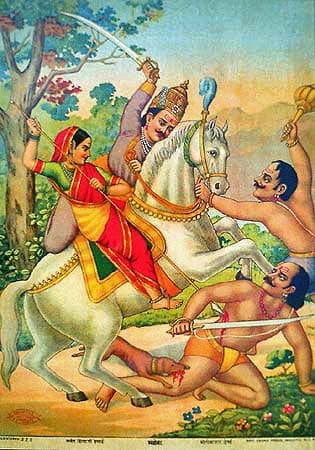
Khandoba
Khandoba is a prominent Hindu deity, primarily worshipped in Maharashtra and Karnataka, often seen as a manifestation of Shiva. He is revered as a family deity (Kuladevata) and the patron deity for various castes, including warriors, farmers, and tribal communities. Khandoba is known for his victory over demons Mani and Malla and his marriages, with his worship reflecting syncretic traditions that include Jain and Muslim influences.
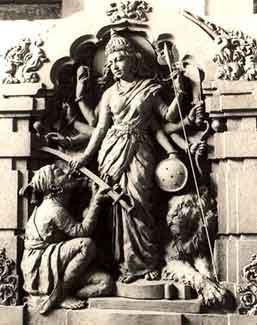
Bhavani
Bhavani is a significant epithet of the Hindu goddess Durga, translating to "giver of life." She is revered as a nurturing mother figure who provides for her devotees and dispenses justice by vanquishing evil forces. Bhavani is considered a manifestation of the primeval energy Shakti and is widely worshipped, particularly in Maharashtra, India.
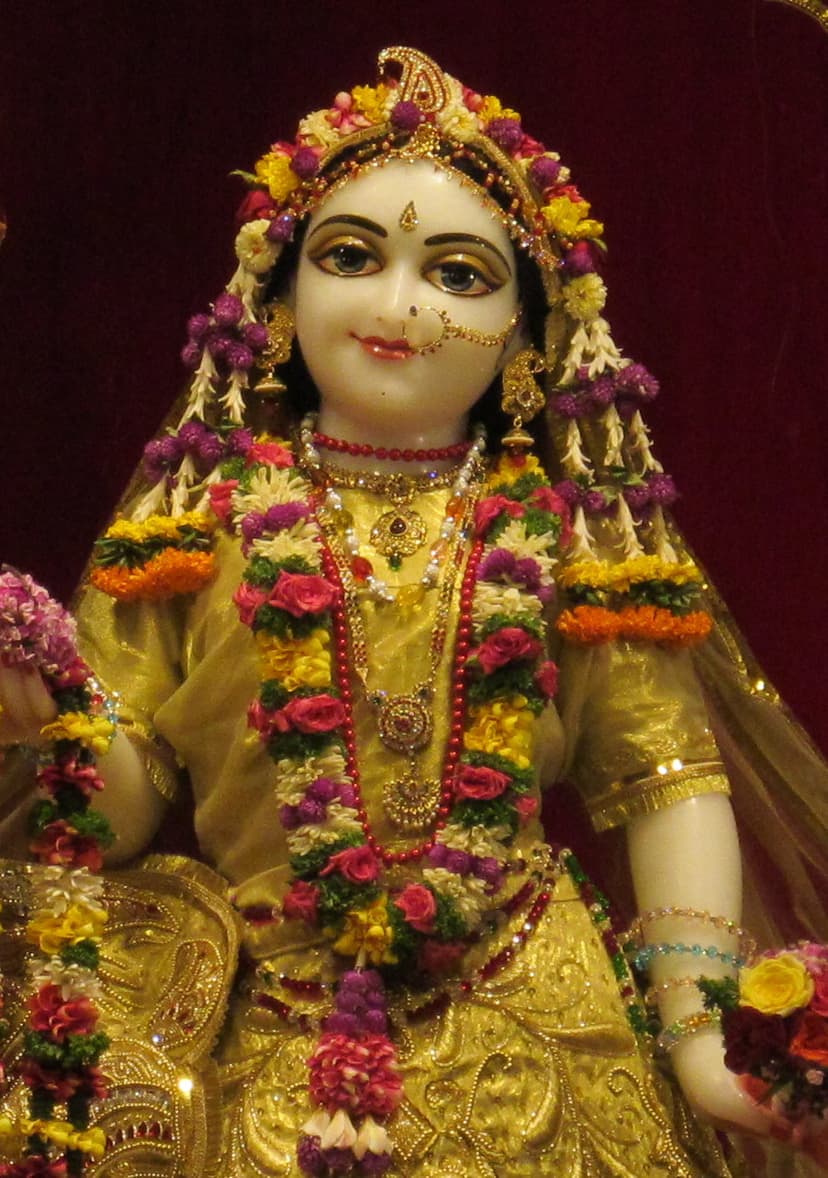
Radha
Radha is a principal Hindu goddess and the chief consort of Krishna. Revered as the goddess of love, compassion, and devotion, she is often depicted as an avatar of Lakshmi or as the supreme feminine energy of Krishna. Her profound love for Krishna has inspired countless devotional traditions, literary works, and artistic expressions.