
Narasimhi
Narasimhi, also known as Pratyangira, is a powerful Hindu goddess venerated as the shakti (female energy) of Narasimha. She is recognized as one of the Matrikas, a group of mother goddesses significant in Shakta and Tantra traditions. Narasimhi is invoked to counteract evil, magic, and suffering, and is depicted with a fierce appearance, often with a lion's head and a woman's body.
Key Facts
- ›Narasimhi is the shakti (female energy) of the deity Narasimha.
- ›She is one of the Matrikas, a group of seven mother goddesses.
- ›Her worship is associated with counteracting evil rites, magic, and suffering.
- ›She is depicted with a lion's head and a woman's body, often with a fierce appearance.
- ›Her earliest representation in literature is found in the Atharva Veda as Atharvana Bhadrakali.
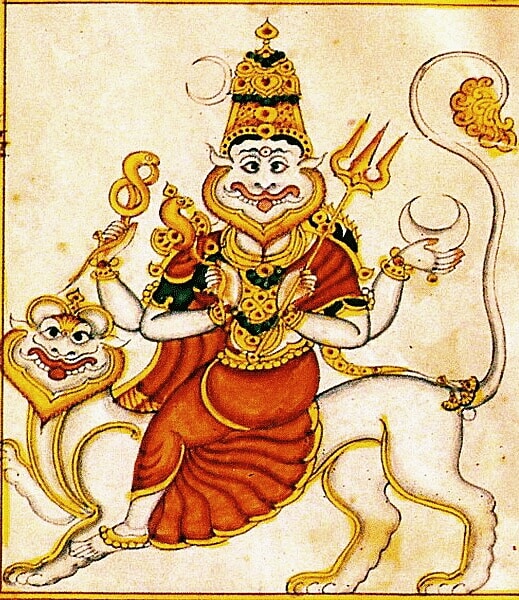
Pratyangira, Atharvana Bhadrakali, Nikumbhila, Narasimhi
Head of A Male Lion and Body of A Woman, Dark Complexion, Reddened Eyes, Disheveled Hair, Protruding Tongue, Four-Armed Form, Maha Pratyangira Form, Garland of Skulls
Vedas, Devi Mahatmya, Tripura Rahasya, Ramayana, Puranas
Shakti of Narasimha
Prathyangira Devi Temple, Shollinganallur, Maa Pratyangira Kalika Alayam, Pratyangira Devi Temple, Ayyavadi
Trishula, Pasha, Damaru, Kapala
About Narasimhi
Narasimhi, also widely known as Pratyangira, is a significant Hindu goddess revered as the shakti, or female energy, of the formidable deity Narasimha. She is recognized as one of the Matrikas, a sacred group of seven mother goddesses who hold particular importance in the Shakta and Tantric traditions of Hinduism. Her worship is sought for protection against malevolent forces, including black magic and evil rites, and for the alleviation of suffering.
Literature and Mythology
Narasimhi's earliest literary presence appears in the Vedas, where she is identified as Atharvana Bhadrakali, the goddess associated with the Atharva Veda and magical incantations. The Devi Mahatmya describes her manifestation as the energy of Narasimha, created to aid Chandika in her battle against the demon Shumbha and Nishumbha. The Tripura Rahasya further elaborates on her, presenting her as a manifestation of the wrath of Tripura Sundari. The epic Ramayana recounts an instance where Hanuman intervenes to stop Indrajita's Nikumbhila yajna, a ritual dedicated to Nikumbhila, another name for Pratyangira, which would have rendered him invincible.
According to various Puranas, at the close of the Krita Yuga, Narasimhi took form to defeat the asura Vipulasura, who was disturbing sages performing rituals to propitiate Ashta Lakshmi. She assumed the form of Narasimhi and vanquished the demon, protecting the sages and the goddess Lakshmi.
Iconography
Narasimhi's iconography is striking and fierce, typically depicting her with the head of a lion and the body of a woman. Common visual attributes include a dark complexion, a lion's face, reddened eyes, disheveled hair, and a protruding tongue. She is often shown seated on her vahana, a lion, and adorned with a garland of skulls. Her iconography is primarily observed in two forms: a commonly depicted four-armed version, holding a trident, serpent noose, hand drum, and skull cup, and the Maha Pratyangira form, a cosmic representation with multiple lion faces and numerous arms wielding various weapons. This ugra, or fierce, appearance is intended as a protective visual for her devotees.
Worship and Sacred Sites
Narasimhi is venerated across Hinduism, Buddhism, and Jainism, with her spiritual practice (sadhana) aimed at counteracting evil, promoting welfare, and destroying suffering. Numerous temples are dedicated to her, predominantly located in South India, including the Prathyangira Devi Temple in Shollinganallur, Maa Pratyangira Kalika Alayam, and the Pratyangira Devi Temple in Ayyavadi.
Source: Wikipedia ↗
Frequently Asked Questions
Who is Narasimhi?
Narasimhi, also known as Pratyangira, is a Hindu goddess described as the shakti (female energy) of the deity Narasimha. She is part of the Matrikas, a group of divine mother goddesses.
What is Narasimhi known for?
Narasimhi is known for her protective and fierce nature, invoked by adherents to counteract evil rites, magic, and suffering. She is also associated with the Atharva Veda as Atharvana Bhadrakali.
What is Narasimhi's iconography?
Narasimhi is typically depicted with the head of a lion and the body of a woman, often with a dark complexion, reddened eyes, disheveled hair, and a protruding tongue. She is sometimes shown riding a lion and adorned with a garland of skulls.
In which scriptures is Narasimhi mentioned?
Narasimhi is mentioned in the Devi Mahatmya, the Tripura Rahasya, the Ramayana, and various Puranas. She is represented earliest in the Vedas as Atharvana Bhadrakali.
What is the significance of Narasimhi in Hindu traditions?
Narasimhi holds significance in Shakta and Tantra traditions as one of the Matrikas. Her worship is primarily focused on protection against negative forces and the removal of suffering.
Related Hindu deities

Chandraghanta
Chandraghanta is a powerful form of the Hindu goddess Mahadevi, revered as the destroyer of demons and the protector of her devotees. She is the third of the Navadurga and is prominently worshipped on the third day of Navaratri. Her name, meaning 'adorned with the moon as her bell,' refers to the crescent moon on her forehead, and she is depicted with ten arms holding various weapons and a bell.
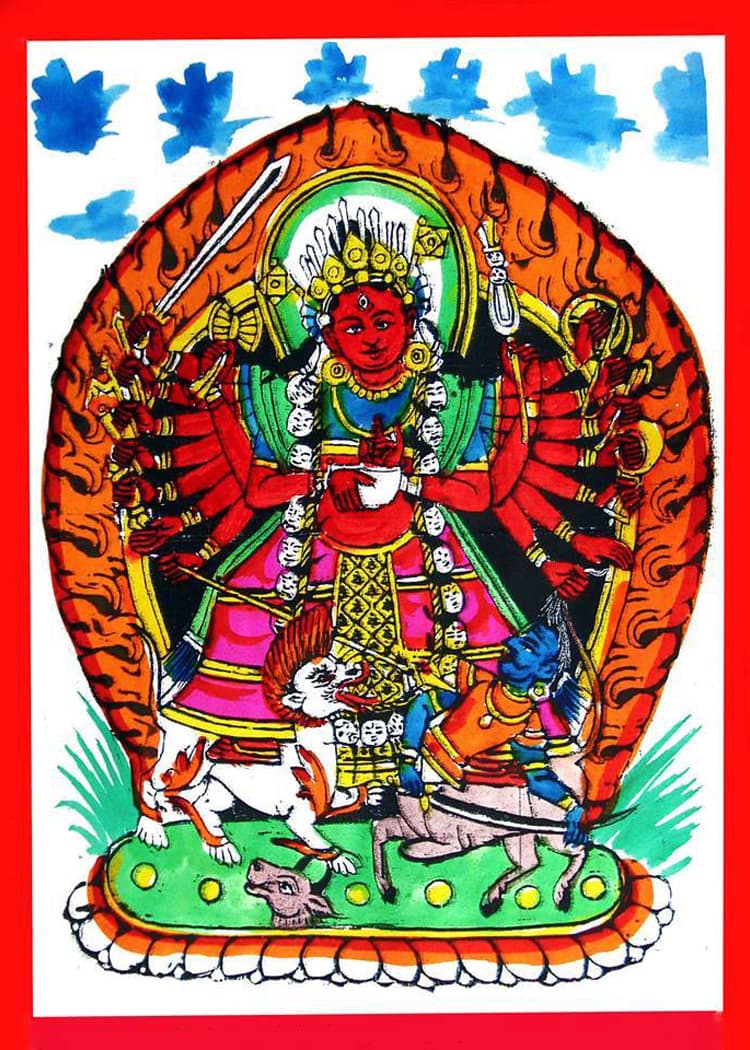
Chandi
Chandi, also known as Chandika, is a fierce Hindu goddess revered as a form of Durga and an incarnation of Chamunda. Derived from the Sanskrit word for "fierce," she is celebrated for vanquishing demons and embodying divine wrath. Chandi is particularly significant in the Shakta tradition and is widely worshipped in West Bengal and Gujarat.

Kaushiki
Kaushiki is a Hindu goddess who emerged from the sheath of Parvati. She is primarily known for her role in defeating the asura brothers Shumbha and Nishumbha, and her emergence also led to the creation of the Matrikas. Kaushiki is considered an incarnation of Mahasaraswati and is also known by epithets such as Ambika and Chandika.