
Manasa
Manasa is a Hindu goddess of snakes, primarily worshipped for protection against snakebite, as well as for fertility and prosperity. Though denied full godhood due to her mixed parentage, she is known for her kindness to devotees and her determination to establish her authority. Her worship is particularly prevalent in eastern India.
Key Facts
- ›She is a Hindu goddess of snakes.
- ›Worshipped mainly for prevention and cure of snakebite, fertility, and prosperity.
- ›Daughter of sage Kashyapa and sister of Vasuki, king of Nāgas.
- ›Wife of sage Jaratkaru and mother of sage Astika.
- ›Also known by epithets such as Vishahari (destroyer of poison) and Padmavati.
- ›Her worship is prominent in eastern India, particularly Bengal and Assam.
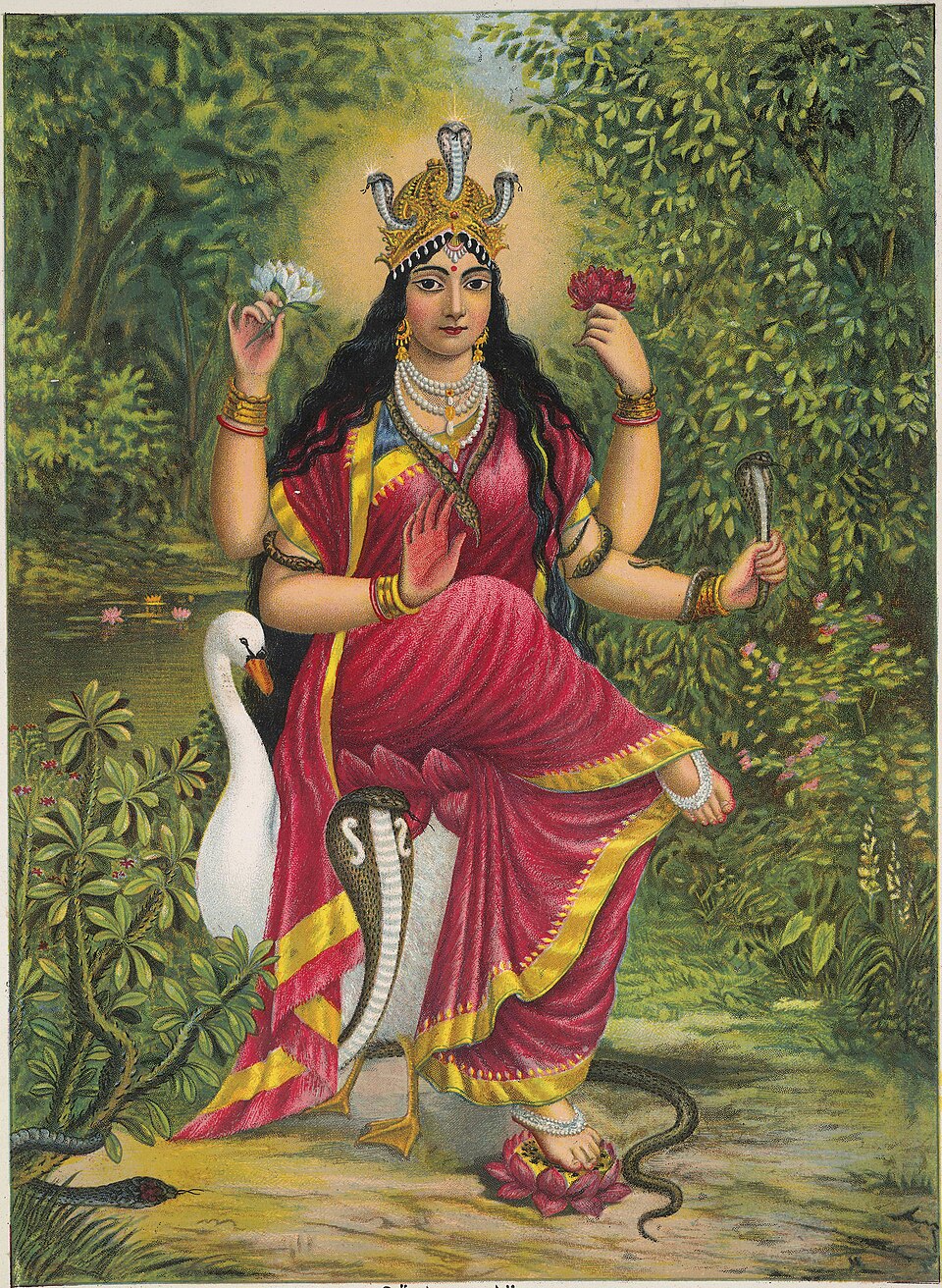
Jaratkaru, Padmavati, Vishahari, Bishohori, Ayonisambhava, Nityā, Nagmati, Mare, Barmati, Gauri
Beautiful Woman With Golden Complexion, Wears Red Garments and Gold Jewelry, Four Arms, Upper Right Hand Holds A Shankh, Left Hand Holds A Lotus, Lower Left Hand Holds A Snake, Right Lower Hand Displays Abhayamudra, Covered With Snakes, Sitting On A Lotus Platform, Standing Upon A Snake, Sheltered By the Canopy of Seven Cobra Hoods, Sometimes Depicted With A Child On Her Lap
Mahabharata, Puranas, Mangalkavyas of Bengal, Padmapurana of Assam
Daughter of Sage Kashyapa, Sister of Vasuki, Wife of Sage Jaratkaru, Mother of Sage Astika
Nag Panchami
Champa, Manasa Devi Mandir At Lala Bagan, Kolkata
Astika
Snakes, Cobras
Folk Deity, Goddess of Snakes, Goddess of Fertility
About Manasa
Manasa is a significant Hindu goddess primarily associated with snakes, worshipped extensively in eastern India, particularly in Bengal and Assam, for protection against snakebite, as well as for blessings of fertility and prosperity. Her worship is also found in Bihar, Odisha, and other northeastern states.
Origin and Mythology
While some traditions suggest a non-Vedic, tribal origin, Manasa was eventually incorporated into the broader Hindu pantheon. According to the Puranas, she is the mind-born daughter of the sage Kashyapa and the sister of Vasuki, the king of the Nāgas. She is married to the sage Jaratkaru and is the mother of the sage Astika. Regional traditions, particularly the Bengali Mangalkavyas, often depict her with a challenging temperament, stemming from her rejection by her father, Shiva, and her husband. These narratives highlight her struggle to establish her divine authority and gain steadfast human devotees.
Manasa's stories often emphasize her determination to overcome obstacles and prove her divinity. In the Mangalkavyas, her efforts to gain widespread worship, notably against the staunch defiance of Chand Sadagar, are central. Through trials and tribulations, including the death and resurrection of Chand's sons, Manasa eventually secures devotion and establishes her place as a revered goddess.
Iconography and Worship
Manasa is typically depicted as a beautiful woman with a golden complexion, adorned with red garments and jewelry. She is often shown with four arms, holding symbols like a conch and a lotus, with a snake in one hand and the gesture of fearlessness (Abhayamudra) in another. She is frequently portrayed seated on a lotus or under the protective canopy of seven cobra hoods, signifying her dominion over snakes. Her vehicle, or vahana, is a swan.
Worship of Manasa often involves the veneration of symbolic representations, such as a cactus branch or an earthen snake image, rather than elaborate idols, though images are also used. She is particularly worshipped during the rainy season when snakes are most active. Her cult gained prominence, sometimes rivaling that of Shiva, leading to her assimilation into the Shaiva and later Brahmanical traditions.
Significance
Manasa's role as a protector against snakebite makes her a vital deity for rural communities where such threats are more prevalent. Her association with fertility and prosperity further solidifies her importance in the lives of her devotees. Despite initial challenges in gaining acceptance, her perseverance and the eventual devotion of figures like Chand Sadagar cemented her status as a major goddess in the folk traditions of Bengal and beyond, representing a powerful aspect of the mother-goddess.
Source: Wikipedia ↗
Frequently Asked Questions
Who is Manasa?
Manasa is a Hindu goddess of snakes. She is worshipped primarily in eastern India for protection from snakebites, and also for blessings of fertility and prosperity.
What is Manasa known for?
Manasa is known for her power to prevent and cure snakebites. She is also invoked for fertility and prosperity. Her stories often highlight her temper and her efforts to gain acceptance and devotion from humans.
What is Manasa's family background?
According to the Puranas, Manasa is the daughter of sage Kashyapa and the sister of Vasuki, the king of the Nāgas (serpents). She is married to sage Jaratkaru and is the mother of sage Astika.
What are Manasa's main epithets?
Manasa is known by several epithets, including Vishahari (or Bishohori), meaning 'destroyer of poison.' She is also called Padmavati, referring to her association with the lotus, and Ayonisambhava, meaning 'one not born of a woman.'
Where is Manasa primarily worshipped?
Manasa is predominantly worshipped in the states of Bihar, Odisha, Bengal, Andhra Pradesh, and other parts of northeastern India. Her worship is especially strong in Bengal, where she is a significant folk deity.
What is Manasa's iconography?
Manasa is depicted as a beautiful woman with a golden complexion, often wearing red garments and jewelry. She typically has four arms, holding a conch and a lotus, with a snake in one hand and displaying the Abhayamudra in another. She is often shown seated on a lotus or sheltered by the hoods of seven cobras.
Related Hindu deities
Gayatri
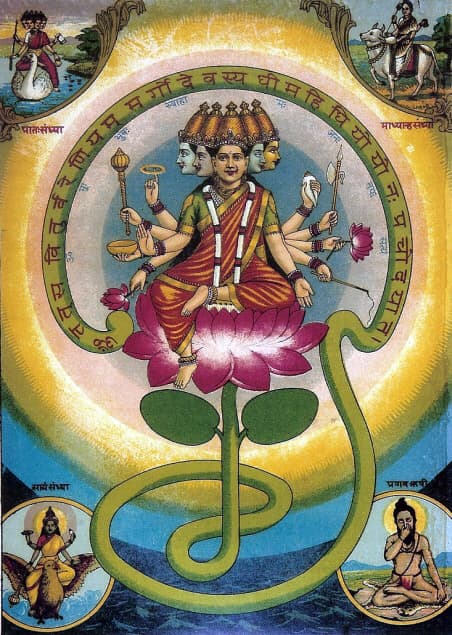
Gayatri is the personified form of the Gayatri Mantra, a significant hymn from Vedic texts, and is also known as Savitri and Vedamata ('mother of the Vedas'). She is considered a manifestation of Saraswati and is often associated with the solar deity Savitṛi, with whom she is sometimes depicted as the consort of the creator god Brahma in Puranic traditions. Gayatri is revered as the Supreme pure consciousness and a powerful goddess.
Devi Kanya Kumari
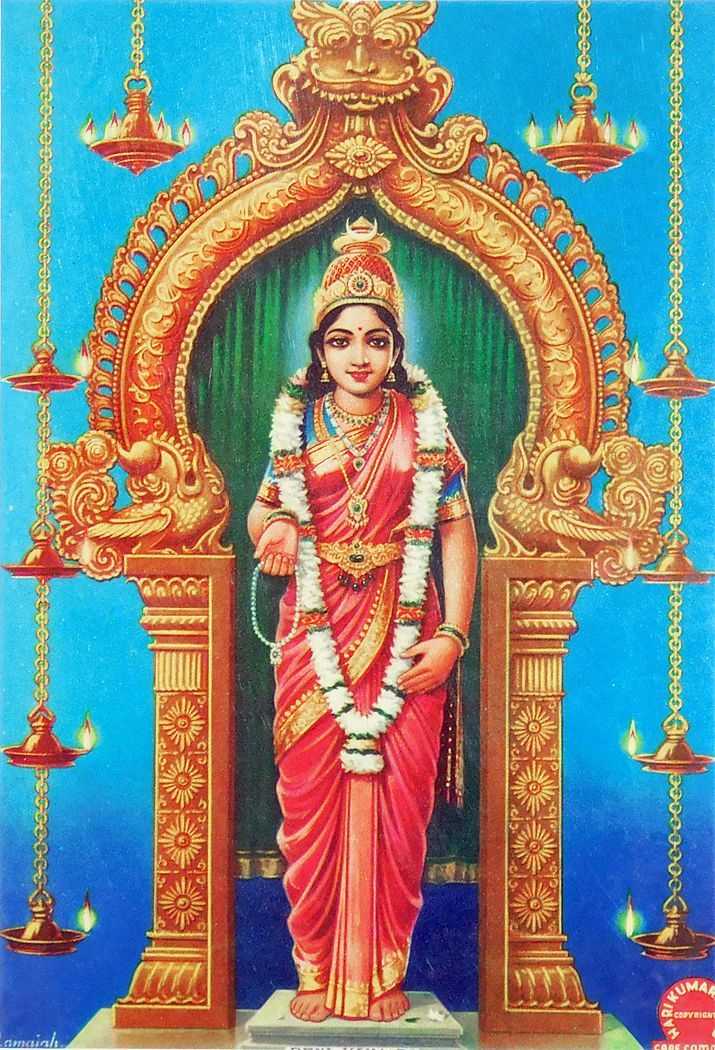
Devi Kanya Kumari is a prominent Hindu goddess, a manifestation of Mahadevi in the form of an adolescent girl. She is revered as a form of Parvati or Lakshmi, and is particularly known for her role in slaying the demon Banasura. Her worship is deeply tied to the town of Kanyakumari at the southernmost tip of India.

Chandraghanta
Chandraghanta is a powerful form of the Hindu goddess Mahadevi, revered as the destroyer of demons and the protector of her devotees. She is the third of the Navadurga and is prominently worshipped on the third day of Navaratri. Her name, meaning 'adorned with the moon as her bell,' refers to the crescent moon on her forehead, and she is depicted with ten arms holding various weapons and a bell.