
Korravai
Blackbuck (kalaimaan)·Female·c. 2nd-century (Silappadikaram)·South India
Korravai is a prominent South Indian and Sri Lankan goddess associated with war, victory, fertility, and agriculture. Her name derives from the Tamil word for "victory," highlighting her martial aspect, while also embodying the nurturing qualities of a mother goddess. She is one of the earliest documented goddesses in Tamil literature, with her worship rooted in ancient traditions.
Key Facts
- ›Korravai is a South Indian and Sri Lankan goddess of war and victory.
- ›She is also revered as a mother goddess, goddess of fertility, agriculture, and hunters.
- ›Her name originates from the Tamil word 'korram,' meaning 'victory' or 'success'.
- ›Earliest references to her appear in the ancient Tamil grammar Tolkappiyam and Sangam literature.
- ›She is depicted with multiple arms holding various weapons and is sometimes shown riding a lion or a blackbuck.
- ›Traditional rural communities offer the first harvest to her.
Kotravai, Atha, Mari, Suli, Neeli
Multiple Arms, Holding Various Weapons
Tolkappiyam, Pattuppattu, Silappadikaram, ParipāṭAl, Agananuru
- Mother of Kartikeya
- Her Other Children With Shiva As A Form of Parvati
PāLai Region, Mahabalipuram, Tamil Nadu
Kartikeya
Lion, Blackbuck
About Korravai
Korravai, also known as Kotravai, is a significant goddess in the religious traditions of South India and Sri Lanka. Her primary domain is war and victory, embodying the ferocity and triumph associated with conflict. However, she also holds a dual role as a nurturing mother goddess, revered for her connection to fertility, agriculture, and the sustenance of life, particularly among hunters.
History and Literature
The worship and recognition of Korravai extend back to ancient times, with her earliest documented references found in the Tolkappiyam, an ancient Tamil grammar considered a foundational text of Sangam literature. She is a recurring figure in various Sangam poems, including those in the Pattuppattu anthology, which date between 300 BCE and 300 CE. The Tamil epic Silappadikaram, from around the 2nd century CE, identifies her as the presiding deity of the Pālai region, known for its arid landscape.
Iconography and Worship
Korravai is often depicted with multiple arms, each capable of wielding different weapons, symbolizing her martial prowess. While she may be shown riding a lion, a common motif for powerful deities, the blackbuck (kalaimaan) is specifically considered her vehicle in Tamil Nadu. Traditional rural communities honor her by offering the first harvest, acknowledging her role in agricultural success. In some ancient texts, her more bloodthirsty aspect is described, with warrior devotees sometimes offering their own heads in a state of religious frenzy. Rituals involving animal and plant sacrifices, along with dancing, are also part of her worship.
Cultural Significance
The cultural impact of Korravai is evident in practices like "Korava Idal" and "Kulavai Idal," which refer to the traditional ritual of ululation. Historically used as a war cry or a call to victory, this ululation remains a significant cultural expression in Kerala and Tamil Nadu, often performed during celebratory occasions such as weddings and festivals, connecting ancient martial traditions with modern joyous events.
Source: Wikipedia ↗
Frequently Asked Questions
Who is Korravai?
Korravai is a South Indian and Sri Lankan goddess primarily associated with war and victory. She also embodies aspects of a mother goddess, fertility, agriculture, and hunters.
What is the meaning of Korravai's name?
Her name is derived from the Tamil word 'korram,' which signifies 'victory,' 'success,' or 'bravery.' This etymology underscores her role as a goddess of triumph.
Where are the earliest mentions of Korravai found?
The earliest references to Korravai are found in the ancient Tamil grammar Tolkappiyam, considered the earliest work of Sangam literature. She is also mentioned in later Tamil literature and anthologies like Pattuppattu.
What are Korravai's visual characteristics?
Korravai is often depicted with multiple arms, holding different weapons. She is sometimes shown riding a lion or a blackbuck, and traditional rural communities offer the first harvest to her.
What is Korravai's connection to fertility and agriculture?
Beyond her martial aspects, Korravai is also venerated as a mother goddess and a symbol of fertility and success in agriculture. Rural communities traditionally offer their first harvest to her.
Related Hindu deities
Devi Kanya Kumari
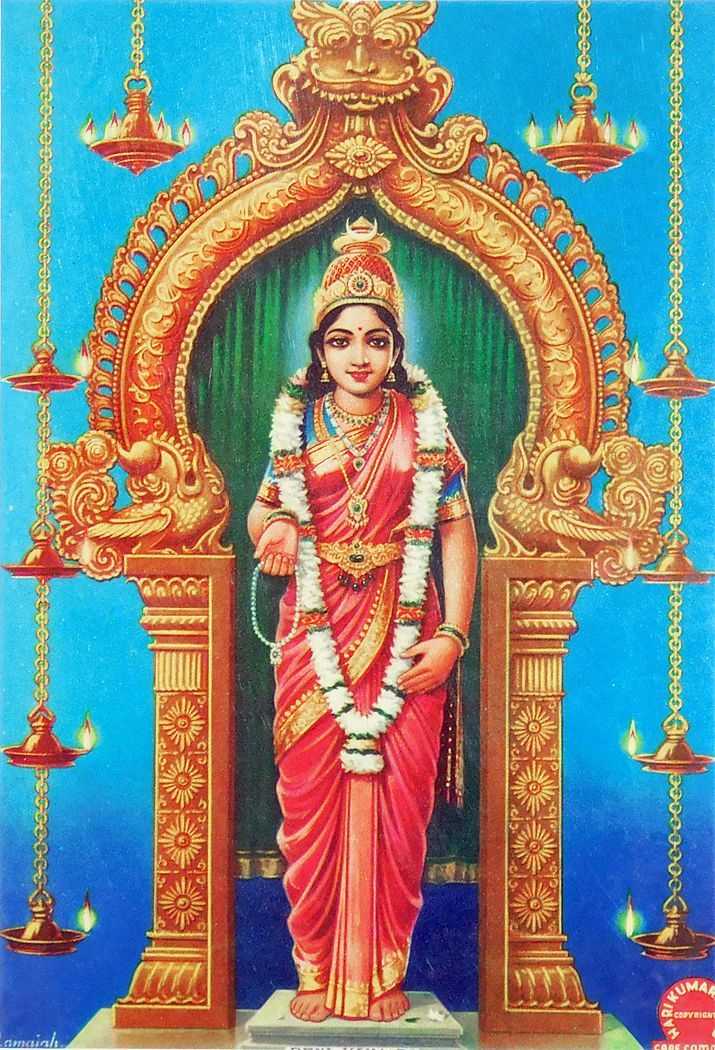
Devi Kanya Kumari is a prominent Hindu goddess, a manifestation of Mahadevi in the form of an adolescent girl. She is revered as a form of Parvati or Lakshmi, and is particularly known for her role in slaying the demon Banasura. Her worship is deeply tied to the town of Kanyakumari at the southernmost tip of India.

Chandraghanta
Chandraghanta is a powerful form of the Hindu goddess Mahadevi, revered as the destroyer of demons and the protector of her devotees. She is the third of the Navadurga and is prominently worshipped on the third day of Navaratri. Her name, meaning 'adorned with the moon as her bell,' refers to the crescent moon on her forehead, and she is depicted with ten arms holding various weapons and a bell.
Gayatri
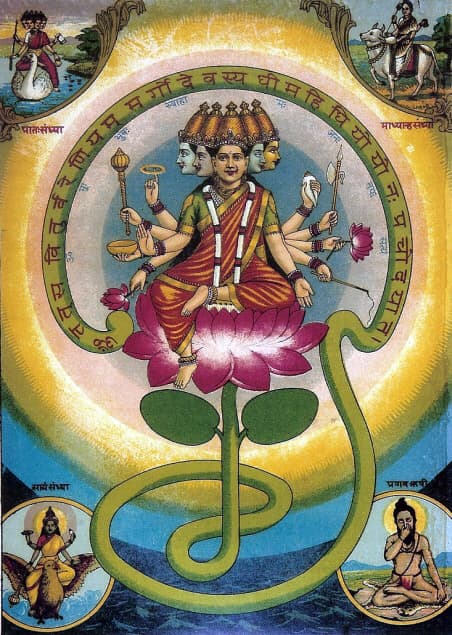
Gayatri is the personified form of the Gayatri Mantra, a significant hymn from Vedic texts, and is also known as Savitri and Vedamata ('mother of the Vedas'). She is considered a manifestation of Saraswati and is often associated with the solar deity Savitṛi, with whom she is sometimes depicted as the consort of the creator god Brahma in Puranic traditions. Gayatri is revered as the Supreme pure consciousness and a powerful goddess.