
Hari
Hari is a significant epithet for the Hindu deity Vishnu, meaning 'the one who takes away,' primarily referring to the removal of sins, darkness, and illusion. It is considered one of Vishnu's 1000 names in the Vishnu Sahasranama and holds immense importance in Vaishnavism, emphasizing Vishnu's role as the preserver and remover of obstacles.
Key Facts
- ›Hari is a primary epithet for the Hindu preserver deity Vishnu.
- ›The name translates to 'the one who takes away,' signifying the removal of sins, darkness, and illusion.
- ›It appears as the 650th name in the Vishnu Sahasranama of the Mahabharata.
- ›Hari is of great significance in Vaishnavism, a major tradition within Hinduism.
- ›The term can also refer to tawny-colored animals like lions, bay horses, or monkeys in Sanskrit epics.
- ›In Gaudiya Vaishnavism, Hari is a name for both Krishna and Vishnu, invoked in the Hare Krishna mahamantra.

Vishnu
Vishnu Sahasranama, Harivamsha
Lion, Bay Horse, Monkey
About Hari
Hari is a primary epithet for the Hindu preserver deity Vishnu, carrying the profound meaning of 'the one who takes away.' This epithet signifies the deity's power to remove sins, dispel darkness and illusion, and clear all obstacles that impede spiritual progress. The name Hari is recognized as the 650th name in the revered Vishnu Sahasranama, a hymn found within the epic Mahabharata, and is considered to be of paramount importance within the Vaishnavism tradition.
Etymology and Significance
The Sanskrit word "Hari" is etymologically linked to the Proto-Indo-European root "*ǵʰel-" meaning 'to shine' or 'to flourish,' related to colors like green and yellow. However, in the context of Hindu religious interpretation, particularly from Adi Sankara's commentary on the Vishnu Sahasranama, Hari is derived from the verbal root "hṛ," meaning 'to grab' or 'to seize.' Within Vaishnavism, this is understood as Vishnu 'taking away' or removing evil and sin. It further extends to describe Vishnu as the one who "destroys samsara," the cyclical entanglement of birth and death, along with the ignorance that perpetuates it. This concept parallels the epithet "Hara" for Shiva, which means 'seizer' or 'destroyer.'
Manifestations and Associations
Beyond its direct association with Vishnu, the name Hari appears in various contexts within Indian religions. The text "Harivamsha" (lineage of Hari) is significant in both Purana and Itihasa traditions. In Sanskrit epics, "hari" can also refer to tawny-colored animals such as lions, bay horses, and monkeys, with the feminine form "Harī" being the mythological mother of monkeys. Harihara represents a fused deity form of Vishnu (Hari) and Shiva (Hara). In Puranic literature, Hari is also the name of a class of gods. The Haridasa movement in Karnataka is a Hari-centered bhakti tradition, and in Gaudiya Vaishnavism, Hari is invoked as a name for both Krishna and Vishnu in the Hare Krishna mahamantra. The mantra "Hari Om" is also a common greeting and sacred chant.
Source: Wikipedia ↗
Frequently Asked Questions
What is the meaning of the name Hari?
The name Hari means 'the one who takes away.' In Hinduism, it specifically refers to the one who removes sins, darkness, and illusion, thereby removing obstacles to spiritual progress.
Who is Hari in Hinduism?
Hari is a primary epithet for Vishnu, the preserver deity in the Hindu trinity. He is revered for his role in maintaining cosmic order and removing hindrances on the spiritual path.
Where does the name Hari appear in scriptures?
The name Hari is prominently featured as the 650th name in the Vishnu Sahasranama, found within the epic Mahabharata. It is also a key name invoked in the Hare Krishna mahamantra.
What is the significance of Hari in Vaishnavism?
Hari is of great significance in Vaishnavism, where Vishnu is worshipped as the supreme deity. The epithet emphasizes Vishnu's power to remove evil, ignorance, and the entanglement of the cycle of birth and death (samsara).
Are there other contexts for the name Hari?
Yes, in Sanskrit epics, 'hari' can refer to tawny-colored animals such as lions, bay horses, or monkeys. The feminine form, Harī, is noted as the mythological mother of monkeys.
Related Hindu deities

Matsya
Matsya is the fish avatar of the Hindu god Vishnu, often considered the first of his ten primary incarnations. He is primarily known for rescuing the first man, Manu, from a great deluge and for saving the sacred Vedas from a demon. Matsya plays a significant role in Hindu mythology, symbolizing divine protection and the preservation of knowledge and humanity.
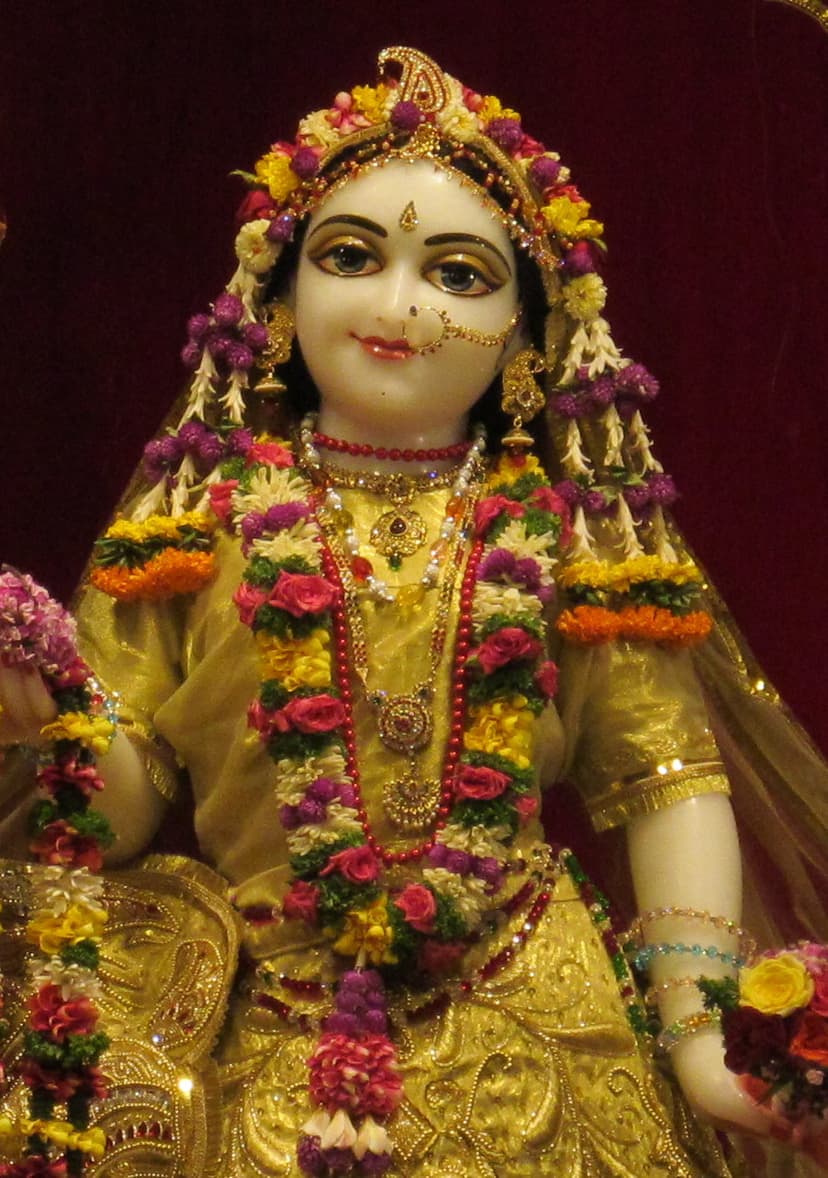
Radha
Radha is a principal Hindu goddess and the chief consort of Krishna. Revered as the goddess of love, compassion, and devotion, she is often depicted as an avatar of Lakshmi or as the supreme feminine energy of Krishna. Her profound love for Krishna has inspired countless devotional traditions, literary works, and artistic expressions.

Caturvyūha
Caturvyūha, meaning 'four emanations,' is an ancient Indian religious concept that initially referred to the four earthly emanations of the Supreme deity Nārāyaṇa, later identified as Viṣṇu. These emanations are primarily associated with the Vrishni heroes, with Vāsudeva being the first and most prominent. The concept evolved from earlier cults of heroes into a doctrine of divine incarnations, becoming a foundational element in the development of Vaishnavism.