
Guruvayurappan
Guruvayurappan is a form of the Hindu deity Vishnu, primarily worshipped in Kerala, India. He is the presiding deity of the Guruvayur Temple, where he is venerated as Krishna in his child form, also known as Guruvayur Unnikkannan. The deity is significant for his devotional legends and the temple named after him.
Key Facts

Lord / Father of Guruvayoor, Guruvayoorappan, Guruvayur Unnikkannan, Little Krishna of Guruvayoor
- Worshipped As Krishna In His Child Form
- Associated With A Peacock Feather, As Seen In the Krishnanattam Drama
Narayaneeyam, Krishnageethi
Ekadasi Festival
Guruvayur Temple, Guruvayoor, Thrissur, Kerala
Cobra, Peacock
Presiding Deity
About Guruvayurappan
Guruvayurappan, often rendered as Guruvayoorappan, is a significant form of the Hindu deity Vishnu, primarily worshipped in the South Indian state of Kerala. The name literally translates to "Lord / Father of Guruvayoor," indicating his prominent status as the presiding deity of the renowned Guruvayur Temple. Within this sacred space, he is worshipped as Krishna, specifically in his beloved child form, also known as Guruvayur Unnikkannan, meaning "Little Krishna of Guruvayoor."
Legends and Devotion
The devotional lore surrounding Guruvayurappan is rich and varied, illustrating his divine interventions and profound compassion for his devotees. One notable legend tells of a king destined to die by a cobra's bite, who was saved by his unwavering meditation and prayer to Guruvayurappan, the deity absorbing the venom due to the devotee's complete absorption in God. Another tale recounts King Manaveda's intense desire to see Krishna, leading to a unique arrangement where he could witness the deity playing as a child, though he momentarily forgot himself and rushed to embrace the divine child, leaving behind a peacock feather that became part of the iconography for Krishna in the dance drama Krishnanattam.
Further stories highlight Guruvayurappan's empathy and willingness to share in his devotees' burdens. In one account, a poor boy steals a banana, shares it with the deity by placing half in the temple's donation box, and is followed around the temple by Guruvayurappan himself, who explains to the shopkeeper that as he received a share of the stolen fruit, he must also share the punishment. Similarly, a celestial voice (Asareeri) once intervened to absolve a young boy of blame for an uneaten offering, confirming that the deity had indeed consumed it.
Temple and Cultural Significance
The Guruvayur Temple itself, located in Thrissur, Kerala, is a major pilgrimage site. While much of the current temple structure dates from the 16th and 17th centuries, its history and importance are deeply intertwined with the worship of Guruvayurappan. The temple's eastern gopuram bears an inscription referring to the town as "Gurupavanapura," further solidifying the deity's association with the location. The devotion to Guruvayurappan has inspired artistic and literary works, such as Melpathur Narayana Bhattathiri's Sanskrit work "Narayaneeyam" and Poonthanam's Malayalam work "Jnanappana," both deeply connected to the deity and the Guruvayur Temple.
Source: Wikipedia ↗
Frequently Asked Questions
Who is Guruvayurappan?
Guruvayurappan is a form of the Hindu deity Vishnu, worshipped predominantly in Kerala, India. He is the central deity of the Guruvayur Temple and is venerated as the child form of Krishna.
What is the significance of the Guruvayur Temple?
The Guruvayur Temple is the main place of worship for Guruvayurappan. The town of Guruvayur itself is named after the deity, signifying his central role in the region's religious landscape.
What is Guruvayurappan known for?
Guruvayurappan is known for his child form, Krishna, and is the subject of many devotional legends. These stories often depict his miraculous interventions in the lives of his devotees, showcasing his compassion and power.
What are some notable legends associated with Guruvayurappan?
Legends include a king who was destined to die by snakebite but was saved by his devotion, a king who was allowed to witness Krishna playing, a shopkeeper whose stolen banana was shared by the deity, and a celestial voice confirming a boy's truthful account of feeding the deity.
What is Guruvayurappan's connection to Krishna?
Guruvayurappan is worshipped as Krishna, specifically in his innocent child form, often referred to as 'Guruvayur Unnikkannan' or 'Little Krishna of Guruvayoor'.
Related Hindu deities
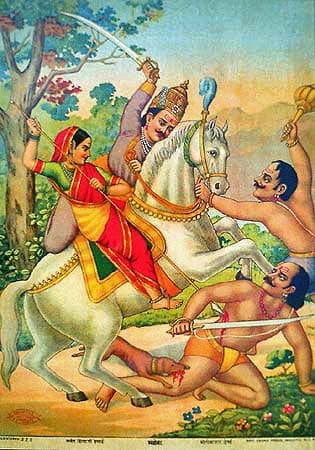
Khandoba
Khandoba is a prominent Hindu deity, primarily worshipped in Maharashtra and Karnataka, often seen as a manifestation of Shiva. He is revered as a family deity (Kuladevata) and the patron deity for various castes, including warriors, farmers, and tribal communities. Khandoba is known for his victory over demons Mani and Malla and his marriages, with his worship reflecting syncretic traditions that include Jain and Muslim influences.

Nataraja
Nataraja is a depiction of the Hindu deity Shiva as the divine cosmic dancer, known for his tandava dance. This iconic form symbolizes Shiva's cosmic functions of creation, preservation, and destruction, and is widely revered as one of the highest forms of Shiva, particularly in Tamil Nadu. The Nataraja sculpture is a significant symbol of Indian culture and Hindu art, representing the interconnectedness of religion and the arts.

Sharabha
Sharabha is an eight-legged deity in Hindu tradition, often depicted as a hybrid of a lion and a bird, possessing immense strength. Primarily recognized in Shaiva traditions, Sharabha is believed to be an incarnation of Shiva who assumed this form to pacify Narasimha, Vishnu's fierce man-lion avatar. While Shaiva scriptures detail this conflict, Vaishnava traditions refute Narasimha's defeat and sometimes identify Sharabha as a name for Vishnu or describe Vishnu's alternate form, Gandabherunda, defeating Sharabha.