
Chhinnamasta
Female·Kalikula sect of Shaktism
Chhinnamasta, meaning "She whose head is severed," is a formidable Hindu goddess and one of the Mahavidyas, representing a fierce aspect of Mahadevi. Known for her self-decapitated, nude form, she symbolizes the paradoxical nature of life and death, sexual energy and control, and destruction and recreation. She is a significant Tantric deity, particularly within the Kalikula sect of Shaktism, and is associated with spiritual self-realization and the awakening of kundalini.
Key Facts
- ›Chhinnamasta is one of the Mahavidyas, a group of ten esoteric Tantric goddesses.
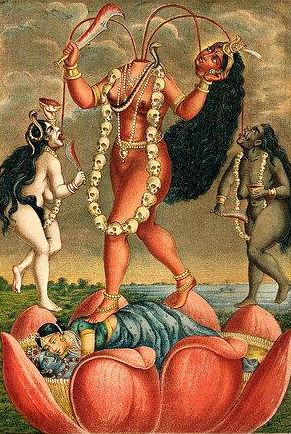
- ›Her iconography features her holding her own severed head and a scimitar, with blood spurting from her neck.
- ›She symbolizes both life-giving and life-slaying aspects, sexual self-control, and primal sexual energy.
- ›Worship is rare in public temples, but she is significant among esoteric Tantric practitioners.
- ›Her origins are believed to be rooted in Buddhist traditions, specifically the goddess Vajrayogini.
- ›She represents radical transformation, the cycle of creation, dissolution, and re-creation.
Chhinnamastika, Chhinnamasta Kali, Prachanda Chandika, Jogani Maa
- Nude Figure, Often Standing Or Seated On A Divine Copulating Couple
- Holds Her Own Severed Head In One Hand
- Holds A Scimitar Or Knife In the Other Hand
- Three Jets of Blood Spurt From Her Neck, Drunk By Her Head and Attendants
- Wears A Serpent As A Sacred Thread
- Adorned With A Garland of Skulls
- Has Loose and Dishevelled Hair
- Often Depicted With A Third Eye
- Red Or Orange Complexion
- Attended By Two Female Yogini Companions, Dakini and Varnini
Shakta Maha-Bhagavata Purana, Brihaddharma Purana, Pranatoshini Tantra, Sadhanamala, Tantrasara, Chhinnamastakalpa
Nepal, Eastern India
Scimitar, Knife, Scissor-Like Object
Serpent
Goddess, Mahavidya, Tantric Deity
Ferocious Aspect of Mahadevi, Esoteric Deity
About Chhinnamasta
Chhinnamasta, a name meaning "She whose head is severed," is a powerful and fearsome Hindu goddess, revered as one of the Mahavidyas. She represents a ferocious manifestation of Mahadevi, the supreme mother goddess. Her striking iconography depicts her nude, having self-decapitated, holding her own severed head in one hand and a scimitar in the other, with blood flowing from her neck to sustain herself and her attendants. This imagery symbolizes the profound paradoxes of existence: life and death, destruction and creation, sexual energy and strict control.
Significance and Symbolism
Chhinnamasta embodies the dual nature of the divine feminine, acting as both a life-giver and a life-slayer. She is associated with spiritual self-realization and the awakening of kundalini energy. Her legends often highlight themes of self-sacrifice, maternal devotion, sexual dominance, and intense fury. Despite her formidable appearance, she is also seen as a giver of ultimate bliss and spiritual enlightenment.
Origins and Worship
Chhinnamasta is primarily worshipped within the Kalikula sect of Shaktism, a goddess-centric tradition. While public temples dedicated to her are rare, with most found in Nepal and eastern India, she holds significant importance among esoteric Tantric practitioners. Her origins are widely believed to have roots in Buddhist traditions, particularly the severed-headed form of Vajrayogini known as Chinnamunda. Scholarly consensus points to her existence by the 9th century CE, with influences from various ancient traditions shaping her iconography and mythology.
Iconography and Mythology
Her visual representation is detailed: a sixteen-year-old girl, typically with red or orange skin, adorned with jewels and serpents, standing or sitting on a divine couple engaged in copulation, symbolizing the transcendence of worldly desires. Three streams of blood flow from her neck, consumed by her head and her two yogini attendants, Dakini and Varnini, who are also depicted with fierce attributes. Her mythology includes tales of self-sacrifice, such as offering her head to satisfy the hunger of her attendants, and her role in the cosmic cycles of destruction and recreation.
Source: Wikipedia ↗
Frequently Asked Questions
What does the name Chhinnamasta mean?
The name Chhinnamasta is derived from Sanskrit and translates to "She whose head is severed." This name directly refers to her most striking and unique iconography.
Who are the Mahavidyas?
The Mahavidyas are a group of ten fearsome goddesses from the esoteric tradition of Tantra within Hinduism. They represent different aspects of the divine feminine and are often associated with profound spiritual knowledge and power.
What is the symbolism of Chhinnamasta's self-decapitation?
Her self-decapitation symbolizes extreme self-sacrifice for the nourishment and sustenance of others, representing the cyclical nature of life, death, and rebirth. It also signifies spiritual awakening and the overcoming of ego.
Where is Chhinnamasta primarily worshipped?
While temples devoted to Chhinnamasta and public worship are rare, she is found in Nepal and eastern India. She is particularly significant and worshipped among esoteric Tantric practitioners.
What is the relationship between Chhinnamasta and Buddhist deities?
Chhinnamasta is closely related to the Tibetan Buddhist goddess Vajrayogini, particularly her severed-headed form known as Chinnamunda. Scholars generally agree that the Hindu Chhinnamasta likely originated from this Buddhist figure.
What does Chhinnamasta represent in terms of sexual energy and control?
She is seen as a paradox, embodying both sexual self-control and primal sexual energy. Her iconography, often depicted trampling a copulating couple, can symbolize the transcendence of lust and the redirection of sexual energy for spiritual purposes.
Related Hindu deities
Devi Kanya Kumari
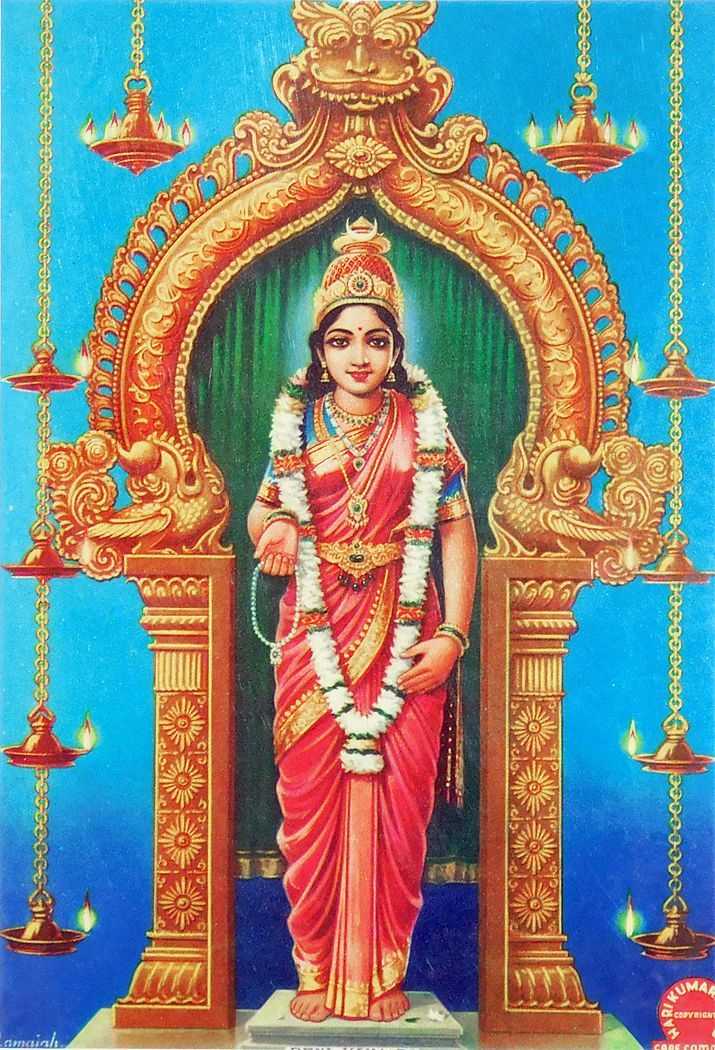
Devi Kanya Kumari is a prominent Hindu goddess, a manifestation of Mahadevi in the form of an adolescent girl. She is revered as a form of Parvati or Lakshmi, and is particularly known for her role in slaying the demon Banasura. Her worship is deeply tied to the town of Kanyakumari at the southernmost tip of India.

Chandraghanta
Chandraghanta is a powerful form of the Hindu goddess Mahadevi, revered as the destroyer of demons and the protector of her devotees. She is the third of the Navadurga and is prominently worshipped on the third day of Navaratri. Her name, meaning 'adorned with the moon as her bell,' refers to the crescent moon on her forehead, and she is depicted with ten arms holding various weapons and a bell.
Gayatri
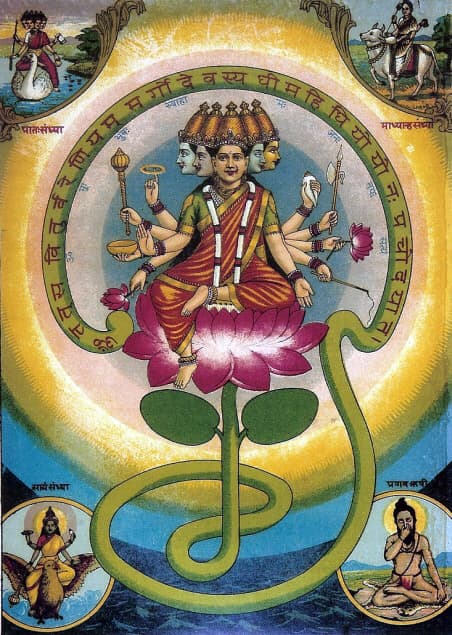
Gayatri is the personified form of the Gayatri Mantra, a significant hymn from Vedic texts, and is also known as Savitri and Vedamata ('mother of the Vedas'). She is considered a manifestation of Saraswati and is often associated with the solar deity Savitṛi, with whom she is sometimes depicted as the consort of the creator god Brahma in Puranic traditions. Gayatri is revered as the Supreme pure consciousness and a powerful goddess.