
Bhima Kali
Rudrani is an epithet for the consort of the Vedic deity Rudra, who is considered a form of Shiva in contemporary Hinduism. Primarily identified with Parvati, Rudrani represents the active energy of Rudra and embodies the inseparable union of "Energy and Being." She is also recognized as one of the Saptamatrikas (Seven Mothers) and is associated with fierce aspects of the Goddess.
Key Facts
- ›Rudrani is an epithet for the consort of Rudra, a Vedic deity considered a form of Shiva.
- ›She is primarily identified with Parvati, the consort of Shiva.
- ›Rudrani represents the active, immanent energy of Rudra, embodying the union of "Energy and being."
- ›She is associated with the fierce (ugra) aspects of the Goddess and is identified as one of the Saptamatrikas (seven Mothers).
- ›The name Rudrani, meaning "the wife of Rudra," is grammatically formalized in Sanskrit texts dating back to the 5th century BCE.
- ›She is described as presiding over Rudraloka, the celestial realm of Rudra, in the Devi Bhagavata Purana.
Rudrāṇī
- Image of Rudrani, Particularly In Her Role As One of the Saptamatrikas.
- Depicted In Temple Complexes Alongside Shiva and Other Deities.
Shiva Purana, Vayu Purana, Linga Purana, Skanda Purana, Padma Purana, Devi Bhagavata Purana, AṣṭāDhyāYī of PāṇIni
Consort of Rudra, Consort of Shiva, Identified With Parvati, Identified With Uma
Rudrakoti, Kusasthali
About Bhima Kali
Rudrani
Rudrani is a significant epithet for the consort of Rudra, a Vedic deity considered a manifestation of Shiva in contemporary Hinduism. Primarily identified with Parvati, the principal consort of Shiva, Rudrani embodies the active, immanent energy of Rudra, representing the inseparable union of "Energy and Being" that constitutes the divine. Her name, meaning "the wife of Rudra," is found in Sanskrit texts dating back to at least the 5th century BCE, indicating its ancient theological formalization.
Scriptural Identity and Roles
Puranic literature frequently synthesizes various goddess epithets into the singular identity of Mahadevi, often identified as Parvati or Uma. Texts such as the Vayu Purana and Shiva Purana explicitly equate Rudrani with Uma and Parvati, respectively. In the theological framework of Shaktism, where the Goddess is supreme, Rudrani presides over Rudraloka, the celestial realm of Rudra. She is understood as the Shakti (power) that enables Rudra's cosmic actions, embodying Prakriti (Primal Nature) and Kriya Shakti (Power of Action).
Rudrani is also recognized for her fierce (ugra) aspects, mirroring the formidable nature of Rudra. This fierce persona is linked to her role as one of the Saptamatrikas (Seven Mothers), divine shaktis personifying the powers of principal male deities. Her protective and martial functions are highlighted in scriptural narratives and prayers, where she is invoked to overcome misfortunes and combat demons. The association of Rudrani with specific sacred sites, such as Rudrakoti, grounds her abstract theology within the sacred geography of India.
Source: Wikipedia ↗
Frequently Asked Questions
Who is Rudrani?
Rudrani is an epithet for the consort of Rudra, a Vedic deity who is considered a form of Shiva in modern Hinduism. She is most frequently identified with Parvati, Shiva's primary consort.
What does the name Rudrani signify?
The name Rudrani is a Sanskrit feminine noun that literally means "the wife of Rudra" or "the consort of Rudra." It is formed by adding the feminine suffix -ānī to the name Rudra.
How is Rudrani related to Parvati and Uma?
Puranic texts often synthesize various goddess epithets into the singular identity of Mahadevi, who is identified as Parvati or Uma. The Vayu Purana and Shiva Purana explicitly refer to Rudrani as Uma and Parvati, respectively, establishing a synonymity between these names.
What is Rudrani's role in Shaktism?
In Shaktism, where the Goddess is venerated as the supreme reality, Rudrani is identified as the Divine Mother who presides over Rudraloka. She is considered the Shakti (power) that assists Rudra and is identified as Prakriti (Primal Nature) and Kriya Shakti (Power of Action).
What are Rudrani's fierce aspects?
The name Rudrani inherently carries the fierce (ugra) connotations of her consort, Rudra. She is associated with the formidable nature of Rudra and is depicted as a protector, sometimes sending emanations into combat, and is identified as one of the fierce Matrika goddesses.
Where is Rudrani mentioned in scriptures?
Rudrani is referenced across numerous Puranic scriptures, including the Shiva Purana, Vayu Purana, Linga Purana, Skanda Purana, Padma Purana, and Devi Bhagavata Purana. She is also mentioned in early Sanskrit texts like the Aṣṭādhyāyī by Pāṇini.
Related Hindu deities

Kamakhya
Kamakhya is a prominent Shakta Tantric mother goddess, embodying Kama (desire) and revered as the goddess of longing. Her primary abode is the Kamakhya Temple in Assam, India, situated on Nilachal hills. She is worshipped in a non-iconic, un-anthropomorphic form of a stone shaped like a yoni, symbolizing her connection to creation and fertility.
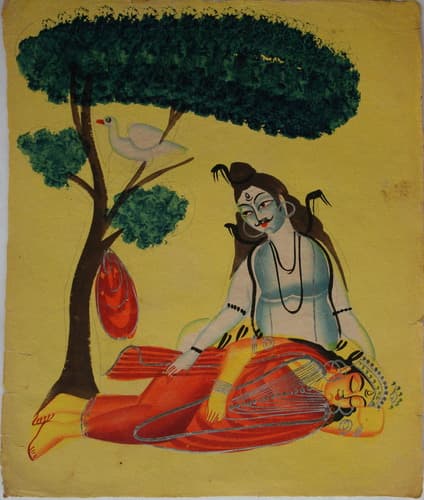
Sati
Sati, also known as Dakshayani, is a prominent Hindu goddess revered as an aspect of the mother goddess Shakti. She is primarily known as the first wife of Shiva and the daughter of Daksha. Her most significant legend involves her self-immolation to protest her father's insult to her husband, Shiva, which ultimately led to the formation of the sacred Shakti Pithas.
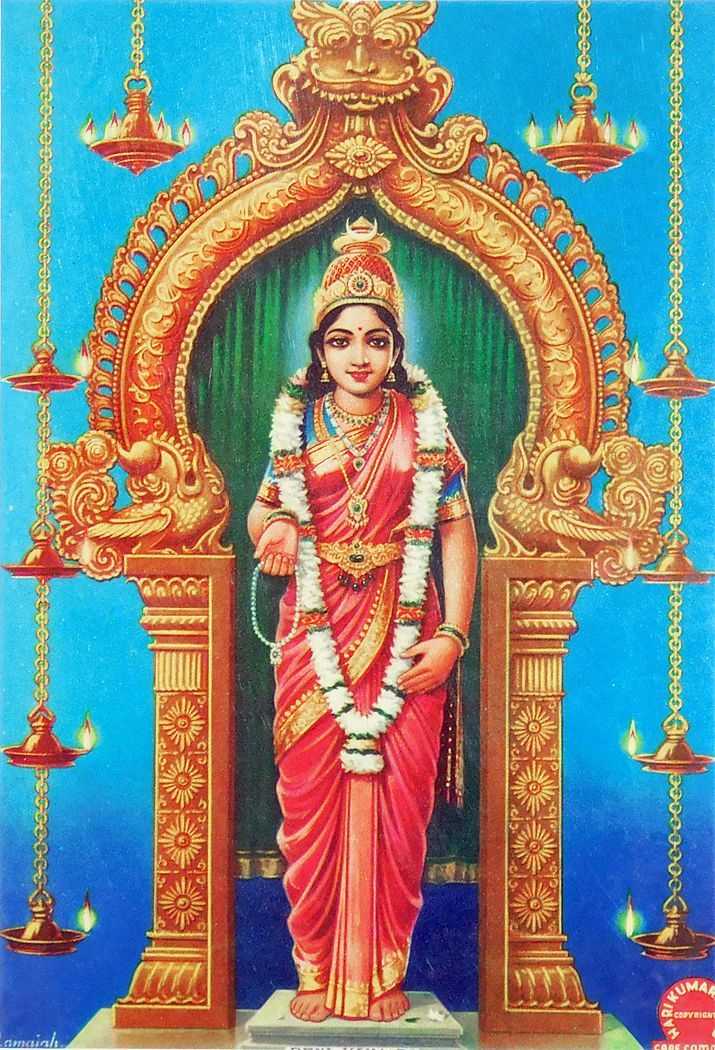
Devi Kanya Kumari
Devi Kanya Kumari is a prominent Hindu goddess, a manifestation of Mahadevi in the form of an adolescent girl. She is revered as a form of Parvati or Lakshmi, and is particularly known for her role in slaying the demon Banasura. Her worship is deeply tied to the town of Kanyakumari at the southernmost tip of India.