
Shuten Doji
Shuten-dōji is a prominent oni (demon) leader in Japanese mythology, known for his lair at Mount Ōe and his eventual defeat by the hero Minamoto no Raikō. His legend is documented in various medieval Japanese texts, including the Ōeyama Ekotoba and Otogi-zōshi, where he is depicted as a formidable supernatural being responsible for abductions and murder.
Key Facts
- ›Shuten-Dōji is a mythical oni leader from Japan, often associated with Mount Ōe.
- ›His legend is primarily recorded in medieval Japanese texts like the Ōeyama Ekotoba and Otogi-zōshi.
- ›He was famously defeated by the hero Minamoto no Raikō, though his severed head still attempted to bite the hero.
- ›The oldest surviving text detailing his legend dates to the 14th century.
- ›He is considered one of the three most feared yōkai in medieval Kyoto.
酒呑童子, 酒顛童子, 酒天童子, 朱点童子
Abduction, Murder, Terrorizing the Capital
Shape-Shifting, Immense Strength, Resistance To Ordinary Weapons
ōEyama Ekotoba, Otogi-ZōShi, Otogi Bunko
Minamoto No Raikō, Fujiwara No HōShō, Abe No Seimei, Minamoto No Yorimitsu, Fujiwara No Yasumasa, Watanabe No Tsuna, Ibaraki-DōJi
Love of Sake, Cruelty, Cannibalism
- the Head of Shuten-DōJi Was Preserved As A Trophy In the Treasure House of ByōDō-In Temple.
- Some Local Legends Associate Shuten-DōJi With Illnesses of the Head, With A Shrine At Oi-No-Saka Said To Perform Miracles For Such Ailments.
- A Sake Bottle and Cup Allegedly Used By Shuten-DōJi Are Preserved At Nariaiji Temple.
Minamoto No Raikō, Fujiwara No Yasumasa, the Four Deities, the Three Gods, the Sword DōJigiri, the Sword Onikiri, the Sword Onikirimaru
- Localization of His Lair To Different Mountains .
- Variations In the Names of His Subordinates and Their Roles.
- Differences In the Specific Divine Sake Used To Incapacitate Him.
Sake, Helmets, Swords, Red Body, Multiple Horns, Multiple Eyes
About Shuten Doji
Shuten-dōji
Shuten-dōji (酒呑童子) is a formidable oni, or demon leader, central to medieval Japanese legends. He is renowned for his reign of terror from his lair, most famously at Mount Ōe (大江山), northwest of Kyoto, and for his eventual, dramatic defeat at the hands of the hero Minamoto no Raikō.
Legend and Texts
The oldest surviving account of Shuten-dōji's legend is found in the 14th-century illustrated scroll, the Ōeyama Ekotoba. His story was later incorporated into the popular corpus of Otogi-zōshi (Companion Tales), which were widely disseminated through woodblock-printed editions. These texts depict Shuten-dōji as a powerful and cruel being responsible for abducting and murdering people, particularly young women, in the capital city.
The Confrontation with Minamoto no Raikō
According to the most prominent versions of the legend, Shuten-dōji's reign of terror prompted Emperor Ichijō to command Minamoto no Raikō and his warriors to exterminate him. Disguised as yamabushi (mountain ascetics) and aided by divine sake that incapacitated the demon, Raikō and his men infiltrated Shuten-dōji's stronghold. In a fierce battle, Raikō decapitated the oni. However, even in death, Shuten-dōji's severed head lunged at Raikō, who narrowly escaped by wearing multiple helmets stacked on his head.
Origin and Appearance
Various local legends offer different origins for Shuten-dōji, suggesting he was born in Echigo Province, or even had connections to the myōjin of Mount Ibuki. In his true form, as described in the Ōeyama Ekotoba, he was a colossal figure standing fifty feet tall, possessing a red body, a five-horned head, fifteen eyes, and limbs of varying colors. His insatiable thirst for sake is a recurring motif in his tales.
Cultural Significance
Shuten-dōji is considered one of the three most feared yōkai in medieval Kyoto, alongside Tamamo-no-Mae and Ōtakemaru. His defeat and the subsequent preservation of his head as a trophy in the treasure house of Byōdō-in Temple symbolized the triumph of order over chaos and the power of the ruling class. His story continues to be a significant element in Japanese folklore and popular culture.
Source: Wikipedia ↗
Frequently Asked Questions
Who was Shuten-dōji?
Shuten-dōji was a mythical oni, or demon leader, in Japanese legend. He is infamous for his strength and his lair at Mount Ōe, from where he terrorized the capital city of Kyoto.
What is Shuten-dōji known for?
He is best known for being defeated by the hero Minamoto no Raikō. According to legend, Raikō decapitated Shuten-dōji, but the demon's head still tried to bite him, forcing Raikō to wear multiple helmets for protection.
Where was Shuten-dōji's lair?
Shuten-dōji's lair was traditionally located at Mount Ōe, northwest of Kyoto, though some versions of the legend place it at Mount Ibuki or another Mount Ōe on the western edge of Kyoto.
What are the oldest texts about Shuten-dōji?
The oldest surviving text is the 14th-century Ōeyama Ekotoba (Tale of Mount Ōe in Pictures and Words). Later, his story was incorporated into the Otogi-zōshi and widely read in woodblock-printed versions.
What was Shuten-dōji's appearance?
According to the Ōeyama Ekotoba, Shuten-dōji returned to his true form when he slept. He was described as being 50 feet tall with a red body, a five-horned head, fifteen eyes, and legs and arms of different colors.
Related Demons
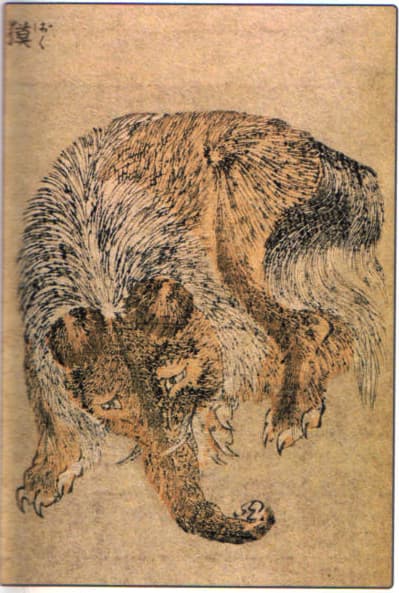
Baku
Baku are supernatural beings originating from Chinese folklore, known in Japan for their ability to devour nightmares. These creatures are said to have been formed from leftover pieces of divine creation, and they have a long history in Japanese folklore and art. While traditionally depicted as chimera-like beings, their form and specific attributes have evolved over time.

Hannya
The Hannya is a mask used in traditional Japanese Noh theater, symbolizing a jealous female demon or vengeful spirit (onryō). It is characterized by bull-like horns, metallic eyes, and a leering mouth, and its appearance varies to reflect the intensity of a woman's jealousy, resentment, and anger. The Hannya mask is notable for its ability to convey complex emotions, appearing frightening when viewed directly and sorrowful when tilted.
Mazoku
Mazoku are supernatural beings primarily from Japanese mythology and fantasy, generally referring to evil entities like devils and demons. The term "mazoku" can also encompass beings from other traditions such as Hindu asura and Zoroastrian daeva. A "maō" (demon king) is a ruler of mazoku, or a more general dark lord figure in fiction.