
Baku
Japanese folklore (derived from Chinese myth)·Folklore·Japan·Supernatural being
Baku are supernatural beings originating from Chinese folklore, known in Japan for their ability to devour nightmares. These creatures are said to have been formed from leftover pieces of divine creation, and they have a long history in Japanese folklore and art. While traditionally depicted as chimera-like beings, their form and specific attributes have evolved over time.
Key Facts
- ›Baku originate from Chinese folklore and were present in Japan as early as the Muromachi period.
- ›They are traditionally believed to devour nightmares, protecting people from bad dreams.
- ›Early descriptions depict Baku as chimera with features of an elephant, rhinoceros, cow, bear, and tiger.
- ›A common ritual involves calling out to Baku to consume a bad dream, but this should be done sparingly.
- ›In modern times, the term 'baku' also refers to the Malayan tapir.
- ›Baku have appeared in various forms of Japanese art, including wood-block prints and carvings, as well as modern manga and anime.
Mo
Nightmares, Dreams, Pestilence, Evil
Devours Nightmares, Protects Against Pestilence, Protects Against Evil
Sankai Ibutsu, Kaii-YōKai Denshō Database, Works By Mizuki, Works By Lafcadio Hearn
Protection From Fear, Potential For Emptiness If Overused
- Calling Out To Baku To Eat A Bad Dream.
- Using Baku Talismans At Bedside.
- Summoning For Protection From Bad Dreams Before Sleep.
- Originates From Chinese Folklore .
- In Modern Japan, the Term Also Refers To the Malayan Tapir.
Talismans
About Baku
Baku are supernatural beings originating from Chinese folklore that are prominently featured in Japanese mythology and art, primarily known for their ability to devour nightmares. These creatures are said to have been formed from leftover pieces of divine creation by the gods after they finished crafting other animals. Their history in Japan spans centuries, with early attestations dating back to the Muromachi period (14th–15th century).
History and Description
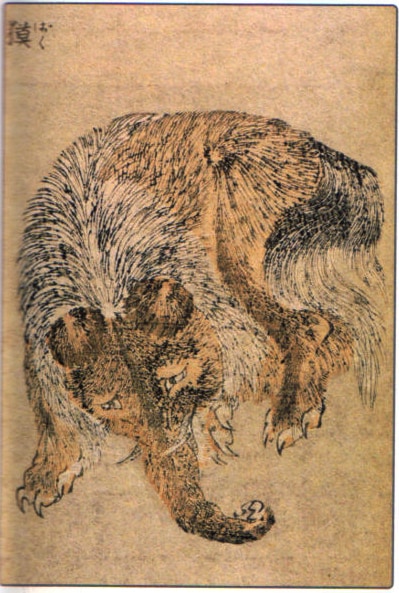
The traditional Japanese Baku is a dream-eating entity. Early accounts, such as a 17th-century Japanese manuscript, describe the Baku as a chimera possessing features from various animals, including an elephant's trunk and tusks, a rhinoceros's ears, a cow's tail, a bear's body, and a tiger's paws. This early iteration was believed to protect against pestilence and evil, though dream-eating was not its primary attributed ability. By the late 18th century, as seen in a 1791 wood-block illustration, the Baku was specifically depicted as a dream-destroying creature, maintaining its elephantine head and tusks, along with horns and tiger claws. Lafcadio Hearn, writing in the Meiji period, also described a Baku with similar attributes capable of devouring nightmares.
Lore and Practice
Legends surrounding the Baku suggest that individuals experiencing a nightmare can call out to the creature to consume their bad dream. A common invocation is for a child to repeat, "Baku-san, come eat my dream," three times. It is believed that the Baku will then appear and devour the nightmare, allowing the child to sleep peacefully. However, cautionary tales advise against invoking the Baku too frequently, as a hungry Baku might also devour a person's hopes and desires, leading to a life devoid of ambition. The Baku can also be summoned proactively for protection against bad dreams before sleeping, and in the early 20th century, Baku talismans were commonly kept by children at their bedside.
Modern Context
In recent years, the depiction and understanding of the Baku have evolved. While the traditional dream-devouring creature persists in folklore and art, the term "baku" in modern Japanese also refers to the Malayan tapir. The creature continues to be a subject in contemporary Japanese media, including manga and anime, demonstrating its enduring presence in popular culture.
Source: Wikipedia ↗
Frequently Asked Questions
What is a Baku?
A Baku is a supernatural being from Japanese folklore, originally from Chinese myth. It is primarily known for its ability to devour nightmares, thus protecting people from bad dreams and allowing them to sleep peacefully.
How did Baku originate?
According to legend, Baku were created by the gods from the spare pieces left over after the creation of all other animals. Their origins can be traced back to the Chinese myth of the 'mo'.
What does a Baku look like?
Traditional depictions of the Baku vary, but they are often described as a chimera with the trunk and tusks of an elephant, the ears of a rhinoceros, the tail of a cow, the body of a bear, and the paws of a tiger. Illustrations show them with elephant heads, tusks, and trunks.
How does one call upon a Baku?
In legend, a person experiencing a bad dream can call out to Baku, often by repeating a phrase three times. For example, a child might say, 'Baku-san, come eat my dream.' This is done to have the creature devour the nightmare.
Are there any risks in calling upon a Baku?
Yes, it is advised to call upon the Baku sparingly. If the Baku remains hungry after devouring a nightmare, it may also consume a person's hopes and desires, potentially leading to an empty life.
Are Baku still relevant today?
Baku continue to be depicted in modern Japanese culture, appearing in manga and anime. The term 'baku' has also come to refer to the Malayan tapir in recent years.
Related Demons

Jinn
Jinn, also known as djinn or genies, are supernatural beings central to ancient Arabian religion and Islam. They are accountable for their actions and can be either believers or unbelievers, possessing the ability to shapeshift and interact with humans in various ways, from neutral to intimate. Jinn are notable for their dual nature, being neither inherently good nor evil, and their presence in Islamic scripture and folklore.

Oni
Oni are fearsome creatures from Japanese folklore, often depicted as monstrous ogres or demons with superhuman strength, horns, and a propensity for violence. They are associated with natural disasters and the underworld, but their image has softened over time, with some modern interpretations portraying them as protectors or even benevolent figures. Oni are notable for their enduring presence in Japanese art, literature, and popular culture, symbolizing both terror and, in some contexts, good fortune.
Akuma
An akuma is an evil spirit in Japanese folklore, sometimes referred to as a devil or demon. The term is also used in Japanese Christianity to denote Satan and in Japanese Buddhism for Mara. Akuma are often depicted as malevolent beings associated with misfortune and mental illness.