
Jinn
Jinn, also known as djinn or genies, are supernatural beings central to ancient Arabian religion and Islam. They are accountable for their actions and can be either believers or unbelievers, possessing the ability to shapeshift and interact with humans in various ways, from neutral to intimate. Jinn are notable for their dual nature, being neither inherently good nor evil, and their presence in Islamic scripture and folklore.
Key Facts
- ›Jinn are supernatural beings originating from ancient Arabian religion and Islam.
- ›They are accountable for their deeds and can choose to be believers or unbelievers.
- ›Jinn are capable of shapeshifting, often appearing as snakes, scorpions, lizards, or humans.
- ›While naturally invisible, they possess subtle bodies and can interact with humans in positive, negative, or neutral ways.
- ›The Quran mentions jinn approximately 29 times, primarily in Meccan surahs, and they are created from smokeless fire.
- ›Jinn are often associated with pre-Islamic Arabian beliefs, where they were sometimes venerated and held responsible for diseases.

Djinn, Genies
Possession, Magical Aid
Shapeshifting, Invisibility, Ascending Into the Air
Quran, Pre-Islamic Arabic Poetry
Accountability, Free Will, Belief, Disbelief
- Belief In Amulets For Protection Against Jinn Assaults.
- Association With Sorcerers and Witches Who May Call Upon Them To Cause Harm.
- Amulets With the Name of God Written On Them Are Believed To Protect Against Jinn.
- the Term 'Genie' Is An Anglicized Form Derived From the French 'GéNie', Which In Turn Comes From the Latin 'Genius'.
Snakes, Scorpions, Lizards
About Jinn
Jinn, also transliterated as djinn or anglicized as genies, are supernatural entities deeply embedded in ancient Arabian religion and subsequently adopted into Islamic tradition. They are conceptualized as beings who, much like humans, are accountable for their actions and are capable of choosing between belief and disbelief, depending on their acceptance of divine guidance. This dual nature means jinn are neither inherently good nor evil, a characteristic that allowed for their integration from various pre-Islamic beliefs into the Islamic framework.
Creation and Nature
According to Islamic tradition, jinn were created by God before humankind, from "smokeless fire." They are described as possessing subtle bodies, which allows them to be naturally invisible but also capable of shapeshifting. While they often prefer to inhabit desolate places and live among their own kind in tribal-like societies, jinn can interact with humans. These interactions can range from neutral to positive or negative, and in some narratives, can even involve intimate relationships, leading to hybrid offspring. However, they are generally depicted as rarely meddling in human affairs unless disturbed or harmed.
Role in Islamic Thought and Folklore
The Quran mentions jinn approximately 29 times, primarily in Meccan surahs, often appearing alongside humans as designations for distinct but equally accountable creations. They are presented as rational beings, formed into nations, and having the free will to perform good or evil deeds. The Quran condemns the pre-Islamic practice of worshipping or seeking protection from jinn, emphasizing that only God is the true protector. Despite their spiritual significance, jinn are not considered one of the fundamental articles of Islamic faith, unlike angels. Nonetheless, their existence is widely accepted by Muslim scholars and they feature prominently in Islamic folklore, often associated with charms, talismans, and instances of possession, though their power is considered to derive largely from human attribution.
Etymology and Western Perceptions
The word "jinn" is an Arabic collective noun derived from the Semitic root "jnn," meaning "to hide" or "to adapt," suggesting beings concealed from human senses. The singular form, "jinnī," is the origin of the English word "genie." In Western cultures, the concept of the genie, particularly as popularized by translations of "One Thousand and One Nights," often differs from the more complex Islamic depiction, sometimes being portrayed as benevolent wish-granters. However, the term "genie" also broadly encompasses various intermediary spirits and can be used analogously to other supernatural beings like demons or spirits, depending on the source and context.
Source: Wikipedia ↗
Frequently Asked Questions
What are jinn?
Jinn are supernatural beings found in ancient Arabian religion and Islam. They are described as beings accountable for their deeds, capable of belief or disbelief, and possessing the ability to shapeshift. They are neither inherently good nor evil.
Where do jinn come from?
The exact origins of the belief in jinn are unclear. They are prominent in pre-Islamic Arabian religion and were integrated into Islamic tradition. The Quran states they were created from smokeless fire.
Can jinn interact with humans?
Yes, jinn can interact with humans in various ways, from neutral to intimate, including shapeshifting into human or animal forms. They can also retaliate if harmed and, in extreme cases, possess humans, necessitating exorcism.
Are jinn good or evil?
Jinn are not innately good or evil. Like humans, they are subject to divine judgment and can be either believers or unbelievers, making them capable of both positive and negative actions.
How are jinn described in the Quran?
The Quran mentions jinn approximately 29 times, placing them on the same plane as humans in relation to God. They are created from smokeless fire and are responsible for their free-will actions, capable of both good and evil deeds.
What is the difference between jinn and devils?
Unlike many depictions of devils, jinn are not exclusively malevolent. Some jinn can enter paradise, and they can be helpful or even benevolent. Devils are generally considered to be fallen angels or beings of pure fire.
Related Demons
Nar as-samum
Nār as-samūm, meaning "fire of scorching winds," is a concept in Islam associated with a type of flameless fire and hot desert winds. It is notably the substance from which Jinns, including Iblis (Satan) and his angels, are believed to have been created, distinguishing them from angels made of light. This concept has also been linked to figures in other religious traditions and folklore.
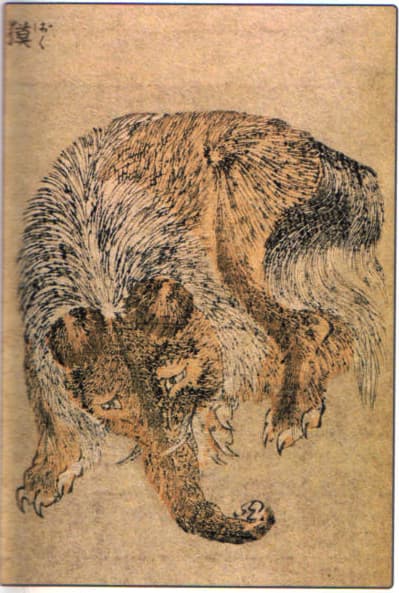
Baku
Baku are supernatural beings originating from Chinese folklore, known in Japan for their ability to devour nightmares. These creatures are said to have been formed from leftover pieces of divine creation, and they have a long history in Japanese folklore and art. While traditionally depicted as chimera-like beings, their form and specific attributes have evolved over time.
Eblis/Iblis/Ibris
Iblis, also known as Shaitan, is the leader of devils in Islam, famously cast out of heaven for refusing to prostrate before Adam. He is a central figure in Islamic theology and Sufi cosmology, often compared to Satan in Christianity and Mara in Buddhism. Iblis is notable for embodying cosmic illusion and for the complex theological debates surrounding his nature, role as a tempter, and the concept of "Satan's Monotheism."