
Jinn
Jinn are supernatural beings originating from ancient Arabian religion and Islam, considered accountable for their actions and capable of being either believers or unbelievers. They are described as having subtle bodies, the ability to shapeshift, and can interact with humans in various ways, ranging from neutral to intimate. While they are generally invisible, they are believed to inhabit the world alongside humans and are subjects of divine judgment.
Key Facts
- ›Jinn are supernatural beings recognized in pre-Islamic Arabian religion and Islam.
- ›They are accountable for their deeds and can be either believers or unbelievers.
- ›Jinn are described as having subtle bodies and the ability to shapeshift, often into animal forms like snakes.
- ›While generally invisible, they can interact with humans, sometimes intimately, and can even produce offspring.
- ›They are not inherently evil or good and can be benevolent or malevolent.
- ›The Quran condemns the pre-Islamic practice of worshipping or seeking protection from jinn.
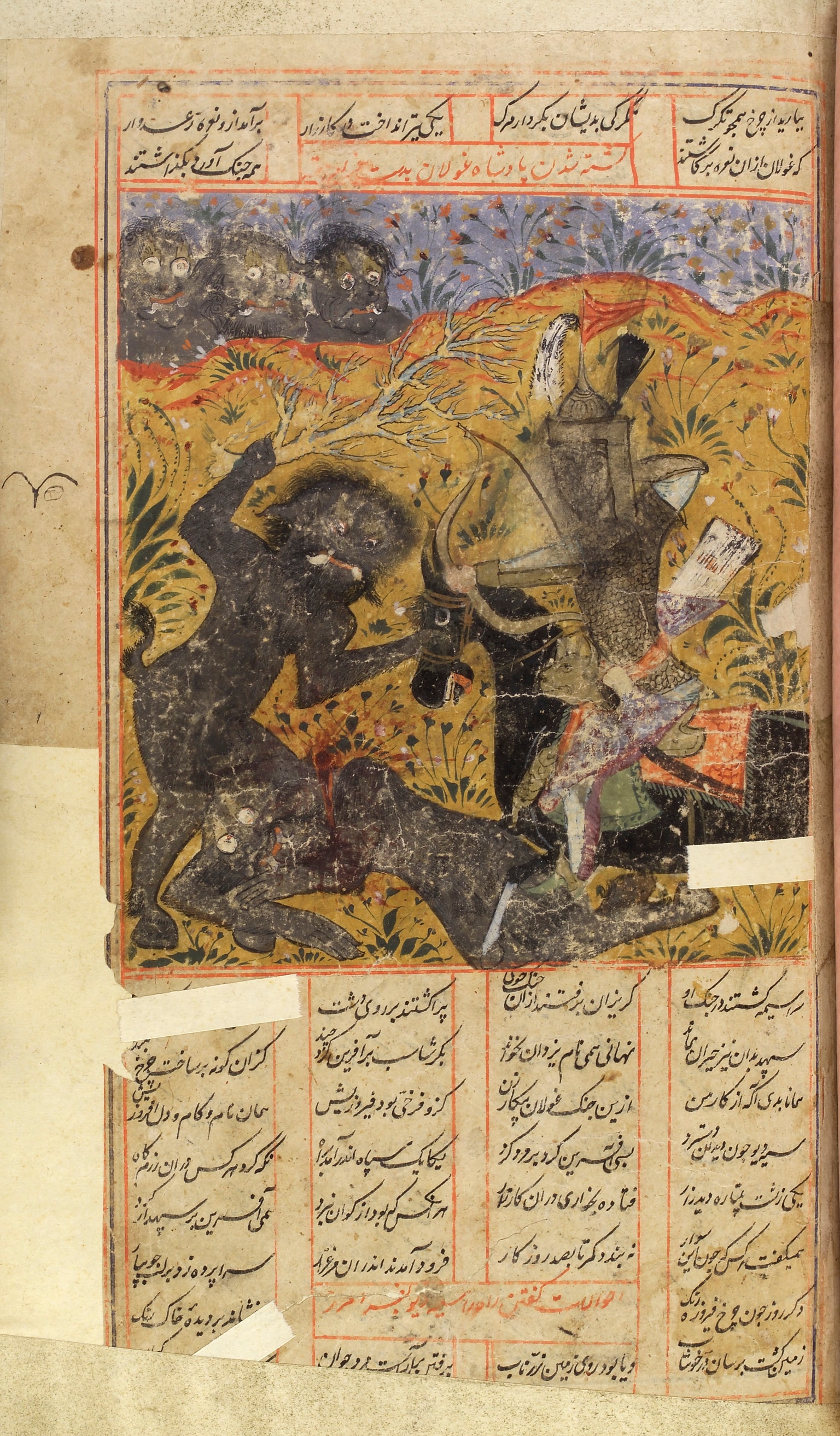
djinn, genies
Supernatural Being, Accountable Being
Smokeless Fire
Quran 51:56-57, Quran 7:179, Quran 55:56, Quran 72:6, Quran 46:29-32, Quran 72:2-7, Quran 15:27, Quran 55:15, Quran 72:8, Surah Al-Jinn, Surah 'Aṣ-ṣāFfāT, Surah An-Nas
Humans, Angels, Devils, Iblis
- Appear In Charms and Talismans
- Called Upon For Protection Or Magical Aid
- Worn Amulets To Protect Against Their Assaults
- Associated With Sorcerers and Witches
- Depicted In Folklore
About Jinn
Jinn, also known by transliterations such as djinn and the anglicized term 'genies,' are supernatural beings central to ancient Arabian religion and, subsequently, Islam. These entities are presented as accountable for their actions, capable of embracing faith or disbelief, similar to humans. Their existence is acknowledged within Islamic tradition, where they are understood to possess subtle bodies and the ability to shapeshift, often appearing in forms such as snakes or other reptiles.
Origins and Nature
The exact origins of the belief in jinn are not definitively clear, but they were recognized in pre-Islamic Arabian culture, where they were sometimes associated with pagan nature deities or malevolent spirits inhabiting desolate places. The Quran acknowledges their presence and their creation from 'smokeless fire,' distinguishing them from angels (created from light) and devils (created from pure fire). Jinn are described as having a societal structure analogous to human tribes and can interact with humans in various ways, from neutral encounters to intimate relationships, and even the production of hybrid offspring. However, they are generally depicted as preferring to live separately from humans.
Role in Islam and Scripture
In Islam, jinn are placed on the same plane as humans in their accountability before God and their subjection to divine judgment and an afterlife. The Quran mentions jinn approximately 29 times, primarily in Meccan surahs, and posits that prophets were sent to both human and jinn communities. While the Quran does not condemn jinn as inherently harmful, it strongly condemns the pre-Islamic practice of worshipping or seeking protection from them, deeming such acts as shirk (associating partners with God). Jinn are capable of both good and evil deeds, and while they possess extraordinary abilities like invisibility and transformation, they do not have knowledge of the future and are subject to God's will.
Interactions and Beliefs
Historically, jinn were sometimes feared or venerated, with individuals seeking refuge from them or even believing they could inspire poets and soothsayers. In Islamic folklore and belief, jinn can be called upon for magical aid or protection, often under the leadership of a king, and amulets are sometimes worn to ward them off. The Quranic perspective emphasizes that humans should only seek refuge in God, not in jinn, to avoid falling into idolatry. While not a core article of Islamic faith like belief in angels, belief in jinn is widely accepted among Muslims due to their mention in the Quran and their prominent role in Islamic folklore.
Source: Wikipedia ↗
Frequently Asked Questions
What are jinn?
Jinn are supernatural beings from ancient Arabian religion and Islam. They are invisible entities capable of shapeshifting and can be either believers or unbelievers, accountable for their actions.
What is the origin of the word 'jinn'?
The word 'jinn' is an Arabic collective noun derived from the Semitic root 'jnn,' meaning 'to hide' or 'to adapt.' It can literally be interpreted as 'beings that are concealed from the senses.'
What is the nature of jinn?
Jinn are described as having subtle bodies and are capable of shapeshifting, often taking on forms such as snakes, scorpions, or lizards. They are neither inherently good nor evil, and their interactions with humans can be negative, positive, or neutral.
Where are jinn mentioned in the Quran?
Jinn are mentioned approximately 29 times in the Quran, primarily in Meccan surahs. The Quran presents them as a distinct creation alongside humans, both created to worship God.
Can jinn harm humans?
While jinn are capable of harming humans, particularly if disturbed or harmed themselves, the Quran condemns the practice of seeking protection or veneration from them. Belief in jinn does not grant them divine attributes; only God is the true protector.
Are jinn angels or demons?
In Islamic exegesis, the term 'jinn' can sometimes be used broadly to refer to beings hidden from sight, including angels and devils. However, in a more specific sense, jinn are a separate creation from angels (made of light) and devils (made of pure fire), being created from 'smokeless fire.'
Related Angels
Artiya'il
Artiya'il is an angel recognized in Islamic lore, primarily known for his role in alleviating human sorrow and anxiety. He is described as an angel who removes the memories of distress and is depicted in Islamic tradition as appearing in various forms, such as a bird, to offer comfort.
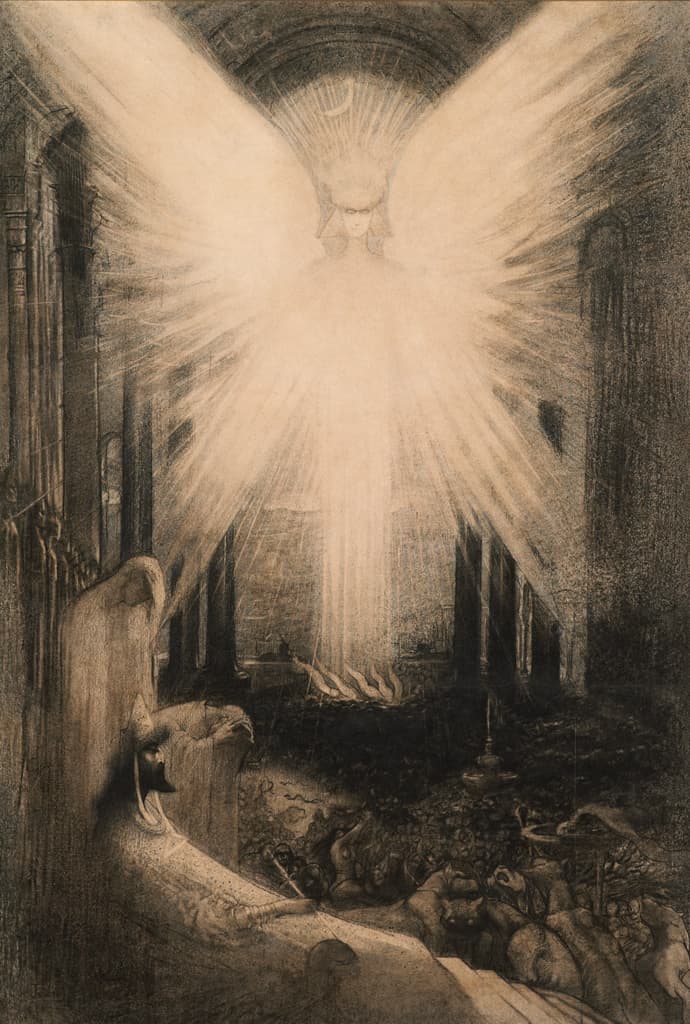
Azrael
Azrael is the canonical angel of death in Islam and appears in earlier apocryphal texts. He is depicted as a benevolent psychopomp, responsible for transporting souls after death and recording their fates. Azrael is recognized as one of the four archangels in Islam and corresponds to the Hebrew "Malakh ha-mavet" (Angel of Death).
Harut
Harut and Marut are a pair of angels mentioned in the Quran who, according to Islamic exegesis, were sent to Earth to test humanity. They are depicted as teaching the arts of sorcery in Babylon, with varying interpretations of whether they committed sins or if the story is allegorical. Their narrative is a subject of theological debate within Islam, concerning the infallibility of angels and the nature of divine punishment.