
Namtar
Mesopotamian·Mythology/Demonology·Mesopotamian·Demon/Minor God
Namtar is a figure in ancient Mesopotamian religion, known as both a minor god and a demon of disease. He is most prominently recognized as the attendant deity (sukkal) of Ereshkigal, the goddess of the underworld. His name, meaning "fate" in Sumerian, reflects his association with inevitable destiny, often linked to death and illness.
Key Facts
- ›Namtar's name translates to 'fate' in Sumerian and was also used in Akkadian as dnam-ta-ru.
- ›He is primarily known as the sukkal (attendant) of Ereshkigal, the goddess of the underworld.
- ›Namtar functioned as a demon of disease, particularly associated with headaches and heart pain.
- ›He is described as having a fearsome appearance, with traits like 'twisted hands' and 'mouth filled with venom'.
- ›Namtar's role as a deity is attested from the Old Babylonian period onwards.
- ›He appears in literary texts and incantations, sometimes tasked with keeping other malevolent forces imprisoned in the underworld.
Dnam-Ta-Ru
Fate, Death, Disease, Headaches, Heart Pain, Underworld
- Inflicting Disease
- Binding Or Imprisoning Other Malevolent Forces
- Slaying Humans With A Sword
Nergal and Ereshkigal, Ishtar's Descent, Death of Gilgamesh, Death of Ur-Namma, Atrahasis, Enki and Ninmah, An = Anum, Udug-Hul Incantations, Underworld Vision of An Assyrian Prince
Ereshkigal, Nergal, HušBišAg, ḫEdimmeku, Mardula'Anki, Enlil, Asag, Ninisina, Asalluhi, Girra, šUlpae, Lugal-Namtarra, Ninshubur, Shamash, Ishtar, Enki
Unavoidable Fate, Death, Illness
- Offerings Were Made To Namtar In Literary Texts Like 'Death of Gilgamesh' and 'Death of Ur-Namma'.
- Incantations Invoked the Medicine Goddess Ninisina Or Asalluhi To Counter Namtar's Influence.
- Namtar Could Be Implored To Imprison Other Demons, Such As Mimma Lemnu.
- An Incantation Asked the Fire God Girra To Hand Over Enemies To Namtar.
Ninisina, Asalluhi
About Namtar
Namtar is a significant figure in ancient Mesopotamian religion, embodying aspects of both a minor deity and a demon associated with disease. His name, derived from the Sumerian word for "fate," underscores his primary connection to destiny and the inevitable. He is most consistently identified as the sukkal, or attendant deity, to Ereshkigal, the formidable goddess presiding over the underworld, reflecting his role within the cosmic hierarchy of the Mesopotamian pantheon.
Character and Functions
As the personification of unavoidable fate, Namtar's influence was often seen as synonymous with death and suffering. Beyond his role as Ereshkigal's attendant, he functioned as a potent demon of disease, with particular associations with ailments of the head and heart. While not a figure of active worship, literary texts and incantations attest to his presence in religious thought. He could be invoked to contain other malevolent entities within the underworld, demonstrating a complex, albeit minor, role in the management of supernatural forces.
Appearance and Attestations
Namtar's appearance was typically depicted as fearsome, characterized by unsettling physical attributes like "twisted hands" and a "mouth filled with venom." Some accounts suggest he could be portrayed as a slayer. His presence in Mesopotamian religion is noted from the Old Babylonian period onward. While the word 'namtar' appears in earlier personal names, these are not generally considered to refer to the deity himself. Namtar is notably absent from formal offering lists, indicating a lack of a widespread cult, though instances of making offerings are recorded in specific literary contexts.
Associations and Mythology
Namtar served as the sukkal for Ereshkigal in prominent myths, including "Nergal and Ereshkigal," where he acts as her representative at a divine banquet. In "Ishtar's Descent," Ereshkigal tasks him with inflicting Ishtar with numerous diseases, highlighting his power over illness. He is also mentioned in other foundational texts like "Atrahasis," where he was initially considered by Enlil as a means to deal with human overpopulation. Namtar's family includes his wife Hušbišag and their daughter Ḫedimmeku, and his mother is identified as Mardula'anki.
Source: Wikipedia ↗
Frequently Asked Questions
What does Namtar's name mean?
Namtar's name in Sumerian literally means 'fate.' This name reflects his association with destiny and inevitability, often understood as the personification of death or unavoidable outcomes.
What was Namtar's primary role in Mesopotamian religion?
Namtar served dual roles: as a minor god of the underworld and as a demon of disease. He is best known as the attendant deity (sukkal) to Ereshkigal, the queen of the underworld.
What kinds of diseases was Namtar associated with?
Namtar was particularly associated with diseases affecting the head and heart. He was often considered one of the most dangerous sources of illness, frequently paired with the demon Asag.
How was Namtar depicted or described?
Descriptions of Namtar portray him as fearsome, with attributes such as 'twisted hands' and a 'mouth filled with venom.' He could also be depicted as slaying a man with a sword.
Did Namtar have a family or other divine associations?
Namtar was married to Hušbišag, the 'stewardess of the underworld,' and they had a daughter named Ḫedimmeku. His mother was identified as Mardula'anki, and in a single instance, he is referred to as a son of Enlil and Ereshkigal.
Related Demons
Anzû/Bhavna/Imdugud/Zû
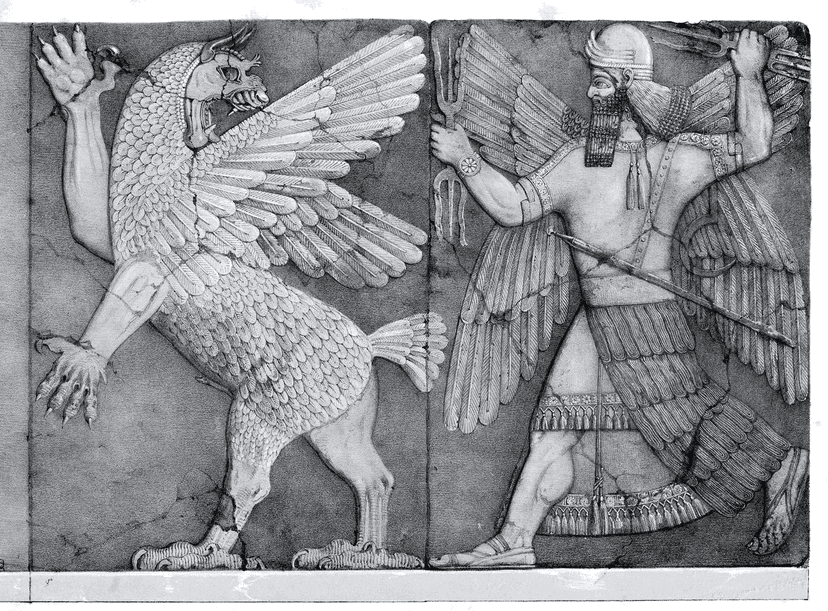
Anzû, also known as Imdugud or Zû, is a significant demonic being in Mesopotamian religions, particularly Sumerian and Babylonian lore. Conceived as a divine storm-bird, Anzû is notable for its myth where it steals the Tablet of Destinies, challenging divine authority and leading to conflicts with major gods like Enlil and Ninurta. Its depiction as a bird with leonine features and the ability to breathe fire and water contributes to its fearsome reputation.
Lamashtu
Lamashtu is a fearsome demonic deity from Mesopotamian mythology, characterized by a hybrid appearance and a malevolent nature. She is primarily known for her attacks on infants, pregnant women, and newborns, and was believed to cause miscarriages and cot deaths. Despite being identified as a demoness, her ability to act independently suggests she was also revered as a goddess in her own right, with amulets and talismans used as protection against her.

Ninurta
Ninurta is an ancient Mesopotamian deity primarily associated with agriculture, healing, hunting, law, scribes, and war. Initially a god of farming and healing, he evolved into a formidable warrior deity as Mesopotamian society became more militarized. He is notable for his prominent role in epic myths, such as slaying the demon Asag and defeating the Anzû bird, and for his association with the planet Saturn in Babylonian astrology.