
Anzû/Bhavna/Imdugud/Zû
Mesopotamian religions (Sumerian, Babylonian, Assyrian)·Mythology·Mesopotamian·Demon, divine storm-bird, hybrid creature
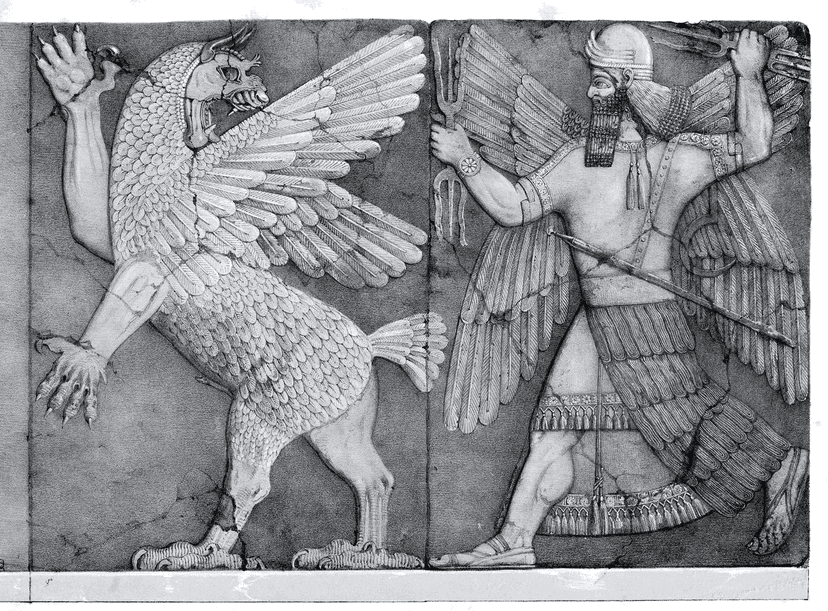
Anzû, also known as Imdugud or Zû, is a significant demonic being in Mesopotamian religions, particularly Sumerian and Babylonian lore. Conceived as a divine storm-bird, Anzû is notable for its myth where it steals the Tablet of Destinies, challenging divine authority and leading to conflicts with major gods like Enlil and Ninurta. Its depiction as a bird with leonine features and the ability to breathe fire and water contributes to its fearsome reputation.
Key Facts
- ›Anzû is a Mesopotamian demon, often depicted as a divine storm-bird.
- ›It is associated with the southern wind and thunderclouds.
- ›In Babylonian myths, Anzû is described as a massive bird, sometimes with a lion's head and the ability to breathe fire and water.
- ›A central myth involves Anzû stealing the Tablet of Destinies from Enlil, challenging the gods' organization.
- ›The hero who defeated Anzû varies between myths, with Ningirsu in an Old Babylonian version and Ninurta in the Standard Babylonian version.
- ›Its name's pronunciation and origin have been subject to scholarly debate, with possible readings including 'heavy wind' or 'heavenly eagle'.
Dzû, Imdugud, Dim.DugudmušEn, An.Im.MimušEn, An.Im.DugudmušEn, Zu
Storms, Thunderclouds, Wind
Breathing Fire, Breathing Water, Flight
Epic of Anzu, Myths From Mesopotamia, Inanna and the Huluppu Tree, Lugalbanda and the Anzud Bird
Abzu, Mami, Siris, Enlil, Anu, Marduk, Ninurta, Ningirsu, Abu, Inanna, Lugalbanda
Challenging Authority, Chaos, Disruption of Divine Order
Ninurta, Ningirsu, Marduk
Bird, Lion, Thunderclouds, Wind
About Anzû/Bhavna/Imdugud/Zû
Anzû
Anzû, also referred to as Imdugud or Zû, is a prominent demonic figure in Mesopotamian mythology, particularly prominent in Sumerian and Babylonian traditions. Conceived as a divine storm-bird, Anzû is a being of immense power, often depicted as a massive avian creature, sometimes possessing a lion's head and the formidable ability to breathe both fire and water. Its parentage is attributed variously to the cosmic freshwater ocean Abzu and the earth goddess Mami, or as the son of Siris.
Mythological Significance
The most famous narrative surrounding Anzû involves its audacious theft of the Tablet of Destinies from the chief god Enlil. This act directly challenged Enlil's authority and the established order of the gods, which was responsible for providing agriculture and sustenance to Mesopotamia. The retrieval of the stolen tablet became a paramount concern, leading to conflicts involving other major deities. While some accounts attribute the bird's defeat to Marduk, the most widely cited versions of the myth depict the hero Ninurta as the one who ultimately vanquishes Anzû.
Origin and Evolution
Scholarly debate has explored the origins and interpretation of Anzû's name and form. The name itself, originally written in Sumerian cuneiform, has been subject to various readings and transliterations, with possible meanings ranging from 'heavy wind' to 'heavenly eagle.' The depiction of Anzû as a storm-bird with leonine features may have been intended to symbolize the destructive power of thunder and wind, connecting it to storm deities like Abu, who was later syncretized with Ninurta and Ningirsu. Early conceptions may have envisioned Anzû as a literal thundercloud in the shape of an eagle, with later artistic and mythological developments adding the lion's head to enhance its fearsome aspect.
Source: Wikipedia ↗
Frequently Asked Questions
What is Anzû?
Anzû is a demon from Mesopotamian religions, particularly Sumerian and Babylonian mythology. It is primarily known as a divine storm-bird.
What is Anzû known for in mythology?
Anzû is most famous for stealing the Tablet of Destinies from the god Enlil, an act that challenged the established order of the gods and led to conflict.
What does Anzû look like?
Anzû is typically depicted as a massive bird, sometimes with the head of a lion. It is also described as having the ability to breathe fire and water.
Who defeated Anzû?
The identity of the hero who defeated Anzû varies depending on the version of the myth. In some accounts, it is Ningirsu, while in others, it is Ninurta.
What is the origin of the name Anzû?
The name Anzû has been subject to scholarly debate. It is believed to derive from Sumerian cuneiform signs and may have originally been pronounced 'dim.dugud', possibly meaning 'heavy wind' or 'heavenly eagle'.
Related Demons
Lamashtu
Lamashtu is a fearsome demonic deity from Mesopotamian mythology, characterized by a hybrid appearance and a malevolent nature. She is primarily known for her attacks on infants, pregnant women, and newborns, and was believed to cause miscarriages and cot deaths. Despite being identified as a demoness, her ability to act independently suggests she was also revered as a goddess in her own right, with amulets and talismans used as protection against her.

Ninurta
Ninurta is an ancient Mesopotamian deity primarily associated with agriculture, healing, hunting, law, scribes, and war. Initially a god of farming and healing, he evolved into a formidable warrior deity as Mesopotamian society became more militarized. He is notable for his prominent role in epic myths, such as slaying the demon Asag and defeating the Anzû bird, and for his association with the planet Saturn in Babylonian astrology.
Alal
In Mesopotamian mythology, the alal were a class of demons originating from the Underworld, known for their ability to take on various forms to tempt humans. They were depicted in ancient Chaldean-Assyrian art as monstrous beings, often theriocephalous, and were repelled by the use of amulets.