
Ninurta
Ancient Mesopotamian religion·Mythology·Mesopotamian·God
Ninurta is an ancient Mesopotamian deity primarily associated with agriculture, healing, hunting, law, scribes, and war. Initially a god of farming and healing, he evolved into a formidable warrior deity as Mesopotamian society became more militarized. He is notable for his prominent role in epic myths, such as slaying the demon Asag and defeating the Anzû bird, and for his association with the planet Saturn in Babylonian astrology.
Key Facts
- ›Ninurta was an ancient Mesopotamian god of agriculture, healing, hunting, law, scribes, and war.
- ›He was worshipped as early as the middle of the third millennium BC by the Sumerians.
- ›His main cult center was the Eshumesha temple in Nippur, and later the temple at Kalhu became important.
- ›In mythology, he is known for slaying the demon Asag and defeating the Anzû bird.
- ›He was associated with the planet Saturn in Babylonian astrology.
- ›Ninurta's symbols included a perched bird and a plow.
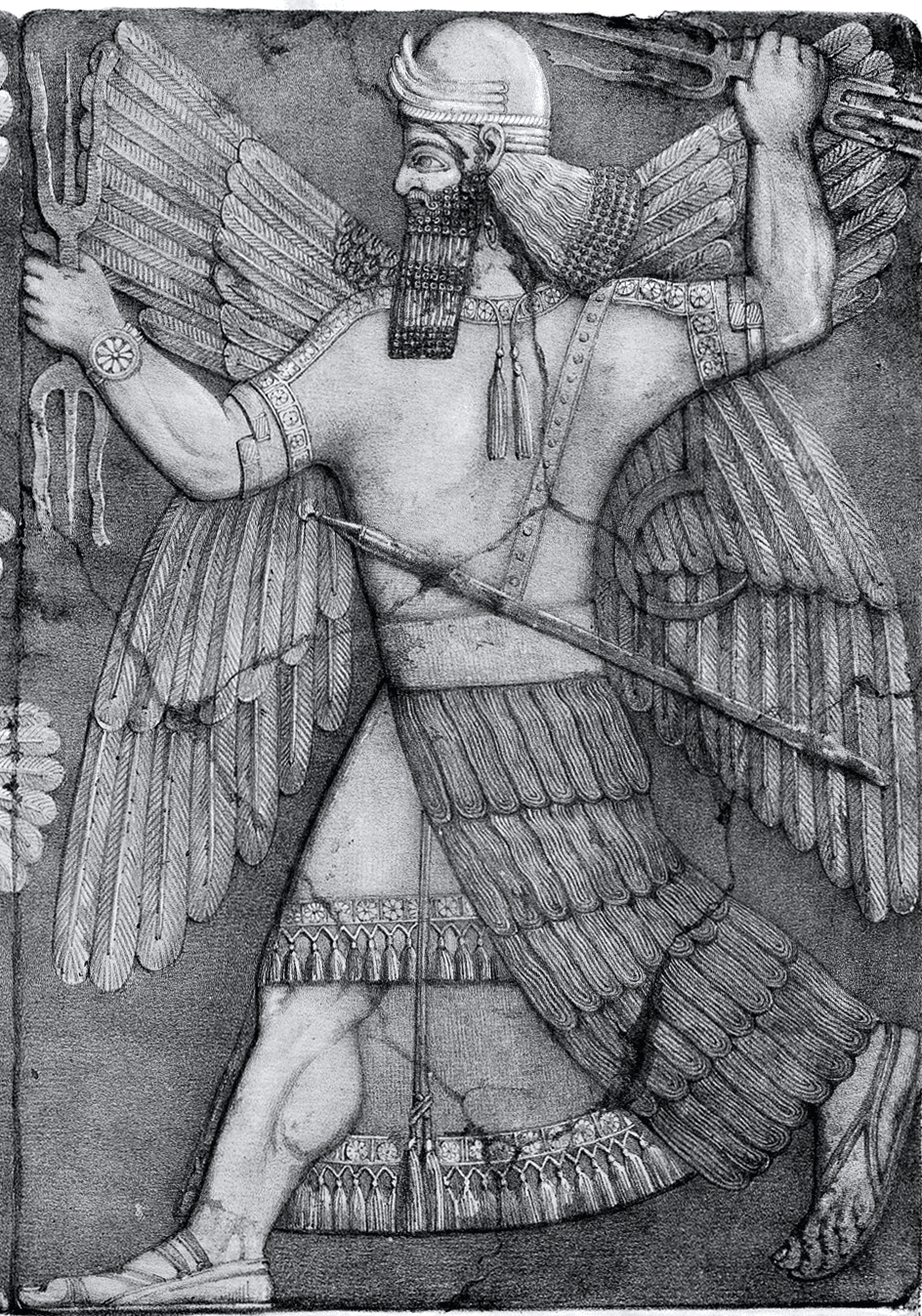
NinĝIrsu, Nimrod
Farming, Healing, Hunting, Law, Scribes, War, Irrigation, Astrology
Curing Illness, Exorcising Demons, Slaying Demons and Monsters, Organizing the Land For Irrigation, Wielding A Talking Mace, Using Stones To Build Rivers and Mountains
Lugal-E, Angim Dimma, Anzû Myth, Ninurta's Journey To Eridu, Sumerian Georgica, Book of Genesis, 2 Kings, Isaiah, Pseudomonarchia Daemonum, Paradise Lost
Enlil, Ninmah, Ninlil, Gula, Bau, Ig-Alima, šUl-šAgana, Nanna, Nergal, Ninazu, Enbilulu, Inanna, Asag, Anzû, Ea, Enki, Sharur
Order, Justice, Strength, Prosperity, Victory In War
- Oaths Were Sworn Invoking Ninurta, With Penalties For Violation Involving Offerings To Him.
- His Temple At Kalhu Hired the Poor and Destitute, Indicating A Role In Social Welfare Or Charity.
- Legal Documents Were Sealed With His Seal, Alongside Other Deities Like AššUr.
Enlil, Ea, AššUr, Nabu
- As NinĝIrsu, He Was Specifically Honored In the City-State of Girsu.
- the Figure of Nimrod In the Book of Genesis Is Widely Considered To Be Inspired By Ninurta.
Perched Bird, Plow, Winged Disc, Bow and Arrow, Mercury
About Ninurta
Ninurta is a significant ancient Mesopotamian god revered for his multifaceted roles as a deity of agriculture, healing, hunting, law, scribes, and warfare. His worship dates back to the early Sumerian period, making him one of the earliest attested deities in the region.
Early Worship and Domains
Initially, Ninurta was primarily recognized as a god of agriculture and healing, possessing the power to cure illnesses and expel demons. His main cult center in Sumer was the Eshumesha temple in Nippur, where he was worshipped as the son of the chief god Enlil. As Mesopotamian societies grew more militarized, Ninurta's persona evolved to encompass a formidable warrior deity, though he retained many of his earlier agricultural attributes. The city-state of Girsu also venerated him as Ninĝirsu, a local form that became increasingly intertwined with the more widely known Ninurta.
Mythological Significance
Ninurta features prominently in Mesopotamian mythology, demonstrating his importance in the pantheon. In the epic poem "Lugal-e," he is famously depicted slaying the destructive demon Asag with his talking mace, Sharur, and then using stones to construct the Tigris and Euphrates rivers to enhance irrigation. He also played a crucial role in the "Anzû myth," where he defeated the monstrous bird Anzû after it stole the Tablet of Destinies from his father, Enlil. These myths highlight his prowess as a warrior and his role in establishing order and making the land habitable and productive.
Assyrian Devotion and Later Influence
During the Assyrian period, Ninurta gained immense popularity as a warrior god. Assyrian kings frequently incorporated his name into their own, such as Tukulti-Ninurta, signifying their divine favor and martial success. King Ashurnasirpal II built a major temple for Ninurta at Kalhu (modern Nimrud), which became a significant cultic center. The city of Kalhu itself was later associated with the biblical figure of Nimrod, a "mighty hunter," suggesting a possible cultural lineage or inspiration. Even after the decline of Assyria, Ninurta remained venerated, with his temple at Kalhu continuing to function until the end of the empire.
Iconography and Associations
Ninurta's iconography includes symbols such as a perched bird and a plow, reflecting his diverse domains. He was also associated with the planet Saturn in Babylonian astrology. While debated, some scholars suggest early connections to the winged disc motif. His family included his father Enlil, and various mothers and wives such as Ninmah, Ninlil, Gula, and Bau, depending on the specific tradition.
Legacy
Ninurta's influence extended beyond Mesopotamian borders, with potential links to figures in later traditions. His story of successive trials and victories has been compared to the Greek legend of the Twelve Labors of Heracles. The demonological interpretations of "Nisroch" in later periods, though likely based on scribal errors and misidentifications, also demonstrate the enduring, albeit transformed, presence of Mesopotamian deities in later thought.
Source: Wikipedia ↗
Frequently Asked Questions
What is Ninurta the god of?
Ninurta was a Mesopotamian deity associated with a broad range of domains, including farming, healing, hunting, law, scribes, and war. He was particularly known for his agricultural aspects and his role as a warrior.
Who were Ninurta's parents?
Ninurta was believed to be the son of the chief god Enlil. His mother was identified as the goddess Ninmah in some traditions and Ninlil in others.
What are some of Ninurta's most famous myths?
Two of Ninurta's most significant myths are "Lugal-e," where he slays the demon Asag and creates rivers for irrigation, and the "Anzû myth," where he defeats the monstrous bird Anzû who stole the Tablet of Destinies.
What is Ninurta's connection to the planet Saturn?
In Babylonian astrology, Ninurta was associated with the planet Saturn. This association likely stemmed from Saturn's perceived slow and somber nature, which could align with aspects of Ninurta's roles.
What are Ninurta's main symbols?
Ninurta's primary symbols were a perched bird and a plow. A plow was particularly indicative of his agricultural domain, while a perched bird may have represented his hunting prowess or other attributes.
Related Demons
Anti
Nemty was an ancient Egyptian god whose worship was centered in Antaeopolis. Initially a patron deity associated with Horus, he later became known as the god of ferrymen, symbolized by a falcon on a boat. Nemty is notable for his role in the mythological "Contendings of Horus and Seth" and for having pharaohs bear his name.

Orcus
Orcus was a god of the underworld in Roman mythology, whose name also came to represent the underworld itself. His origins are debated, with some scholars considering him a native Roman deity and others suggesting a derivation from Greek or Etruscan traditions, possibly linked to Horkos, the personification of the oath. Orcus is notable for his association with punishing broken oaths and the eventual merging of his figure with Dis Pater and Pluto.

Dagon
Dagon was a prominent ancient Near Eastern deity worshipped primarily in Syria and Mesopotamia, revered as a "father of gods," a god of prosperity, and a bestower of kingship. His cult centers were located in Tuttul and Terqa, and he was syncretized with Mesopotamian gods like Enlil and Hurrian gods like Kumarbi. While associated with grain and prosperity, his role as a weather or water deity is largely discredited by modern scholarship.