
Nalai
European Folklore·Folklore·Southeastern Europe·Undead Creature
The vampire is a mythical creature, often depicted as an undead humanoid that feeds on the vital essence, typically blood, of humans. Originating in European folklore, particularly Southeastern and Eastern Europe, these beings were believed to be revenants of deceased individuals who caused harm in their former neighborhoods. Early descriptions differ significantly from modern portrayals, with folkloric vampires often appearing bloated and ruddy rather than gaunt and pale.
Key Facts
- ›Vampires are mythical creatures that subsist by feeding on the vital essence of humans, most commonly blood.
- ›Early European folklore described vampires as undead humanoids who visited loved ones and caused mischief or deaths in their former neighborhoods.
- ›Folkloric vampires were often depicted as bloated and ruddy or dark in countenance, sometimes with blood seeping from their mouths and noses.
- ›The term 'vampire' gained prominence in Western Europe in the 18th century due to mass hysteria and reports from Eastern Europe.
- ›Belief in vampires has been linked to a misunderstanding of the decomposition process after death in pre-industrial societies.
- ›Modern fictional vampires, characterized as charismatic and sophisticated, largely originated with John Polidori's "the Vampyre" in 1819 and Bram Stoker's "Dracula" in 1897.

Death, Mischief, Harm, Night
Feeding On Vital Essence, Returning From the Grave, Causing Harm To the Living, Shape-Shifting, Possessing Corpses, Pressing On People In Their Sleep
John Polidori's "the Vampyre", Bram Stoker's "Dracula", Joseph Sheridan Le Fanu's "Carmilla"
Ignorance of Decomposition, Fear of Death, Evil Beings, Suicide Victims, Witches, Malevolent Spirits
- Burying A Corpse Upside-Down
- Placing Earthly Objects Near the Grave
- Placing An Obolus In the Corpse's Mouth
- Placing A Wax Cross and Piece of Pottery With Inscription On Corpse
- Severing Tendons At the Knees
- Placing Poppy Seeds, Millet, Or Sand On the Ground At the Grave Site
- Leading A Virgin Boy On A Virgin Stallion Through A Graveyard To Identify A Grave
- Eating Bread Baked With Vampire's Blood Or Drinking It
- Eating Dirt From A Vampire's Grave
- Staking Through the Heart, Mouth, Or Stomach
- Decapitation, With the Head Buried Separately
- Piercing the Skin of the Chest
- Driving Steel Or Iron Needles Into A Corpse's Heart
- Placing Bits of Steel In the Mouth, Over Eyes, Ears, and Between Fingers
- Driving A Hawthorn Stake Through the Legs
- Forcing A Brick Into the Mouth of A Corpse
- Embedding Metal Objects In the Torso of Skeletons
- Pouring Boiling Water Over the Grave
- Complete Incineration of the Body
- Shooting Or Drowning
- Repeating Funeral Service
- Sprinkling Holy Water On the Body
- Exorcism
- Placing Garlic In the Mouth
- Shooting A Bullet Through the Coffin
- Dismembering and Burning the Body, Mixing Pieces With Water
- Placing A Lemon In the Mouth
- Burying Suspected Vampires Face Down
Garlic, Wild Rose, Hawthorn, Mustard Seeds, Crucifix, Rosary, Holy Water, Mirrors, Consecrated Ground, Running Water, Silver, Steel Needles, Hawthorn Stakes, Bread Baked With Vampire's Blood, Dirt From Vampire's Grave, Ash Stakes, Oak Stakes, Aspen Stakes, Lemon, Jesus Christ
Shtriga, Vrykolakas, Strigoi, Upior, Uper, Upyr, Upir, UbıR, Dhampir, Lilitu, Lilith, Lilu, Estries, Empusae, Lamia, Mormo, Striges, VetāLas, PiśāCa, Draugr
Shroud, Garlic, Hawthorn, Cross, Mirror, Blood, Scythe, Sickle, Poppy Seeds, Millet, Sand, Obolus
About Nalai
The Vampire: An Undead Figure of Folklore
The vampire is a mythical being deeply embedded in European folklore, particularly from Southeastern and Eastern Europe, characterized by its sustenance through the vital essence, most notably blood, of living humans. These creatures are often conceived as revenants—the reanimated corpses of individuals who met an untimely or unsavory end, such as suicides or those accused of witchcraft. Early folkloric accounts diverge significantly from the romanticized and gaunt portrayals common in modern popular culture, instead describing vampires as appearing bloated and ruddy, with signs of recent feeding like blood seeping from their mouths and noses.
Origins and Early Beliefs
The concept of blood-drinking entities predates the specific term 'vampire,' with ancient cultures like the Mesopotamians, Hebrews, Greeks, and Romans having legends of demons and spirits that consumed flesh and blood. However, the widespread recognition of the vampire as a distinct entity gained traction in Western Europe during the 18th century, fueled by reports of mass hysteria and pre-existing folk beliefs in regions like Serbia and Romania. These beliefs were sometimes attributed to a lack of understanding regarding the natural processes of decomposition after death, with the vampire serving as an explanation for the unsettling mysteries of mortality.
Folkloric Attributes and Practices
Folkloric vampires were often identified by physical signs such as appearing plump and showing little decomposition, sometimes with their eyes left open. Their presence could be indicated by unusual grave appearances or by poltergeist-like activities such as moving objects or pressing on people in their sleep. To prevent the deceased from becoming a vampire, various apotropaic practices were employed, including burying corpses in specific orientations, placing sharp objects in graves, or scattering seeds to keep the revenant occupied. Protection against vampires involved the use of garlic, hawthorn, crucifixes, holy water, and avoiding entry into homes unless invited, as some traditions held that vampires could not cross running water or walk on consecrated ground.
Destruction and Modern Legacy
Methods for destroying suspected vampires varied widely across regions and included staking through the heart or mouth, decapitation, burning the body, or dismemberment. The modern image of the vampire, however, was significantly shaped by 19th-century literature. John Polidori's "The Vampyre" (1819) and Bram Stoker's iconic novel "Dracula" (1897) were instrumental in popularizing a more sophisticated and often charismatic portrayal, which has since become a dominant figure in horror literature, film, and other media, continuing to captivate audiences to this day.
Source: Wikipedia ↗
Frequently Asked Questions
What is a vampire?
A vampire is a mythical creature, often an undead humanoid, that sustains itself by feeding on the vital essence, usually blood, of living humans. In folklore, they are often revenants of deceased individuals who return to harm the living.
Where did the belief in vampires originate?
The concept of vampiric creatures has ancient roots in various cultures, but the folklore for the modern vampire largely originates from Southeastern and Eastern Europe in the early 18th century. The term 'vampire' became widely known in Western Europe through reports of panics in this region.
How were early folkloric vampires described?
Unlike the pale, gaunt figures of modern fiction, early European folklore often described vampires as bloated and ruddy or dark in appearance. They were typically depicted wearing their burial shrouds, with blood sometimes seen seeping from their mouths and noses.
What are some methods used in folklore to prevent or destroy vampires?
Folkloric traditions include various measures such as burying corpses with sharp objects, placing garlic or mustard seeds around homes, using crucifixes, and in extreme cases, staking the heart, decapitation, or burning the body.
How did the modern image of the vampire develop?
The modern, charismatic vampire image was significantly shaped by early 19th-century literature. John Polidori's "The Vampyre" (1819) and Bram Stoker's "Dracula" (1897) were pivotal in establishing the archetype that dominates contemporary popular culture.
Related Demons
Kukudh
The Kukudh is an undead creature prominent in Albanian mythology, often associated with the souls of misers or unburned corpses. It is linked to nightmares, death, and sickness, with some traditions describing it as a blind female demon carrying plague. Its legend highlights fears of death, the afterlife, and the consequences of greed.

Imp
An imp is a European mythological being, often depicted as a mischievous and troublesome lesser demon or fairy. While not always inherently evil, imps are known for their pranks, which can range from amusing to harmful, and they are sometimes described as attendants to the devil. Their association with witches as familiar spirits and their presence in various folklore and literary works make them notable figures in supernatural lore.
Incubus
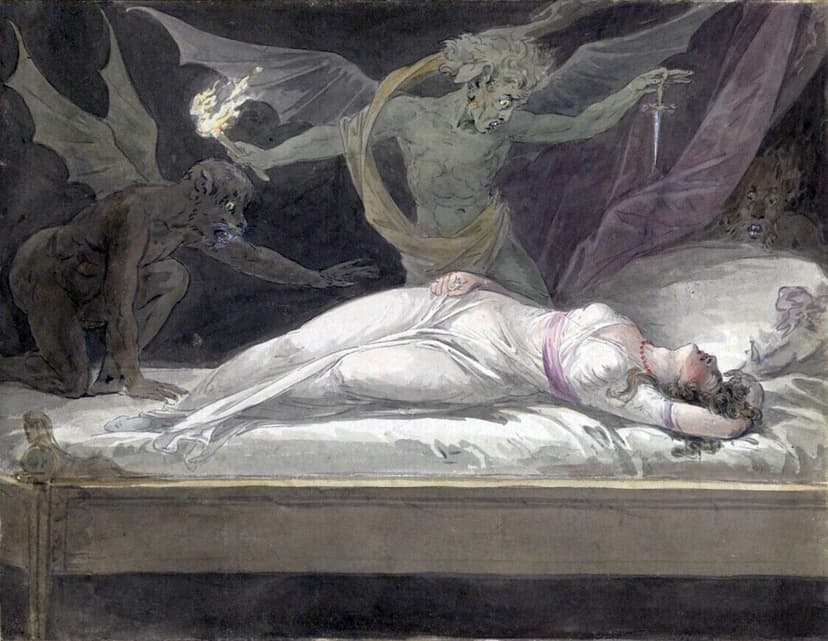
An incubus is a male demon from folklore, primarily European, that appears in the dreams of women to seduce them, leading to sexual activity and potentially the birth of a hybrid child. These encounters are believed to cause the woman's health to deteriorate and can ultimately lead to her death. Historically, the concept of the incubus is thought to have arisen from phenomena such as sleep paralysis and vivid dreams.