
Incubus
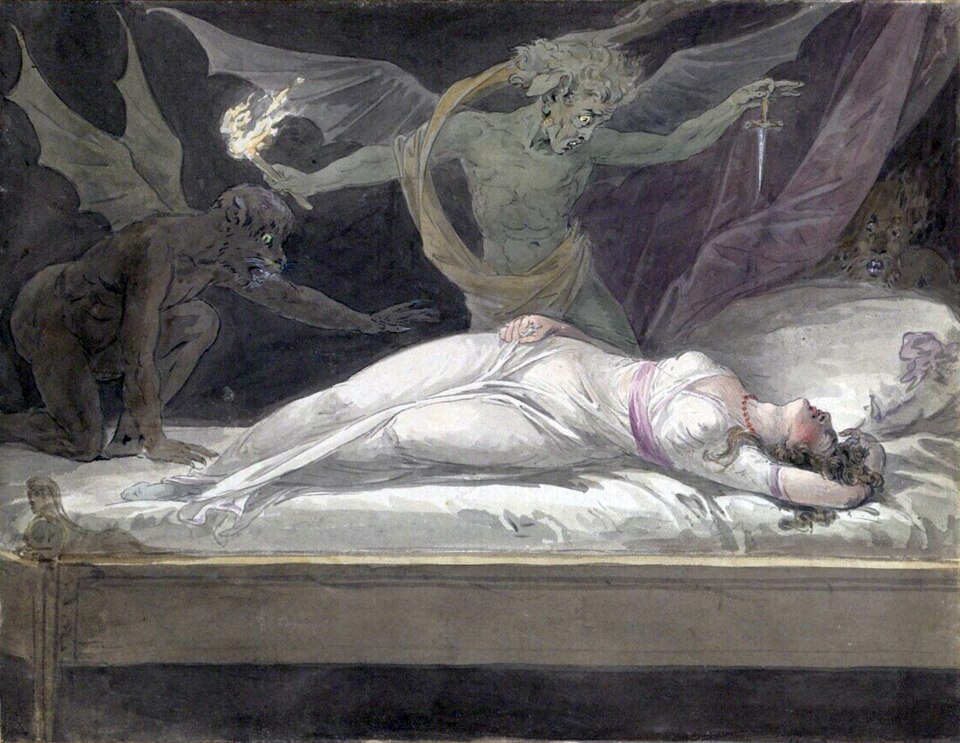
An incubus is a male demon from folklore, primarily European, that appears in the dreams of women to seduce them, leading to sexual activity and potentially the birth of a hybrid child. These encounters are believed to cause the woman's health to deteriorate and can ultimately lead to her death. Historically, the concept of the incubus is thought to have arisen from phenomena such as sleep paralysis and vivid dreams.
Key Facts
- ›An incubus is a male demon that seduces women in their dreams, requiring vaginal ejaculation for survival.
- ›Repeated encounters with an incubus can lead to a bond, sexual intercourse, and the birth of a cambion (half-human, half-demon child).
- ›The incubus concept is believed to be rooted in phenomena like sleep paralysis and hypnagogic hallucinations.
- ›The term 'incubus' originates from the Late Latin word for 'nightmare' or 'what lies down on one whilst one sleeps'.
- ›Similar beings appear in ancient Mesopotamian traditions, such as Lilu and Idlu LILI, who disturb women in their sleep.
- ›In medieval Europe, unions with incubi were sometimes blamed for the birth of notable figures like Merlin.
Lilu, Idlu Lili, Alp, Popo Bawa, the Trauco, TintíN, LidéRc, Boto, Tokolosh, Mara, Mare, Pori, Karabasan, Perelesnyk, Impundulu
Dreams, Seduction, Nightmares, Sexual Activity, Deterioration of Health
Appearing In Dreams, Seducing Humans, Engaging In Sexual Activity, Fathering Hybrid Offspring, Causing Deterioration of Health, Potentially Shape-Shifting
Sumerian King List, Malleus Maleficarum, Demon Lovers, Ynglinga Saga
Succubus, Cambion, Merlin, Lilu, Lilitu, Ardat Lili
Lust, Temptation, Night Terror
- Exorcism Is Presented As A Method To Overcome Incubi Attacks In the Malleus Maleficarum.
- Confession, the Sign of the Cross, and Reciting the Hail Mary Are Also Mentioned As Countermeasures.
- Moving the Afflicted To Another Location and Excommunication Are Also Suggested.
- In Ukrainian Folklore, Uttering 'Amen' Or Wearing A Crucifix Were Countermeasures Against the Perelesnyk.
Exorcists, Confession, the Sign of the Cross, Hail Mary, Excommunication, Amen, Crucifix
- In Zanzibar, the Popo Bawa Primarily Attacks Men.
- the Trauco of Chiloé Province, Chile, Is A Hideous Deformed Dwarf Who Seduces Young Women.
- the TintíN In Ecuador Is A Dwarf Who Seduces Women By Playing Music.
- In Hungary, A LidéRc Can Be A Satanic Lover Appearing As A Fiery Light Or In A Benign Form.
- the Amazon River Dolphin In Brazil Shape-Shifts Into A Charming Man To Seduce Women.
- the Tokolosh In Southern Africa Is A Short Demon; Chaste Women Place Beds On Bricks To Deter Them.
- the Mara Or Mare In Swedish Folklore Rides On Chests and Causes Nightmares.
- In Assam, India, the Pori Seduces Men In Dreams, Leading To Health Deterioration.
- the Karabasan In Turkish Culture Is An Evil Being That Descends Upon Sleepers, Causing A Heavy Weight On the Chest.
- the Perelesnyk In Ukrainian Folklore Transforms Into A Fiery Dragon Or Young Man To Seduce Women.
- In Xhosa, Pondo, and Zulu Cultures, the Impundulu Resembles Incubi and Appears As Handsome Men To Seduce Women and Drink Their Blood.
About Incubus
An incubus is a male demon from folklore, primarily associated with European traditions, that is described as appearing in the dreams of female humans to seduce them. These supernatural encounters are characterized by repeated interactions leading to sexual activity, the formation of a bond, and ultimately sexual intercourse, which the incubus requires for survival. The perpetuation of such a relationship can result in the birth of a hybrid child known as a cambion, but at the expense of the woman's health, which deteriorates rapidly and can lead to her death if the incubus continues to pursue her.
Origins and Etymology
The term "incubus" derives from the Late Latin word incubus, meaning "a nightmare induced by a demon," which itself comes from incubō ("nightmare, what lies down on one whilst one sleeps") and incubāre ("to lie upon, to hatch"). Evidence of beings with similar characteristics to the incubus can be found in ancient Mesopotamia around 2400 BC, where figures like Lilu and Idlu lili were described as disturbing or seducing women in their sleep. These early demons were originally storm demons that later evolved into night demons.
Folklore and Beliefs
Historically, belief in incubi was often motivated by distressing nighttime phenomena, such as wet dreams and sleep paralysis. Scientific explanations suggest that the experience of sleep paralysis combined with hypnagogic hallucinations, which can involve auditory and visual hallucinations, a feeling of being crushed, and the imagined presence of an entity, could lead individuals to believe they were being visited by a demon. Some theories also propose that crimes of sexual assault may have been attributed to incubi to avoid punishment.
In medieval Europe, it was believed that unions between humans and incubi or succubi could result in the birth of beings that were half-demon and half-human. The legendary magician Merlin is famously said to have been fathered by an incubus. Walter Stephens, in his book Demon Lovers, notes that some traditions hold that prolonged sexual activity with an incubus or succubus can lead to a decline in health, impaired mental state, and even death.
Overcoming Incubus Attacks
In texts like the Malleus Maleficarum, exorcism is presented as one of the primary means to overcome incubus attacks. Other methods suggested include confession, performing the Sign of the Cross, reciting the Hail Mary, moving the afflicted to a different location, and excommunication. However, some accounts, such as those from Franciscan friar Ludovico Maria Sinistrari, suggest that incubi may not always obey exorcists or show fear of holy things.
Cultural Variations
Numerous folklore traditions around the world feature beings with characteristics similar to the incubus. These include the alp of Teutonic folklore, the Popo Bawa in Zanzibar, the Trauco and Tintín in South America, the lidérc in Hungary, and the boto (Amazon river dolphin) in Brazil. In Southern Africa, the Tokolosh is a similar demon, while in Swedish folklore, the mara or mare is known for causing nightmares. In Assam, India, the pori is known to seduce men in dreams, and in Turkish culture, the Karabasan is a malevolent entity that descends upon sleepers. The Ukrainian perelesnyk is associated with meteors and fire, transforming to seduce women, and in South African cultures, the impundulu can appear as handsome men to seduce women and drink their blood.
Source: Wikipedia ↗
Frequently Asked Questions
What is an incubus?
An incubus is a male demon described in folklore as appearing in the dreams of women to seduce them. These encounters can lead to sexual activity and the deterioration of the woman's health.
What is the origin of the incubus concept?
The concept of the incubus is thought to stem from distressing nighttime phenomena, particularly sleep paralysis and hypnagogic hallucinations. These states can cause sensations of being held down, hallucinations, and intense emotions.
What are the consequences of an encounter with an incubus?
Encounters with an incubus can lead to sexual activity, a bond forming between the demon and the woman, and the birth of a cambion. The woman's mental and physical health will deteriorate, potentially resulting in death if the encounters are prolonged.
Are there similar figures to the incubus in other cultures?
Yes, various cultures have figures resembling the incubus. Examples include the alp in German folklore, the Tokolosh in Southern Africa, the Karabasan in Turkish culture, and the pori in Assam, India.
How was an incubus believed to be overcome?
In medieval Europe, exorcism was considered one of the ways to overcome incubi attacks. Other methods included confession, the Sign of the Cross, reciting the Hail Mary, moving the afflicted, and excommunication.
What is the female counterpart to an incubus?
The female counterpart to an incubus is known as a succubus. A succubus is a female demon who seduces men in their dreams.
Related Demons

Succubus
A succubus is a female demon from European folklore, known for appearing in the dreams of men to seduce them. These interactions can lead to the birth of a hybrid child, a cambion, but at the cost of the man's deteriorating health and eventual death. Modern interpretations often portray succubi as beautiful seductresses rather than frightening figures.

Imp
An imp is a European mythological being, often depicted as a mischievous and troublesome lesser demon or fairy. While not always inherently evil, imps are known for their pranks, which can range from amusing to harmful, and they are sometimes described as attendants to the devil. Their association with witches as familiar spirits and their presence in various folklore and literary works make them notable figures in supernatural lore.
Nalai
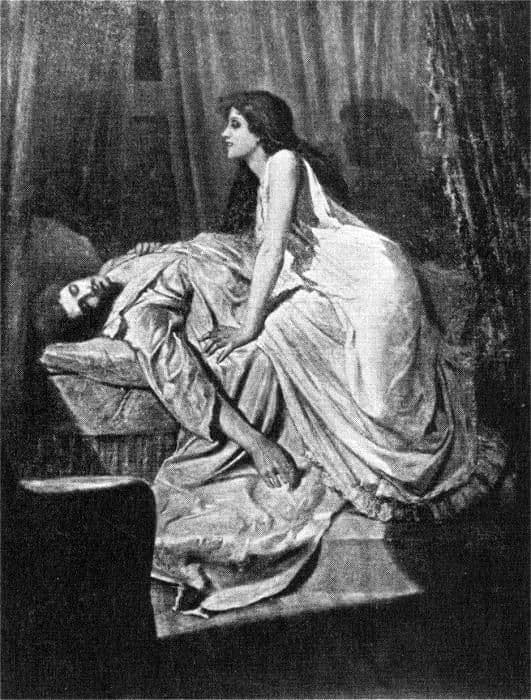
The vampire is a mythical creature, often depicted as an undead humanoid that feeds on the vital essence, typically blood, of humans. Originating in European folklore, particularly Southeastern and Eastern Europe, these beings were believed to be revenants of deceased individuals who caused harm in their former neighborhoods. Early descriptions differ significantly from modern portrayals, with folkloric vampires often appearing bloated and ruddy rather than gaunt and pale.