
Mammon
Christianity (New Testament, Medieval Demonology)·Theology, Demonology, Folklore·Middle East (Aramaic/Hebrew origins), Western Europe (Medieval personification)·Personification of wealth/greed, Demon
Mammon is a concept originating in the New Testament, representing money, material wealth, or anything that promises riches, and is associated with the greedy pursuit of gain. While not explicitly named as a demon in scripture, it was later personified in medieval tradition as a demon of greed and avarice, often listed among the seven princes of Hell. Its name derives from Aramaic and Hebrew words for wealth, and it has become a potent symbol of materialism in both religious and secular contexts.
Key Facts
- ›Mammon originates from Aramaic and Hebrew words meaning 'wealth' or 'money'.
- ›The New Testament quotes Jesus using 'mammon' to represent material wealth, contrasting it with service to God.
- ›In the Middle Ages, Mammon was commonly personified as a demon embodying greed and avarice.
- ›It has been associated with the seven Deadly Sins, specifically greed.
- ›Mammon is metaphorically used to represent the corrupting influence of wealth and materialism.
- ›Various languages, including Polish, Slovak, Finnish, Estonian, and German, use derivations of 'Mammon' to refer to money or greedy people.

Mamon, Mamona, Mamuna, MāMōNā
Material Wealth, Money, Greed, Avarice, Materialism
Promises Wealth, Corrupts Human Hearts With Greed
- Gospel of Matthew
- Gospel of Luke
- Vulgate Bible
- Didascalia
- Augustine of Hippo's Writings
- Peter Lombard's Sentences
- Piers Plowman
- Nicholas De Lyra's Commentaries
- Spenser's the Faerie Queene
- Milton's Paradise Lost
- Jacques Collin De Plancy's Dictionnaire Infernal
- Thomas Carlyle's Past and Present
Jesus, Beelzebub, Plutus, Dis Pater, Wolf
Greed, Avarice, Materialism, Idolatry of Wealth, Unjust Worldly Gain, Gluttony, Excessive Materialism
- In Slavic Languages, 'Mamona' Or 'Mamuna' Is Used As A Synonym For Mammon, Often Figuratively and Derogatorily For Money.
- In Slovak, 'MamonáR' Refers To A Greedy Person.
- In Finnish and Estonian, 'Mammona' Is A Synonym For Material Wealth.
- In German, 'Der SchnöDe Mammon' Is A Colloquial Term For Contemptible Money.
Purse, Wolf
About Mammon
The figure of Mammon originates in the New Testament, where the Aramaic word 'māmōnā' is used by Jesus to represent material wealth, money, or any entity that promises riches. It is presented as a power that cannot be served alongside God, symbolizing the dangers of avarice and the corrupting influence of excessive materialism. While the New Testament uses the term to denote wealth itself, later traditions, particularly during the Middle Ages, personified Mammon as a demon embodying greed.
Personification and Demonological Context
By the medieval period, Mammon was frequently depicted as a demon, often listed among the seven princes of Hell and associated with the deadly sin of greed. This personification likely arose from the biblical warnings against the love of money. Authors and theologians like Peter Lombard and Nicholas de Lyra explicitly referred to Mammon as a demon by name. Literary works, such as Edmund Spenser's The Faerie Queene, further cemented this image, portraying Mammon overseeing a cave filled with worldly treasures. John Milton's Paradise Lost also features a fallen angel who prioritizes earthly wealth.
Etymology and Linguistic Usage
The word 'Mammon' entered English through post-classical Latin and Hellenistic Greek, ultimately deriving from Aramaic and Hebrew terms for wealth. This linguistic root highlights its fundamental connection to financial prosperity. In modern usage, many European languages, including Polish, Slovak, Finnish, Estonian, and German, retain derivatives of 'Mammon' to refer to money, often with a contemptuous connotation, reflecting its enduring symbolic association with the pursuit of wealth.
Source: Wikipedia ↗
Frequently Asked Questions
What does the name Mammon mean?
The name Mammon originates from Aramaic (māmōnā) and Hebrew (māmôn), both meaning 'wealth,' 'riches,' or 'money.' It can also imply 'that in which one trusts.'
Where does Mammon first appear?
Mammon first appears in the New Testament, notably in the Gospels of Matthew and Luke, where Jesus uses the term to represent material wealth that distracts from devotion to God.
Is Mammon a demon?
While not explicitly named as a demon in the New Testament, Mammon became commonly personified as a demon of greed and avarice during the Middle Ages and was sometimes included among the seven princes of Hell.
What is Mammon associated with?
Mammon is primarily associated with money, material wealth, greed, avarice, and the excessive pursuit of worldly gain. It symbolizes the corrupting influence of riches and materialism.
How has Mammon been depicted in literature?
In literature, Mammon has been depicted as a deity of wealth, a personification of greed, and a fallen angel valuing earthly treasures. Thomas Carlyle famously used 'Gospel of Mammonism' to describe the materialist spirit of the 19th century.
Related Demons
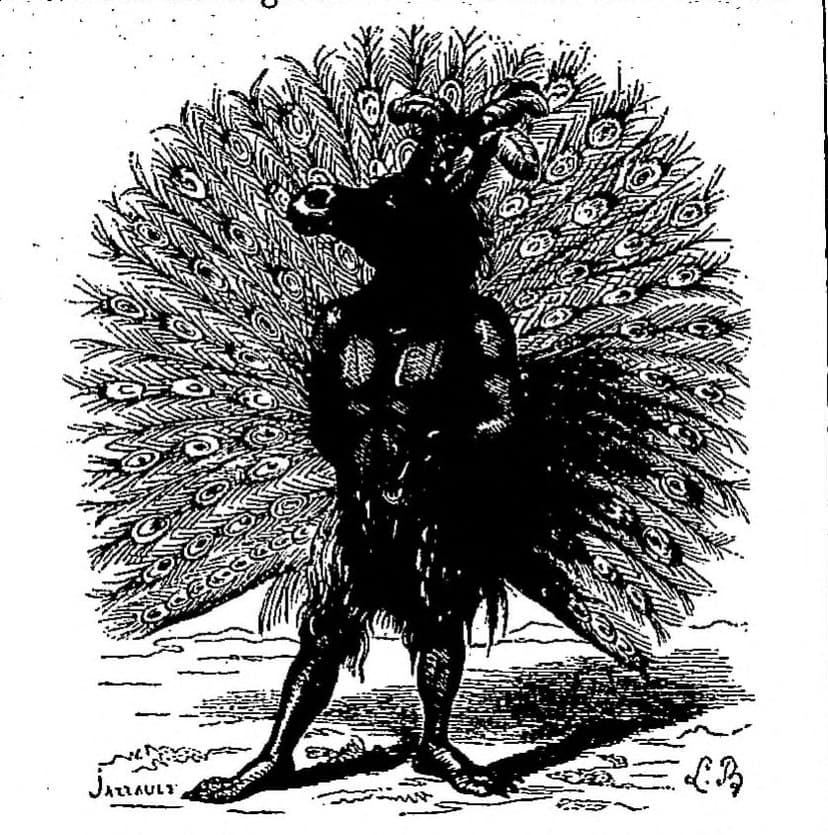
Adrammelech
Adrammelech is an ancient Semitic deity associated with the people of Sepharvaim, who, according to biblical accounts, practiced child sacrifice to him and his consort Anammelech. In later Judeo-Christian demonology, Adrammelech is reinterpreted as a fallen angel and a high-ranking demon, often depicted with a hybrid appearance and holding significant positions in Hell.
Arioch
Arioch is a figure appearing in the Book of Genesis as the King of Ellasar, who participated in the Battle of Siddim alongside other Mesopotamian kings. While traditionally understood as a historical figure, modern scholarship often views him as a literary creation, with Ellasar potentially linked to regions like Anatolia, Cyprus, or even a name found in Babylonian records. Arioch has also been adopted in later literature and demonology as a demonic entity and a lord of Chaos.
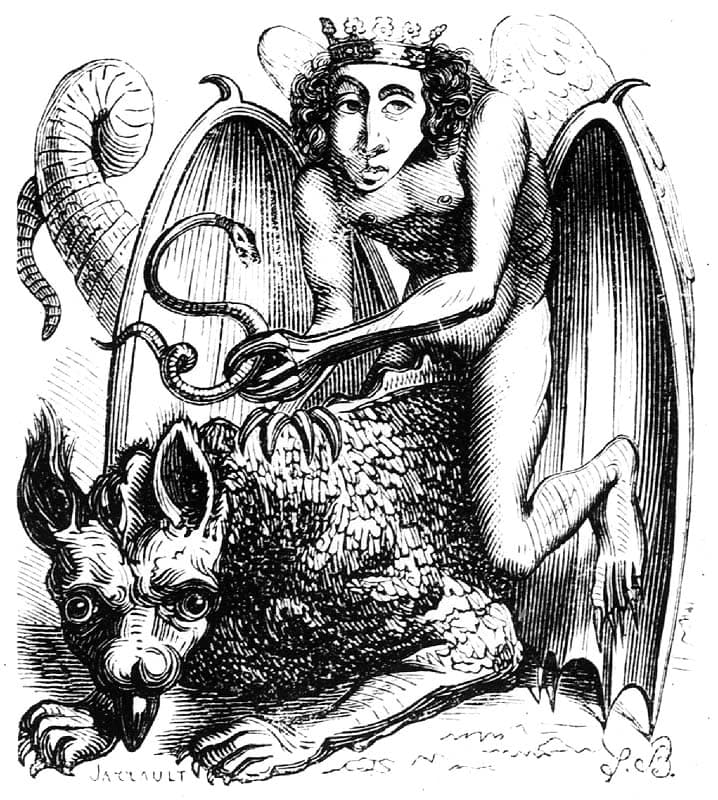
Astaroth
Astaroth is an arch-demon and Great Duke of Hell in demonology, notable for his origins as a demonized ancient Near Eastern goddess. His transformation reflects the historical process of demonizing pagan deities within Abrahamic religious traditions, particularly Christianity and Kabbalah.