
Mahishasur
Mahishasur is a prominent bovine asura from Hindu mythology, primarily known as the "buffalo demon" whose defeat by the goddess Durga is a central theme in the Navaratri festival. He is depicted as a deceitful shape-shifter who waged war against the devas, ultimately being slain by Durga, earning her the epithet Mahishasuramardini. His story symbolizes the triumph of good over evil and is widely depicted in art and celebrated in religious festivals.
Key Facts
- ›Mahishasur is a bovine asura in Hinduism, meaning "buffalo demon."
- ›He waged war against the devas and was granted a boon that no man could kill him.
- ›The goddess Durga was born from the combined divine energies of the defeated devas to combat him.
- ›Durga ultimately killed Mahishasur with her trishula (trident).
- ›His defeat is commemorated during the Navaratri festival, culminating in Vijayadashami.
- ›Mahishasur represents the forces of ignorance and chaos hidden by outer appearances.
Buffalo Demon
Ignorance, Chaos
Shape-Shifting
Devi Mahatmya, Markandeya Purana, Lakshmi Tantra, Narada Purana, Garuda Purana
Durga, Rambha, Mahishi, Gajasura, Devas, Indra
Ignorance, Chaos, Deceit, Evil
- His Defeat Is Commemorated During the Navaratri Festival, Culminating In Vijayadashami.
- the Mahishasura Mardini Stotra Was Written To Commemorate the Legend of His Defeat By Durga.
- the Asur Tribe and Munda Tribes Mourn His Death During the Durga Puja Period.
- the Kherwal Santal and Asura Tribes Worship Mahishasura and Consider Durga the Villain.
Durga, Lakshmi, Chamundeshwari
- Some Traditions Identify the Slayer of Mahishasura As Mahalakshmi, Katyayani, Or Bhadrakali.
- the Asur and Santal Tribes Venerate Mahishasura As Their Ancestor and View Durga As the Aggressor.
- the City of Mysore Is Popularly Believed To Be Named After Mahishasuramardini, the Goddess Who Slew Mahishasura.
Buffalo
About Mahishasur
Mahishasur is a significant figure in Hindu mythology, recognized as a powerful bovine asura, meaning "buffalo demon." His narrative is central to the Devi Mahatmya, a revered text within Shaktism, and his defeat by the goddess Durga is a cornerstone of the annual Navaratri festival. The story symbolizes the eternal struggle between good and evil, with Mahishasura representing the forces of ignorance and chaos.
Legend and Significance
As an asura, Mahishasur waged relentless war against the devas (gods). He had obtained a boon that rendered him impervious to death by any man. His prowess in battle led to the defeat of the devas, prompting them to combine their divine energies to form the goddess Durga. Riding a lion, Durga confronted and ultimately slew Mahishasur with her trishula (trident), thus earning the epithet Mahishasuramardini, meaning "Slayer of Mahishasura." This victory is celebrated during Navaratri, culminating in Vijayadashami, a festival that marks the triumph of dharma (righteousness) over adharma (unrighteousness).
Symbolism and Variations
Mahishasur is often interpreted as a representation of the hidden forces of ignorance and chaos that can be masked by an outward appearance. Hindu art across South and Southeast Asia frequently depicts Durga as a serene figure of good overpowering a scared and outwitted Mahishasura. While the Devi Mahatmya is considered the standard account, variations exist in different Puranic texts and regional traditions, sometimes emphasizing other goddesses like Mahalakshmi or Katyayani as the slayer.
Cultural Reverence and Opposition
The legend of Mahishasur has deeply influenced cultural practices. The city of Mysuru (formerly Mysore) is popularly believed to derive its name from the goddess who defeated him. However, certain tribal communities, such as the Asur and Santal people, hold a different perspective. They venerate Mahishasur as their benevolent ancestor, known as Hudur Durga, and mourn his death during the Durga Puja period, viewing Durga as an invader. This highlights the complex and multifaceted interpretations of this ancient myth.
Source: Wikipedia ↗
Frequently Asked Questions
Who is Mahishasur?
Mahishasur is a powerful bovine asura, or "buffalo demon," from Hindu mythology. He is known for his deceitful nature and his shape-shifting abilities, which he used in his wars against the gods.
What is Mahishasur famous for?
He is most famous for his epic battle with the goddess Durga, who was created by the gods to defeat him. His eventual slaying by Durga is a central theme celebrated during the Navaratri festival.
How was Mahishasur defeated?
After gaining a boon that he could not be killed by any man, Mahishasur was defeated and killed by the goddess Durga. She used her trishula (trident) to pierce his heart.
What does Mahishasur symbolize?
Mahishasur is often interpreted as a symbol of ignorance, chaos, and the darker forces that can be hidden behind outward appearances. His defeat by Durga represents the triumph of good over evil.
Are there different versions of the Mahishasura story?
Yes, while the Devi Mahatmya provides a standard telling, variations exist across different Puranic texts and regional traditions. These retellings may differ in narrative details and the specific form of the goddess who defeats Mahishasura, with some texts highlighting goddesses like Mahalakshmi or Katyayani.
How is Mahishasur remembered today?
Mahishasur is primarily remembered through the annual Navaratri festival, which culminates in Vijayadashami, celebrating his defeat. His legend also inspires art, temple sculptures, and performance arts across South and Southeast Asia.
Related Demons
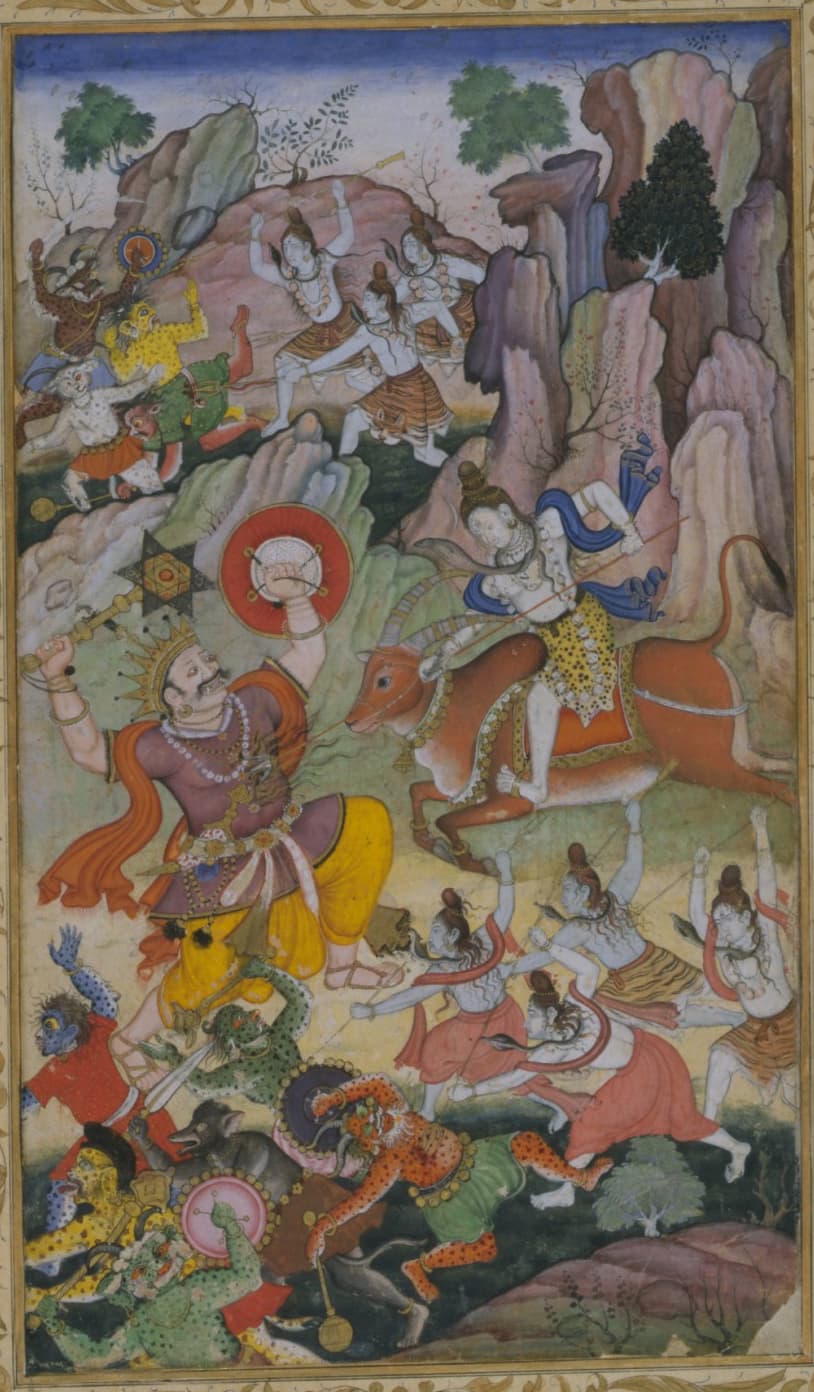
Andhaka
Andhaka is a malevolent asura from Hindu mythology, primarily featured in the Puranic scriptures, whose pride and malevolence are ultimately vanquished by Shiva and Parvati. His origin stories vary, but he is often depicted as a son of Shiva and Parvati, born from their union or Shiva's sweat, and notable for his immense power, numerous forms, and his eventual devotion to Shiva.
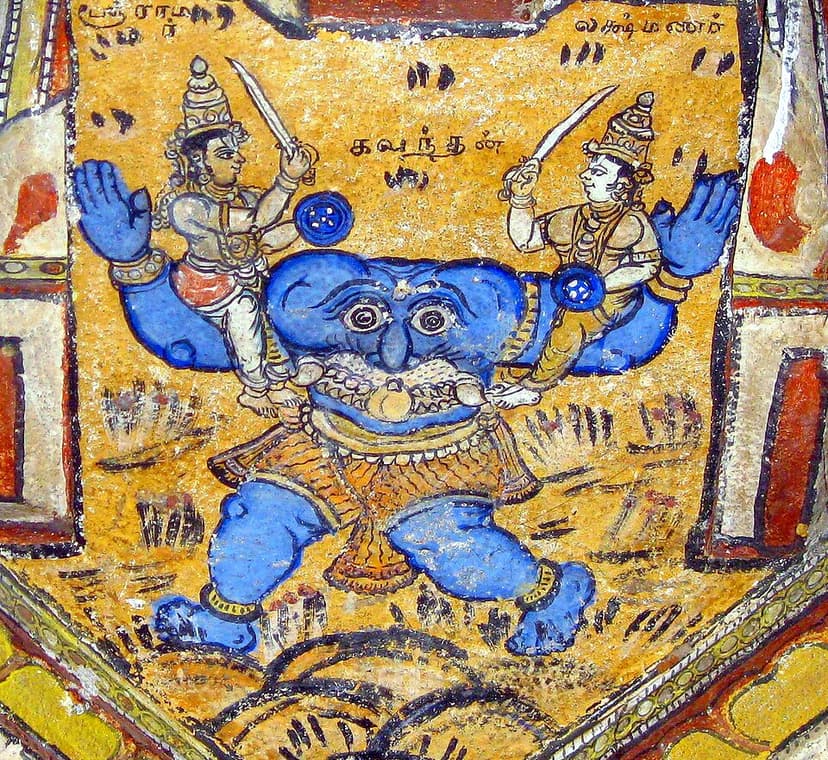
Kabandha/Kabhanda
Kabandha, meaning "headless torso," is a Rakshasa (demon) in Hindu epics like the Ramayana and Mahabharata. Originally a celestial musician named Vishvavasu, he was cursed into a monstrous form, only to be freed by the god Rama. Kabandha's notable role is guiding Rama to Sugriva, a monkey-king crucial for rescuing Rama's wife, Sita.
Arunasura
Bhramari, also known as the goddess of bees, is a Hindu deity and an incarnation of Mahadevi within Shaktism. She is notable for her legend in the Devi Bhagavata Purana, where she appears as a massive, bee-emanating form to defeat the powerful asura Arunasura, who had gained near-invincibility through a boon. Her name directly translates to 'like a bee' or 'the goddess of bees'.