
Kabandha/Kabhanda
Kabandha, meaning "headless torso," is a Rakshasa (demon) in Hindu epics like the Ramayana and Mahabharata. Originally a celestial musician named Vishvavasu, he was cursed into a monstrous form, only to be freed by the god Rama. Kabandha's notable role is guiding Rama to Sugriva, a monkey-king crucial for rescuing Rama's wife, Sita.
Key Facts
- ›Kabandha was originally a Gandharva (celestial musician) named Vishvavasu or Danu.
- ›He was cursed by a sage named Sthulshira (or Ashtavakra, or Durvasa in different accounts) into a demonic form.
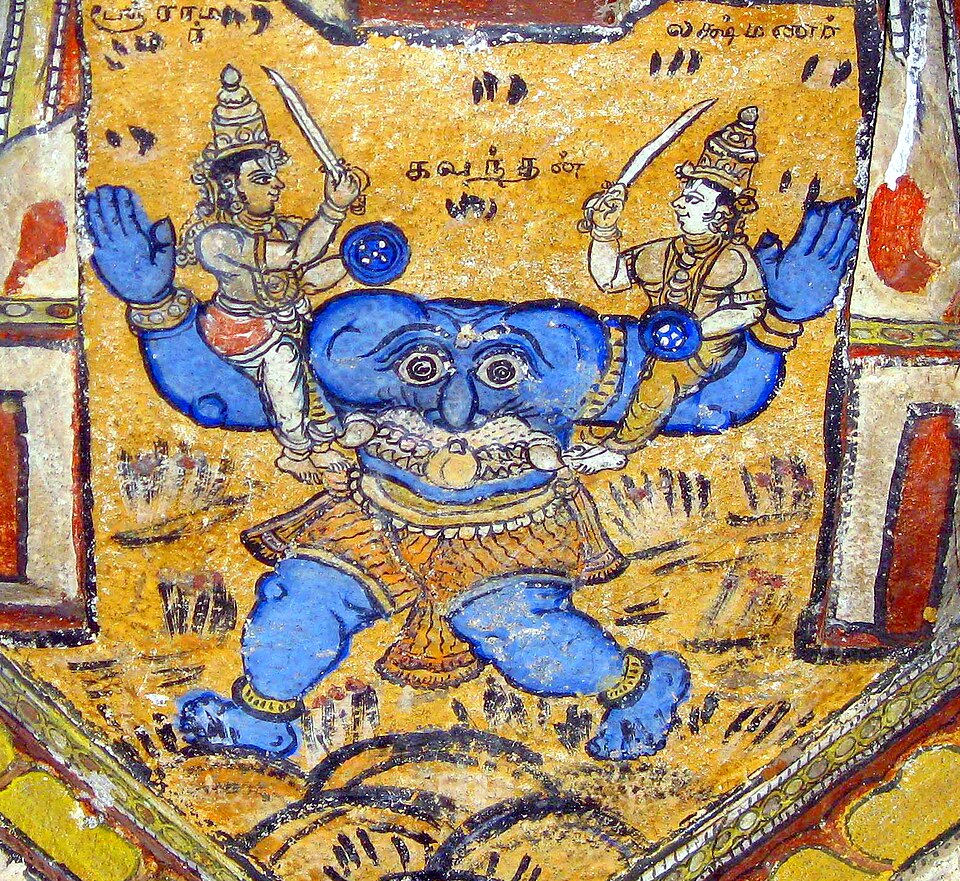
- ›In his demonic form, Kabandha was a headless, carnivorous being with a mouth on his belly and long arms.
- ›His curse was to be broken when Rama and Lakshmana severed his arms.
- ›After his defeat by Rama and Lakshmana, Kabandha resumed his Gandharva form and advised Rama to ally with Sugriva.
- ›This alliance was instrumental in Rama's quest to rescue Sita from Ravana.
Vishvavasu, Danu, Headless Torso
Obstruction, Guidance, Quest
Immense Strength, Ability To Capture Prey With Long Arms, Supernatural Guidance After Transformation
Ramayana, Mahabharata, Ramopakhyana, Harivamsa, Raghuvamsa, Bhattikavya, Mahaviracharita, Anargharaghava, Kamba Ramayana, Adhyatma Ramayana, Ramacharitamanas
Rama, Lakshmana, Sita, Ravana, Sugriva, Vali, Jatayu, Sage Sthulshira, Sage Ashtavakra, Sage Durvasa, Indra, Brahma, Shabari
Arrogance, Consequences of Pride, Redemption, the Necessity of Alliances
Rama, Lakshmana
- the Specific Sage Who Cursed Vishvavasu Varies Between Accounts .
- the Details of the Encounter With Rama and the Subsequent Counsel Are Presented With Variations In Certain Adaptations.
Headless Torso, Long Arms, Mouth On Belly, Tree
About Kabandha/Kabhanda
Kabandha
Kabandha is a prominent Rakshasa (demon) figure in Hindu mythology, most famously depicted in the epic Ramayana. His name, meaning "headless torso," accurately describes his monstrous form, which he bore as a consequence of a curse.
Origin and Curse
Originally, Kabandha was a Gandharva (celestial musician) named Vishvavasu, or sometimes Danu. He was a son of the Gandharva Sri Vishvavasu. In possession of a boon of immortality from Brahma, Vishvavasu became arrogant and clashed with deities like Indra. This led to him being cursed by sages, transforming him into a grotesque, cannibalistic demon. Different texts attribute the curse to various ascetics, including Sthulshira, Ashtavakra, and Durvasa. In his demonic guise, Kabandha was characterized by a lack of a head, a mouth on his belly, and exceptionally long arms, often depicted as being tree-like.
Encounter with Rama and Liberation
Kabandha's pivotal role in the Ramayana unfolds when Rama and his brother Lakshmana, in exile and searching for the abducted Sita, encounter him in the Krauncha forest. The demon captures them, but Lakshmana devises a plan, and together they sever Kabandha's powerful arms. This act liberates Kabandha from his curse. As he dies, he reclaims his celestial Gandharva form.
Counsel to Rama
Upon regaining his true form, Kabandha offers invaluable guidance to Rama. He directs Rama to the Rishyamukha mountain where the exiled monkey-king Sugriva resides. Kabandha advises Rama to form an alliance with Sugriva, explaining that Sugriva's aid would be crucial in the quest to find and rescue Sita from the demon-king Ravana. This alliance, forged as Kabandha suggested, ultimately proves instrumental in Rama's victory and Sita's retrieval. The story of Kabandha appears not only in the Ramayana but also in the Mahabharata and numerous later adaptations, highlighting his significant narrative function as a cursed being who, upon liberation, aids the divine protagonist.
Source: Wikipedia ↗
Frequently Asked Questions
Who was Kabandha before becoming a demon?
Kabandha was originally a Gandharva (celestial musician) named Vishvavasu. He was also known as Danu and was the son of Sri Vishvavasu or Sri.
How did Kabandha become a demon?
Vishvavasu was cursed into a monstrous form by sages like Sthulshira, Ashtavakra, or Durvasa due to his arrogance and misdeeds, such as attacking Indra or scaring sages.
What was Kabandha's appearance as a demon?
He was described as a headless torso with a large belly, a mouth on his stomach, and two exceptionally long arms. He was often depicted as monstrous and cannibalistic.
How was Kabandha's curse broken?
Kabandha's curse was broken when Lord Rama and his brother Lakshmana severed his arms. This act of violence freed him from his demonic form.
What was Kabandha's significance in the Ramayana?
After being freed from his curse, Kabandha provided crucial guidance to Rama. He directed Rama to the Rishyamukha mountain to seek an alliance with the monkey-king Sugriva, which was essential for rescuing Sita.
In which Hindu texts does Kabandha appear?
Kabandha's story is primarily found in the Hindu epics Ramayana and Mahabharata. His legend also appears in various later adaptations of the Ramayana.
Related Demons

Kumbhakarna
Kumbhakarna is a powerful rakshasa and the younger brother of Ravana, a prominent figure in the Hindu epic Ramayana. Despite his immense size and voracious appetite, he is depicted as a virtuous warrior who fought out of loyalty to his brother and homeland. He is famously known for his extraordinary sleep cycle, owing to a curse that made him sleep for six months at a time.
Maricha
Maricha is a prominent rakshasa (demon) from the Hindu epic Ramayana, known for his pivotal role in the abduction of Sita, the wife of Lord Rama. Originally cursed to be a demon along with his mother Tadaka and brother Subahu, Maricha initially terrorized sages before being defeated by Rama. His most significant act was assuming the form of a golden deer to lure Rama away from his hermitage, thus enabling Ravana to kidnap Sita.

Bakasura
Bakasura, also known as Baka, is a fearsome rakshasa from the Hindu epic Mahabharata. He terrorized the citizens of a kingdom by demanding a weekly tribute of food and a human victim, in exchange for protecting them from invaders. His reign of terror was ended by Bhima, one of the Pandava brothers, who slew him in a dramatic battle.