
Bakasura
Bakasura, also known as Baka, is a fearsome rakshasa from the Hindu epic Mahabharata. He terrorized the citizens of a kingdom by demanding a weekly tribute of food and a human victim, in exchange for protecting them from invaders. His reign of terror was ended by Bhima, one of the Pandava brothers, who slew him in a dramatic battle.
Key Facts
- ›Bakasura is a rakshasa from the Hindu epic Mahabharata.
- ›He resided in a forest near Garhbeta town in West Bengal, India.
- ›He terrorized citizens in exchange for protecting the kingdom from invaders.
- ›His demands included a weekly cartload of food and the cart-driver.
- ›He was killed by Bhima, one of the Pandava brothers, to save a Brahmin host.
- ›His slaying is commemorated on the occasion of Bhimana Amavasya.

Baka
Terror, Devouring Humans, Protection
Great Strength, Uprooting Trees For Combat, Overpowering Foes In Physical Combat
Mahabharata
Bhima, Kunti, Pandavas, Hidimbi
Tyranny, Abuse of Power, the Consequences of Fear-Driven Compromise
- the Slaying of Bakasura Is Commemorated On Bhimana Amavasya.
Bhima
About Bakasura
Bakasura, also commonly known as Baka, is a prominent rakshasa (a type of demonic being) featured in the ancient Indian epic, the Mahabharata. His story illustrates themes of tyranny, courage, and divine intervention.
Story and Significance
Bakasura resided in a forest, now identified as Gangani near Garhbeta town in West Bengal, India. He offered protection to the local kingdom from external invaders. However, this "protection" came at a terrible price: the citizens were forced to provide him with a weekly tribute of a large quantity of food, and he would also devour the cart-driver who delivered it. The weak king was unable to resist this demand, leaving his subjects in constant terror.
The narrative takes a turn when the Pandava brothers and their mother Kunti are staying in the city of Ekachakrapura and lodge with a Brahmin family. Upon overhearing the family's despair over the impending turn for one of them to be sacrificed to Bakasura, Kunti, a woman of great resolve, intervenes. She declares that her son, Bhima, known for his immense strength and prowess, will face the rakshasa instead of allowing the innocent Brahmin to be sacrificed.
Bhima readily accepts the task, eager to repay the hospitality of his hosts. He proceeds to Bakasura's dwelling with the cartload of food. The aroma of the food excites Bhima, and he begins to consume it, enraging the rakshasa. A fierce battle ensues, with both Bhima and Bakasura uprooting trees and engaging in intense physical combat. Ultimately, Bhima's superior strength and skill prevail. He breaks Bakasura's spine, defeating him. Following the battle, Bhima assures Bakasura's terrified kin that they will be safe if they renounce human flesh, to which they agree.
Bakasura's defeat is a significant event within the Mahabharata, highlighting the triumph of righteousness and strength over demonic oppression. The slaying of Bakasura by Bhima is still commemorated in Hindu traditions on the occasion of Bhimana Amavasya, serving as a reminder of courage and the protection of the innocent.
Source: Wikipedia ↗
Frequently Asked Questions
Who was Bakasura?
Bakasura was a rakshasa, a demonic being, featured in the Hindu epic Mahabharata. He terrorized a kingdom by demanding tribute in exchange for protection from invaders.
What did Bakasura demand from the kingdom?
In exchange for protecting the kingdom, Bakasura demanded a weekly cartload of food and the person who delivered it, the cart-driver, would be devoured by him.
Who killed Bakasura?
Bakasura was killed by Bhima, one of the five Pandava brothers. Bhima volunteered to face Bakasura to save a Brahmin host whose turn it was to deliver the tribute.
Where did Bakasura live?
Bakasura lived in a forest that is nowadays known as 'Gangani,' located near Garhbeta town in the Indian state of West Bengal.
How is the slaying of Bakasura remembered?
The slaying of Bakasura by Bhima is commemorated annually on the occasion of Bhimana Amavasya.
Related Demons
Maricha
Maricha is a prominent rakshasa (demon) from the Hindu epic Ramayana, known for his pivotal role in the abduction of Sita, the wife of Lord Rama. Originally cursed to be a demon along with his mother Tadaka and brother Subahu, Maricha initially terrorized sages before being defeated by Rama. His most significant act was assuming the form of a golden deer to lure Rama away from his hermitage, thus enabling Ravana to kidnap Sita.
Bali Raj
Mahabali, also known as Bali, is a prominent daitya king in Hinduism, recognized as one of the Chiranjivi, or immortals. He is celebrated for his benevolent rule and generosity, famously tricked by Vishnu's Vamana avatar, which led to his banishment to Sutala Loka. His legend forms a central part of the annual Onam festival in Kerala, marking his symbolic return to his kingdom.
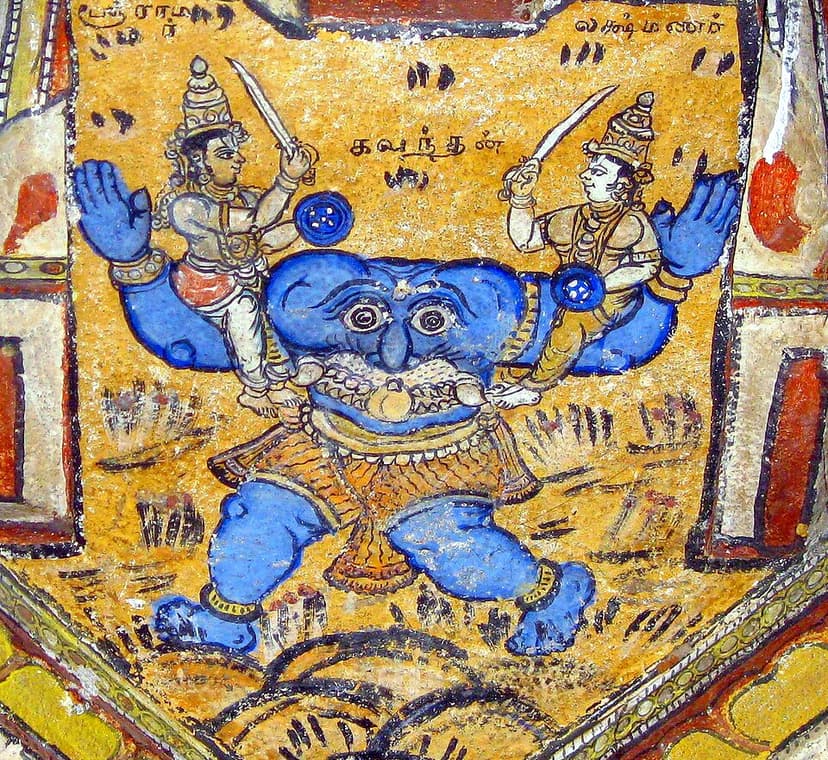
Kabandha/Kabhanda
Kabandha, meaning "headless torso," is a Rakshasa (demon) in Hindu epics like the Ramayana and Mahabharata. Originally a celestial musician named Vishvavasu, he was cursed into a monstrous form, only to be freed by the god Rama. Kabandha's notable role is guiding Rama to Sugriva, a monkey-king crucial for rescuing Rama's wife, Sita.