
Andhaka
Andhaka is a malevolent asura from Hindu mythology, primarily featured in the Puranic scriptures, whose pride and malevolence are ultimately vanquished by Shiva and Parvati. His origin stories vary, but he is often depicted as a son of Shiva and Parvati, born from their union or Shiva's sweat, and notable for his immense power, numerous forms, and his eventual devotion to Shiva.
Key Facts
- ›Andhaka is a powerful asura known for his pride and malevolence, often depicted with thousands of heads, arms, and eyes.
- ›His origin is variously described as being born from Shiva's sweat, or as a son of Shiva and Parvati.
- ›Multiple Puranic texts, including the Shiva Purana, Matsya Purana, and Kūrma Purana, recount his story.
- ›He often attempts to abduct Parvati, mistakenly believing her to be a woman he can possess.
- ›Andhaka's blood, when spilled, can spawn new demons, necessitating the intervention of divine beings like the Mātṛkās or goddesses like Chandi/Kali.
- ›Ultimately, Andhaka is defeated by Shiva, often impaled on his trident, but is frequently forgiven and appointed as a chief of Shiva's attendants (Gaṇa).
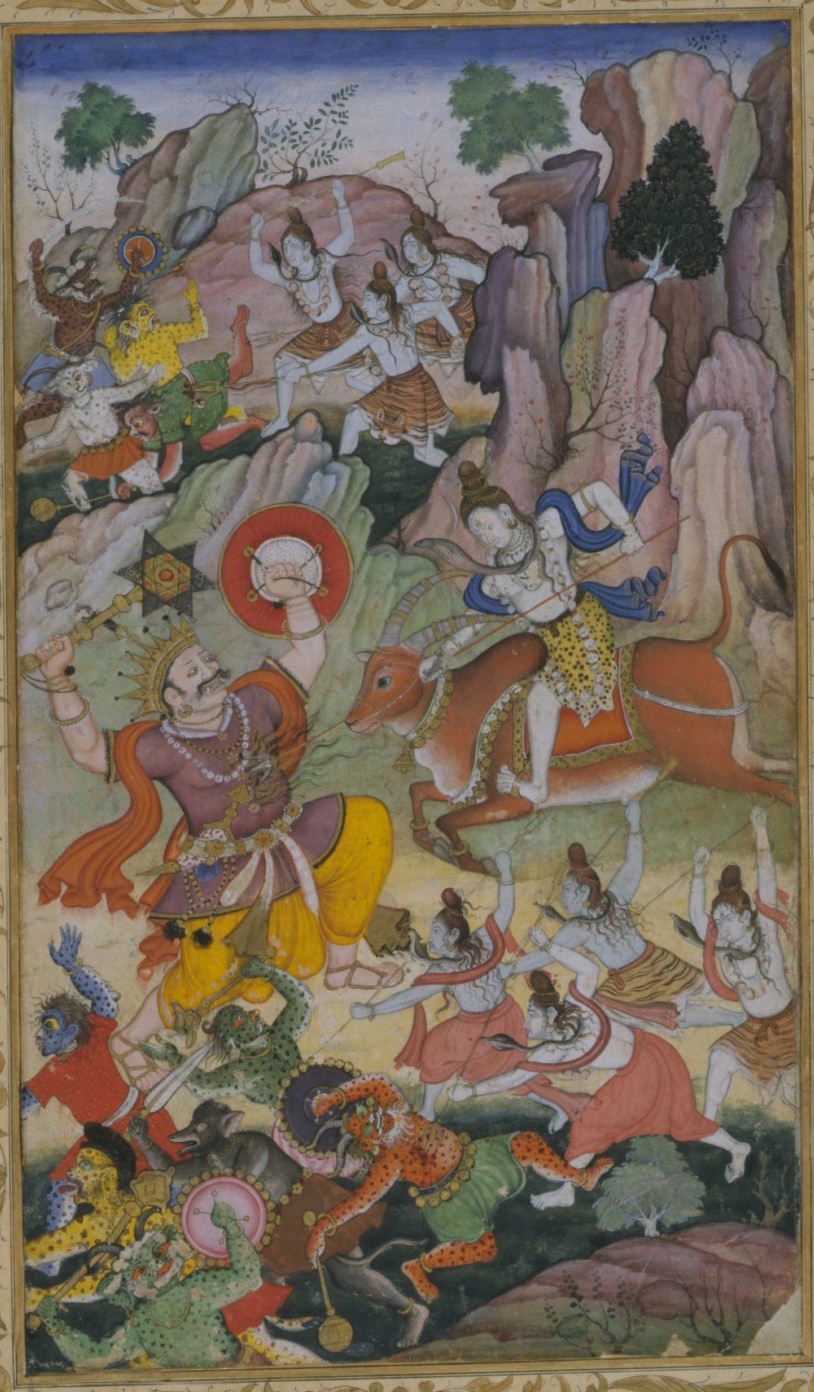
Andhaka, अन्धक
Darkness, Pride, War
Creation of Duplicate Demons From Blood, Immense Strength, Conquest of the Three Worlds, Immunity To Most Forms of Death
Matsya PurāṇA, KūRma PurāṇA, LiṅGa PurāṇA, Padma Purana, Shiva Purana, VāMana PurāṇA, HarivaṃśA Purana, RāMāYaṇA, MahāBhāRata
Shiva, Parvati, Vishnu, Brahma, HiraṇYāKṣA, PrahlāDa, Indra, Nandi, Sukra, Matrikas, Chandi, Kali, Vighasa, Hasti, Duryodhana, Kartikeya, Ganesa, Vasus, Suskapratavarti
Pride, Lust, Ignorance, Devotion, Repentance, Forgiveness
Shiva, Parvati, Vishnu, MāTṛKāS, Chandi, Kali, Nandi
Trident, Darkness
About Andhaka
Andhaka is a formidable asura, a malevolent being central to various narratives within Hindu mythology, particularly in the Puranic scriptures. His name, meaning "He who darkens," reflects his nature and the circumstances of his origin. Andhaka is renowned for his immense power, often described with thousands of heads, arms, and eyes, and his pride often leads him to challenge the divine.
Origins and Birth
The genesis of Andhaka is recounted in several Puranic texts, including the Shiva Purana, Matsya Purana, and Kūrma Purana, with variations in the details. One prominent account states that he was born from the sweat that fell from Shiva's body when Parvati playfully covered his eyes, plunging the universe into darkness. In other versions, he is considered a son of Shiva and Parvati, or a son of the great asura Hiranyaksha.
Deeds and Conflicts
Andhaka's stories often revolve around his ambition and his attempts to usurp power or abduct Parvati, whom he desires for herself, unaware of her true divine nature and her relationship with Shiva. He is known to have conquered the three worlds, subdued gods, and hindered rituals. A critical aspect of his battles is that whenever his blood falls to the ground, it spawns new demons identical to him, making him incredibly difficult to defeat. This challenge is often met by divine intervention, such as the Mātṛkās (divine mothers) drinking his blood or the intervention of goddesses like Chandi or Kali.
Defeat and Redemption
Ultimately, Andhaka's reign of terror is brought to an end by Lord Shiva. Shiva frequently impales him with his trident, a decisive blow that stops the proliferation of his duplicates. Despite his malevolent actions, many accounts conclude with Andhaka's repentance and subsequent forgiveness by Shiva. He is often granted a place of honor as a chief of Shiva's attendants, known as the Gaṇas, signifying a transformation from a destructive force to a devoted follower.
Source: Wikipedia ↗
Frequently Asked Questions
Who is Andhaka in Hindu mythology?
Andhaka is a prominent asura in Hindu literature, known for his immense power and pride. His stories are mainly found in the Puranic scriptures, where he often clashes with the gods.
What is Andhaka's origin story?
The origin of Andhaka varies across texts. In some accounts, he is born from the sweat of Shiva when Parvati covers his eyes, creating darkness. In others, he is depicted as a son of Shiva and Parvati.
Why is Andhaka significant?
Andhaka is notable for his powerful, often destructive, nature and his eventual defeat and subsequent redemption by Shiva. His story highlights themes of divine power, ego, and forgiveness.
What are Andhaka's powers and weaknesses?
Andhaka possesses immense strength and can create duplicate demons from his spilled blood. His primary weakness is Shiva, who is ultimately capable of defeating him. He is also vulnerable to lusting after women who are like mothers.
How is Andhaka defeated?
Andhaka is typically defeated by Shiva, often impaled on Shiva's trident. In some versions, his blood is consumed by divine mothers to prevent the proliferation of demons.
What happens to Andhaka after his defeat?
Despite his malevolence, Andhaka is often forgiven by Shiva due to his repentance or devotion. He is frequently made a chief of Shiva's Gaṇas, signifying his final devotion.
Related Demons
Mahishasur
Mahishasur is a prominent bovine asura from Hindu mythology, primarily known as the "buffalo demon" whose defeat by the goddess Durga is a central theme in the Navaratri festival. He is depicted as a deceitful shape-shifter who waged war against the devas, ultimately being slain by Durga, earning her the epithet Mahishasuramardini. His story symbolizes the triumph of good over evil and is widely depicted in art and celebrated in religious festivals.
Arunasura
Bhramari, also known as the goddess of bees, is a Hindu deity and an incarnation of Mahadevi within Shaktism. She is notable for her legend in the Devi Bhagavata Purana, where she appears as a massive, bee-emanating form to defeat the powerful asura Arunasura, who had gained near-invincibility through a boon. Her name directly translates to 'like a bee' or 'the goddess of bees'.
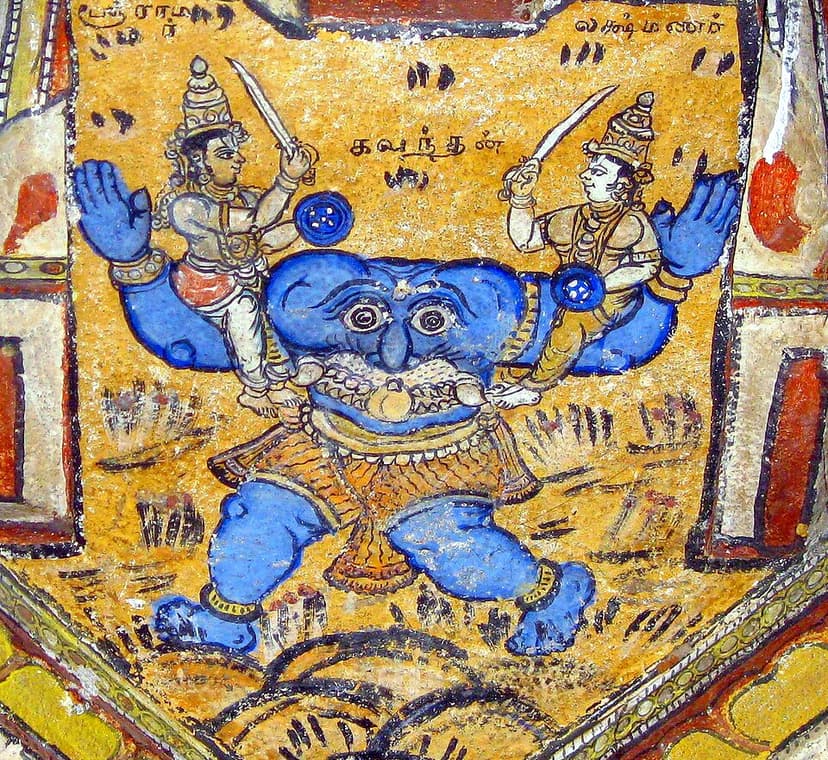
Kabandha/Kabhanda
Kabandha, meaning "headless torso," is a Rakshasa (demon) in Hindu epics like the Ramayana and Mahabharata. Originally a celestial musician named Vishvavasu, he was cursed into a monstrous form, only to be freed by the god Rama. Kabandha's notable role is guiding Rama to Sugriva, a monkey-king crucial for rescuing Rama's wife, Sita.