
Lilith
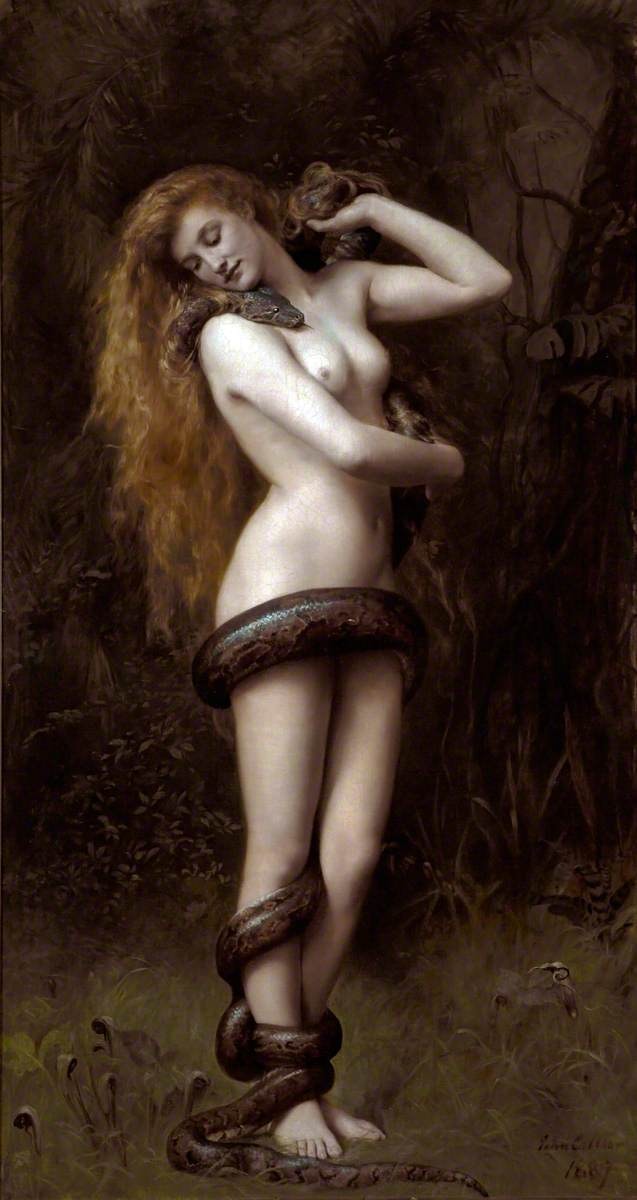
Lilith is a prominent figure in Jewish mythology, primarily known as Adam's first wife who refused to be subservient and fled the Garden of Eden. Her legend developed significantly in medieval Jewish folklore, mysticism, and texts like the Zohar, where she is often depicted as a dangerous night demon. Lilith is notable for her origins as a potentially composite figure drawing from Mesopotamian demonology and her enduring presence in folklore and theological discussions.
Key Facts
- ›Lilith is a feminine figure in Jewish mythology, not appearing in the Hebrew Bible but mentioned in Isaiah 34:14 as 'lilit', whose meaning is debated.
- ›She is first attested in the Dead Sea Scrolls and later in Mandaean and Jewish sources from late antiquity.
- ›Medieval Jewish folklore, particularly the Alphabet of Sirach and the Zohar, elaborates on her as Adam's first wife who left Eden due to her refusal to submit to him.
- ›Lilith is described as a sexually wanton demon of the night who threatens children and seduces men.
- ›Scholarly debate exists regarding her origins, with some linking her to Akkadian 'LīLītu' (night spirits) and others questioning direct Mesopotamian influence.
- ›Jewish incantation bowls and amulets from ancient Mesopotamia provide some of the earliest visual depictions of Lilith as a female demon.
Lilit, Lilis, Liliyyot
Night, Seduction, Threat To Children, Demonic Malevolence
Ability To Transform Into Human Form, Seduction, Threatening and Harming Children, Leading Men Astray
Dead Sea Scrolls, Babylonian Talmud, Zohar, Alphabet of Sirach, Isaiah 34:14
Adam, Samael, LamašTu
Rebellion Against Authority, Female Independence, Nighttime Danger, Sexual Temptation
- Appears In Protective Spells On Jewish Incantation Bowls From Sassanid Empire Babylon .
- Incantation Bowls Were Buried To Trap Demons, Including Lilith, and Inscribed With Scripture Or Talmudic References.
- Amulets Served As Symbolic Divorce Papers To Ward Off Lilith Haunting A Household.
the Strong One of Abraham, the Rock of Isaac, Shaddai of Jacob, Yah Ha-Shem
- Potentially Draws From Akkadian 'LīLīTu' and 'Ardat Lilî' .
- Identified With LamašTu In Some Aramaic Traditions.
- Interpretations Vary From A Literal Demon To A Night Bird Or Animal.
About Lilith
Lilith is a significant feminine figure in Jewish mythology, most prominently known as Adam's first wife. According to legend, she was created simultaneously and from the same earth as Adam but refused to be subservient to him, fleeing the Garden of Eden rather than submitting to his authority. This act of defiance and independence forms the core of her narrative.
Origins and Development
The concept of Lilith has roots that are debated among scholars, with some suggesting connections to Mesopotamian demonology, specifically Akkadian spirits known as 'līlû' and 'līlītu.' The Hebrew word 'lilit' appears in the Book of Isaiah (34:14), though its precise meaning in that context is uncertain and has been interpreted variously as a demon, a night bird, or a type of wild creature. The figure of Lilith as a distinct demoness and Adam's first wife became more elaborated in later Jewish traditions, particularly during the Middle Ages.
Medieval Folklore and Mysticism
Lilith's legend was significantly expanded in medieval Jewish folklore, Aggadah, and mysticism, notably in texts such as the Alphabet of Sirach and the Zohar. In these traditions, she is often depicted as a dangerous demon of the night, characterized by her sexual wantonness. She is said to seduce men, threaten infants, and generally embody a form of chaotic female power. Some rabbinic authorities, however, did not accept the existence of Lilith.
Attestations and Interpretations
Early attestations of Lilith appear in the Dead Sea Scrolls (4Q510-511) and in Jewish and Mandaean sources from late antiquity, where she is described in incantations as a supernatural malevolence. Jewish incantation bowls and amulets from ancient Mesopotamia (4th–6th centuries AD) provide some of the earliest visual depictions of Lilith, often portraying her as a chained demon, emphasizing the intent to ward her off. While some ancient Mesopotamian texts are believed to inform her character, direct textual evidence linking the Jewish Lilith to specific Akkadian figures like the 'ki-sikil-lil-la-ke' from the Epic of Gilgamesh or the figure on the Burney Relief is considered scant or disputed by modern scholarship.
Lilith's enduring presence in folklore and theological discussions stems from her complex portrayal as a figure of rebellion, seduction, and danger, making her one of the most recognizable demonic figures in Jewish tradition.
Source: Wikipedia ↗
Frequently Asked Questions
Who is Lilith in Jewish mythology?
Lilith is a feminine figure in Jewish mythology, most famously known as Adam's first wife who predated Eve. She is depicted as having fled the Garden of Eden after refusing to be subservient to Adam.
Where does the name Lilith come from?
The name 'Lilith' is thought to be related to the Akkadian terms 'lilû' and 'līlītu,' which refer to classes of demonic spirits. The Hebrew word 'lilit' appears in Isaiah 34:14, though its precise meaning is debated.
What are Lilith's traditional roles and characteristics?
Lilith is often portrayed as a dangerous demon of the night, known for her sexuality, and her threat to children, sometimes depicted as stealing babies. She is also associated with seduction and leading men astray.
Is Lilith mentioned in the Bible?
Lilith herself does not appear in the Hebrew Bible. However, the word 'lilit' is found in Isaiah 34:14, though its interpretation as a demon or a type of creature is debated among scholars.
What are the earliest attestations of Lilith?
The earliest known references to Lilith appear in the Dead Sea Scrolls (specifically 4Q510-511) and in Jewish and Mandaean sources from late antiquity, dating from around 300 AD onwards.
How is Lilith depicted in ancient artifacts?
Jewish incantation bowls and amulets from Mesopotamia, dating from the 4th to 6th centuries AD, provide early visual depictions of Lilith. These often show her as a chained female demon, indicative of attempts to ward her off.
Related Demons

Shedim
Shedim are spirits or demons in Jewish mythology and the Tanakh, distinct from the Christian concept of purely evil entities. They were often viewed not as inherently malevolent, but as the gods of foreign peoples, or as beings with a more morally ambiguous nature, sometimes even capable of living according to the Torah. Their origins are varied, with legends attributing them to serpents, Lilith, unfinished divine creations, or the builders of the Tower of Babel.
Agrat bat Mahlat
Agrat bat Mahlat is a demon from Jewish mythology, often referred to as "Agrat, daughter of Mahlat." She is notable as one of the four wives of the archdemon Samael, and is associated with magic, prostitution, and the "angels of destruction." Her most prominent appearances are in Talmudic literature and Kabbalistic texts, where she is depicted as a powerful and dangerous demonic figure.
Lili/Lilin/Lilim
Lilin are plural night spirits in Jewish mythology, serving as the male equivalent of Lilith and often conceived as her children with Adam or other mortal men. They are notable for their appearances in early rabbinic literature, such as the Babylonian Talmud and Midrash, and in Aramaic incantation bowls, where they are invoked or bound. Their origins are linked to ancient Akkadian wind demons, and they are depicted as having human form with wings or distinctive hair patterns.