
Agrat bat Mahlat
Agrat bat Mahlat is a demon from Jewish mythology, often referred to as "Agrat, daughter of Mahlat." She is notable as one of the four wives of the archdemon Samael, and is associated with magic, prostitution, and the "angels of destruction." Her most prominent appearances are in Talmudic literature and Kabbalistic texts, where she is depicted as a powerful and dangerous demonic figure.
Key Facts
- ›Agrat bat Mahlat is a demon in Jewish mythology, meaning "Agrat, daughter of Mahlat."
- ›She is one of the four wives of Samael, alongside Lilith, Naamah, and Mahlat.
- ›Talmudic accounts depict her as a powerful sorceress and a leader of "180,000 angels of destruction."
- ›She is associated with sacred prostitution and is sometimes identified with the epithet Eisheth Zenunim.
- ›Kabbalistic texts, particularly the Zohar, describe her as a queen of demons.
- ›She is mentioned in Aramaic incantation bowls and is a subject of legend involving King Solomon and King David.
Agrath, Igrat, Igrah, Iggereth, Igereth, Agrat Bat Mahalat, Igrathiel, Eisheth Zenunim
Magic, Prostitution, Destruction, Nighttime Travel, Demonic Offspring
Communicating Magic Secrets, Causing Danger and Harm, Traveling With A Host of Destructive Angels, Mating To Produce Demonic Offspring
Talmud, Aramaic Incantation Bowls, Zohar, Tuv Haaretz By Nathan Nata Spira, Yalquṭ ḥAdash
Samael, Lilith, Naamah, Mahlat, ḥAnina Ben Dosa, Abaye, King Solomon, King David, Asmodeus, Hadad the Edomite
Sorcery, Sacred Prostitution, Danger, Destruction, Night
- Associated With Tuesday Nights and Friday Nights As Times of Increased Danger.
- Mentioned In Aramaic Incantation Bowls, Often Alongside Lilis and Liliths.
Rabbi ḥAnina Ben Dosa, Abaye
- the Talmudic Encounter With ḥAnina Ben Dosa and the Historiola On Aramaic Incantation Bowls Share Motifs But May Represent Separate Versions of A Story About An Encounter Between A Sage and An Evil Spirit.
About Agrat bat Mahlat
Agrat bat Mahlat is a prominent demon within Jewish mythology, whose name translates from Hebrew as "Agrat, daughter of Mahlat." She is most famously recognized as one of the four wives of the archdemon Samael, alongside Lilith, Naamah, and Mahlat. Her lore is deeply intertwined with themes of sorcery, sacred prostitution, and the forces of destruction, making her a significant figure in the demonological traditions of Judaism.
Talmudic Accounts
In the Talmud, Agrat bat Mahlat is portrayed as a formidable entity. She is described as the "mistress of the sorceresses" and is said to travel at night with an entourage of 180,000 "angels of destruction." These nocturnal excursions are particularly noted for Tuesdays and Friday nights, times when human vulnerability is heightened. However, legends also recount encounters where she met with righteous sages like Rabbi Ḥanina ben Dosa and Abaye. In these narratives, the sages, through their piety and divine favor, managed to curb her malevolent powers and impose restrictions on her movements, preventing her from harming inhabited areas except on specific nights.
Kabbalistic and Later Traditions
Within the mystical tradition of Kabbalah, particularly in the Zohar, Agrat bat Mahlat is elevated to the status of a queen of demons. She is associated with "sacred prostitution" and is depicted as a consort of Samael. Her lineage is further detailed in later rabbinic literature, such as Tuv haAretz, which suggests her mother was Mahalath, daughter of the sorcerer Kasdiel, and that she was conceived when the demon Igrathiel mated with Mahalat. Legends also attribute Agrat bat Mahlat with visiting King Solomon disguised as a prostitute. Furthermore, she is said to have mated with King David, bearing him a demonic son, Asmodeus, who is also identified with Hadad the Edomite. Her presence is also noted in Aramaic incantation bowls, where she appears alongside other demonic figures.
Source: Wikipedia ↗
Frequently Asked Questions
Who is Agrat bat Mahlat?
Agrat bat Mahlat is a demon in Jewish mythology, whose name translates to "Agrat, daughter of Mahlat." She is recognized as one of the wives of the archdemon Samael and is associated with various forms of malevolent influence.
What is Agrat bat Mahlat known for in the Talmud?
In the Talmud, Agrat bat Mahlat is depicted as a powerful sorceress who, along with 180,000 angels of destruction, goes out at night, particularly on Tuesdays and Shabbat. She is shown to have encountered sages like Rabbi Ḥanina ben Dosa and Abaye, who managed to curb her powers.
What is Agrat bat Mahlat's role in Kabbalistic tradition?
In Kabbalistic texts like the Zohar, Agrat bat Mahlat is described as a queen of demons and an angel of sacred prostitution. She is said to mate with Samael and is counted among the demon queens.
Are there any legends about Agrat bat Mahlat and King Solomon or David?
According to legend, Agrat bat Mahlat and Lilith visited King Solomon disguised as prostitutes. Later, King David discovered a lamp containing spirits, and Agrat bat Mahlat mated with him, bearing a demonic son identified as Asmodeus.
What other names or epithets are associated with Agrat bat Mahlat?
Agrat bat Mahlat is sometimes referred to by the epithet Eisheth Zenunim, which means "woman of whoredom." The name "Mahlat" is her mother's name, and variations in spelling include Agrath, Igrat(h), and Iggereth.
Related Demons
Lilith
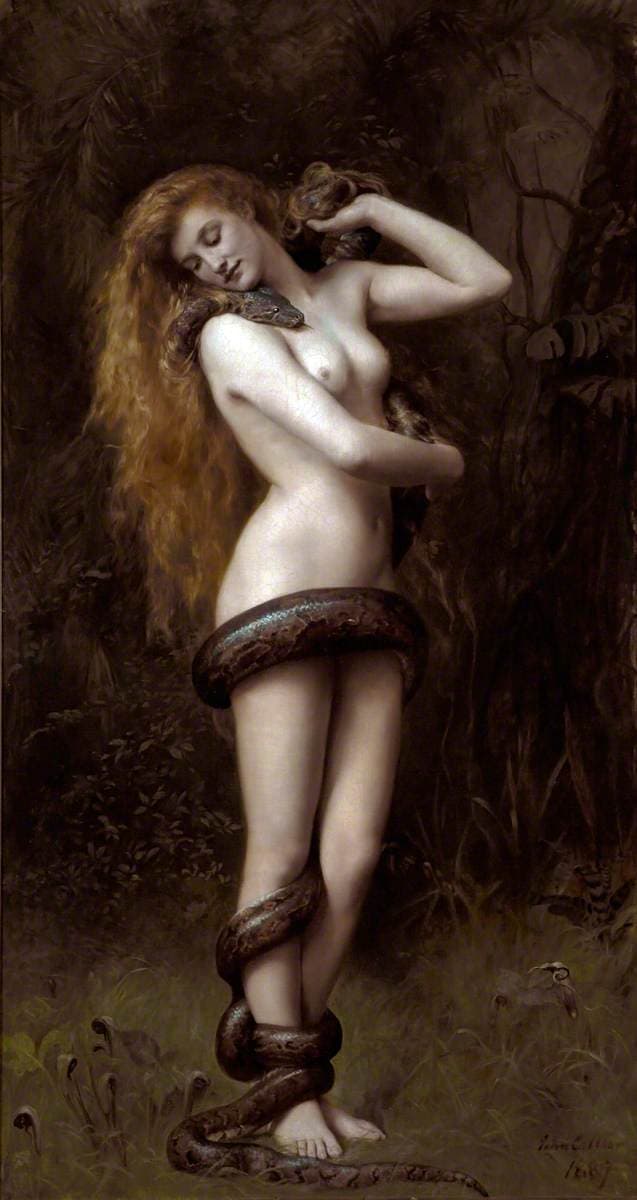
Lilith is a prominent figure in Jewish mythology, primarily known as Adam's first wife who refused to be subservient and fled the Garden of Eden. Her legend developed significantly in medieval Jewish folklore, mysticism, and texts like the Zohar, where she is often depicted as a dangerous night demon. Lilith is notable for her origins as a potentially composite figure drawing from Mesopotamian demonology and her enduring presence in folklore and theological discussions.

Shedim
Shedim are spirits or demons in Jewish mythology and the Tanakh, distinct from the Christian concept of purely evil entities. They were often viewed not as inherently malevolent, but as the gods of foreign peoples, or as beings with a more morally ambiguous nature, sometimes even capable of living according to the Torah. Their origins are varied, with legends attributing them to serpents, Lilith, unfinished divine creations, or the builders of the Tower of Babel.
Lili/Lilin/Lilim
Lilin are plural night spirits in Jewish mythology, serving as the male equivalent of Lilith and often conceived as her children with Adam or other mortal men. They are notable for their appearances in early rabbinic literature, such as the Babylonian Talmud and Midrash, and in Aramaic incantation bowls, where they are invoked or bound. Their origins are linked to ancient Akkadian wind demons, and they are depicted as having human form with wings or distinctive hair patterns.